Martin Aurielle Eileen Rowe, Kayingo Gerald
Physician Assistant Leadership and Learning Academy, University of Maryland, 520 West Fayette St, Suite 130, 21201, Baltimore, Maryland, USA.
BMC Med Educ. 2025 Jan 2;25(1):2. doi: 10.1186/s12909-024-06606-5.
PA-specific post professional doctoral programs have gained traction in the U.S. over the past decade, but little is known about their structure and outcomes. The objectives of this study were first to investigate the trends and characteristics of the currently available PA-specific doctoral programs and secondly to examine the delivery of research and scholarly education in these programs.
This was a mixed-method study that involved qualitative analysis as well as website searches of characteristics of different PA-specific doctoral programs. Data were triangulated by examining each program's public website and promotional materials. When data were unavailable, information was requested from programs via e-mail.
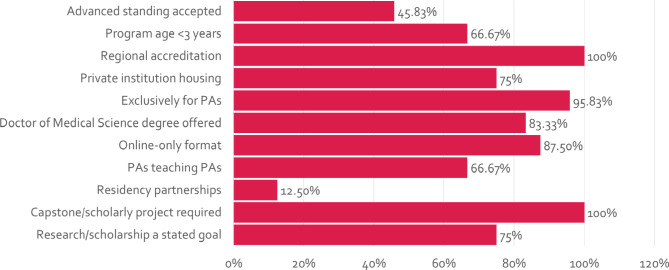
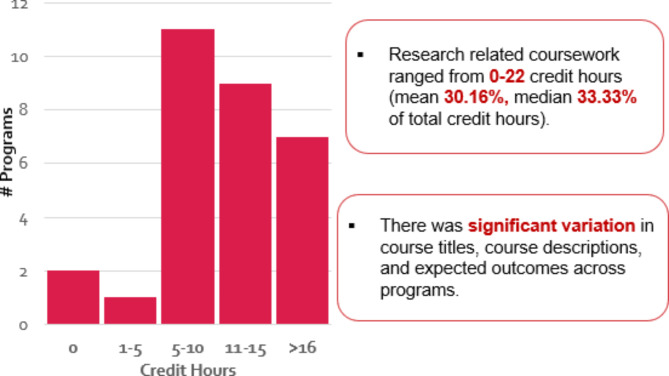
A total of 24 PA-specific post professional doctoral programs were identified across the U.S., of which the majority are less than 3 years old. All the programs are accredited regionally. Most programs were housed in private institutions (75%) and were exclusively offered to PAs (95.82%). All programs were offered as postgraduate programs for students with prerequisite master's degrees, but 2 programs also offered bridge pathways of study. The most frequent credential awarded was Doctor of Medical Science (DMSc or DMS). Total credit hours ranged from 12 to 60 credits. The cost per credit ranged from $480-1200 per credit hour. Regarding program structure, the following themes emerged: format (online vs. in-person), concentrations or tracks (leadership, education, clinical practice), PAs teaching PAs, and coupling the doctoral program with residency or fellowship. Regarding research and scholarly education, there was a lot of variability in terms of expectations, courses offered, credit hours, and specific capstone project requirements. Components of research or scholarship were noted in the mission or goal statements of 18 (75%) of the programs. None of the programs required a traditional doctoral dissertation but all programs required a scholarly or capstone project.
PA doctoral education is growing rapidly with the majority of the currently available programs emphasizing leadership, academia, and clinical practice advancement. Although research was stated as a goal, there is a lack of consistency in the delivery of this curricular element. Future studies should correlate this data with graduate outcomes.
在过去十年中,美国针对执业助理医师(PA)的专业后博士项目受到了关注,但对其结构和成果却知之甚少。本研究的目的一是调查当前可用的PA专业博士项目的趋势和特点,二是考察这些项目中研究与学术教育的开展情况。
这是一项混合方法研究,涉及定性分析以及对不同PA专业博士项目特点的网站搜索。通过查看每个项目的公共网站和宣传材料对数据进行三角验证。当数据不可用时,通过电子邮件向项目索取信息。
在美国共识别出24个PA专业后博士项目,其中大多数项目成立不到3年。所有项目均获得地区认证。大多数项目设在私立机构(75%),且专门面向执业助理医师(95.82%)。所有项目均为有硕士学位先决条件的学生提供研究生项目,但有2个项目也提供衔接学习途径。最常授予的学位是医学科学博士(DMSc或DMS)。总学分从12到60学分不等。每学分成本为每学分小时480 - 1200美元。关于项目结构,出现了以下主题:形式(在线与面授)、专业方向或轨道(领导力、教育、临床实践)、执业助理医师教执业助理医师以及将博士项目与住院医师培训或研究员培训相结合。关于研究与学术教育,在期望、提供的课程、学分小时数以及具体的顶点项目要求方面存在很大差异。18个(75%)项目的使命或目标声明中提到了研究或学术的组成部分。没有一个项目要求传统的博士论文,但所有项目都要求有学术或顶点项目。
PA博士教育发展迅速,目前大多数可用项目强调领导力、学术界和临床实践提升。尽管研究被列为目标,但在这一课程要素的实施方面缺乏一致性。未来的研究应将这些数据与毕业生成果相关联。