Choi Yoo-Mi, Na Deukchae, Yoon Goeun, Kim Jisoo, Min Seoyeon, Yi Hee-Gyeong, Cho Soo-Jeong, Cho Jae Hee, Lee Charles, Jang Jinah
Center for 3D Organ Printing and Stem cells (COPS), Pohang University of Science and Technology (POSTECH), Pohang, 37666, Republic of Korea.
Ewha Institute of Convergence Medicine, Ewha Womans University Mokdong Hospital, Seoul, 07985, Republic of Korea.
Adv Sci (Weinh). 2025 Mar;12(10):e2411769. doi: 10.1002/advs.202411769. Epub 2025 Jan 2.
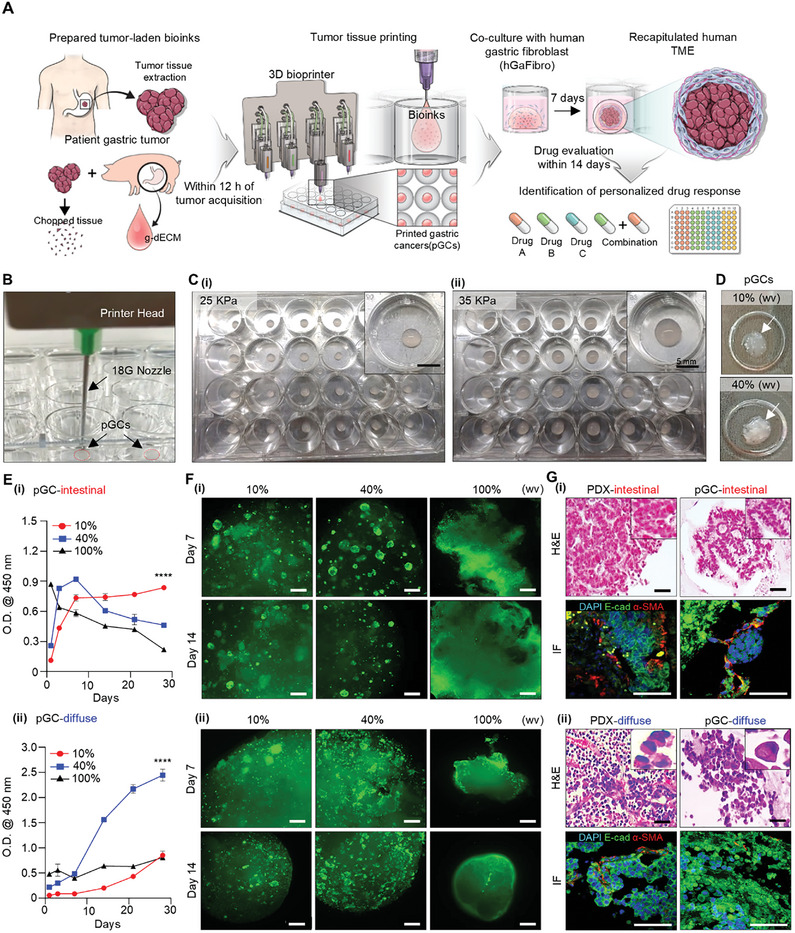
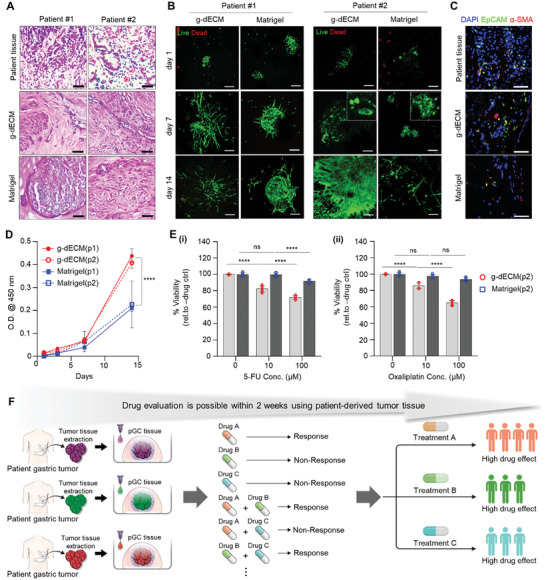
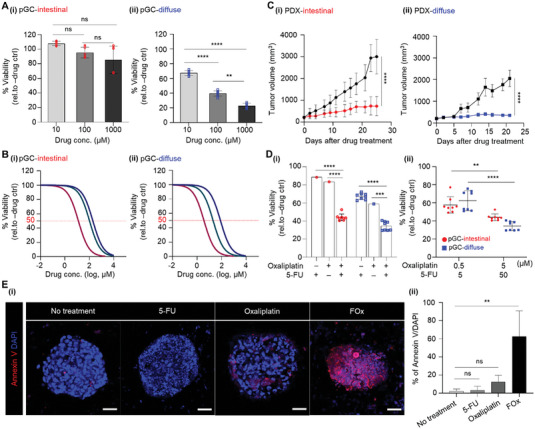
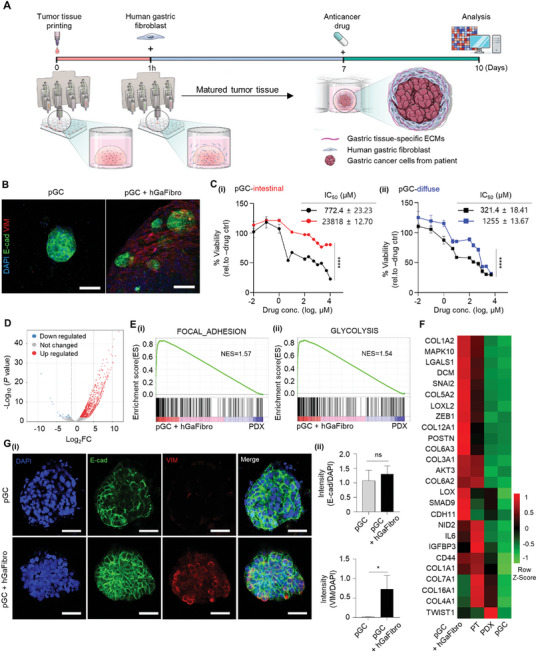
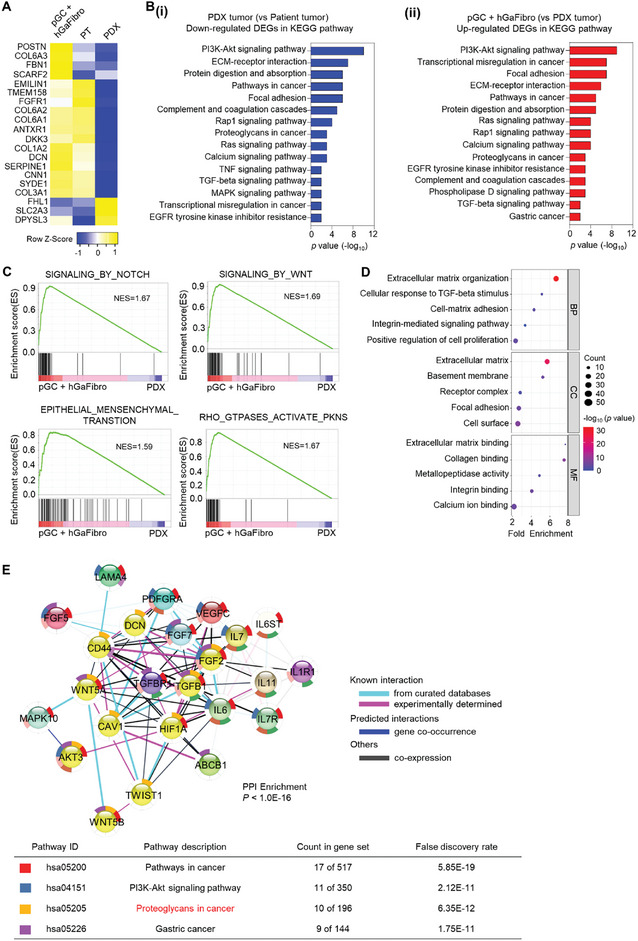
Despite significant research progress, tumor heterogeneity remains elusive, and its complexity poses a barrier to anticancer drug discovery and cancer treatment. Response to the same drug varies across patients, and the timing of treatment is an important factor in determining prognosis. Therefore, development of patient-specific preclinical models that can predict a patient's drug response within a short period is imperative. In this study, a printed gastric cancer (pGC) model is developed for preclinical chemotherapy using extrusion-based 3D bioprinting technology and tissue-specific bioinks containing patient-derived tumor chunks. The pGC model retained the original tumor characteristics and enabled rapid drug evaluation within 2 weeks of its isolation from the patient. In fact, it is confirmed that the drug response-related gene profile of pGC tissues co-cultured with human gastric fibroblasts (hGaFibro) is similar to that of patient tissues. This suggested that the application of the pGC model can potentially overcome the challenges associated with accurate drug evaluation in preclinical models (e.g., patient-derived xenografts) owing to the deficiency of stromal cells derived from the patient. Consequently, the pGC model manifested a remarkable similarity with patients in terms of response to chemotherapy and prognostic predictability. Hence, it is considered a promising preclinical tool for personalized and precise treatments.
尽管研究取得了重大进展,但肿瘤异质性仍然难以捉摸,其复杂性对抗癌药物研发和癌症治疗构成了障碍。不同患者对同一种药物的反应各不相同,治疗时机是决定预后的重要因素。因此,开发能够在短时间内预测患者药物反应的个性化临床前模型势在必行。在本研究中,利用基于挤压的3D生物打印技术和含有患者来源肿瘤块的组织特异性生物墨水,开发了一种用于临床前化疗的打印胃癌(pGC)模型。pGC模型保留了原始肿瘤特征,并能够在从患者分离后的2周内进行快速药物评估。事实上,已证实与人类胃成纤维细胞(hGaFibro)共培养的pGC组织的药物反应相关基因谱与患者组织相似。这表明,由于缺乏患者来源的基质细胞,pGC模型的应用有可能克服临床前模型(如患者来源的异种移植物)中与准确药物评估相关的挑战。因此,pGC模型在化疗反应和预后可预测性方面与患者表现出显著相似性。因此,它被认为是一种有前景的用于个性化和精准治疗的临床前工具。