Bhutta Nabeel Khalid, Xu Xiujin, Jian Cuiqin, Wang Yifan, Liu Yi, Sun Jinlyu, Han Bingnan, Wu Shandong, Javeed Ansar
Laboratory of Anti-allergic Functional Molecules, College of Life Sciences and Medicine, Zhejiang Sci-Tech University, Hangzhou, China.
Hangzhou Zheda Dixun Biological Gene Engineering Co., Ltd., Hangzhou, China.
Front Microbiol. 2024 Dec 19;15:1477187. doi: 10.3389/fmicb.2024.1477187. eCollection 2024.
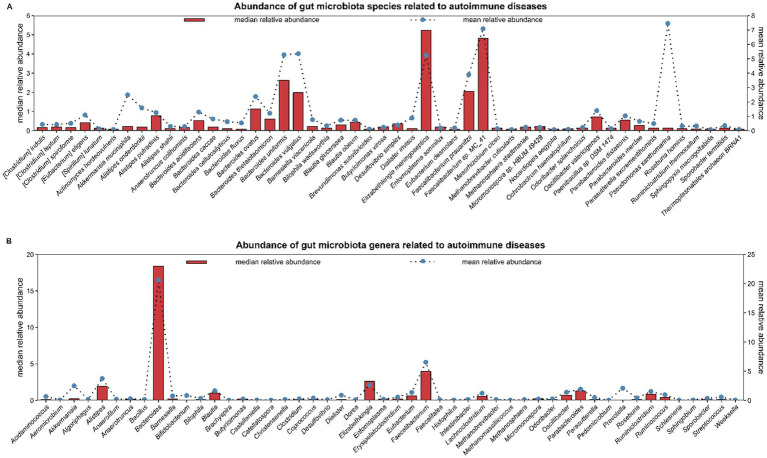
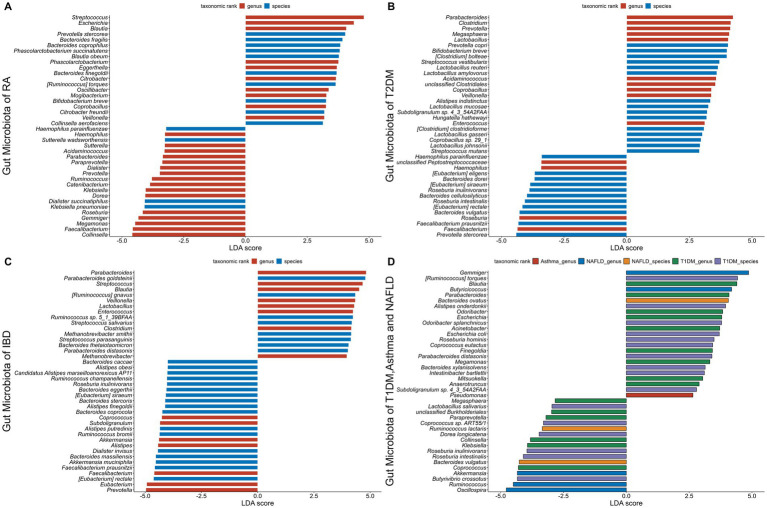
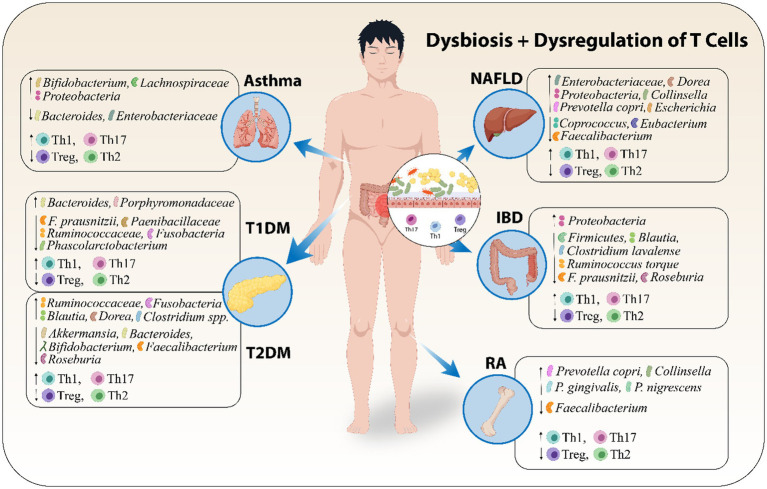
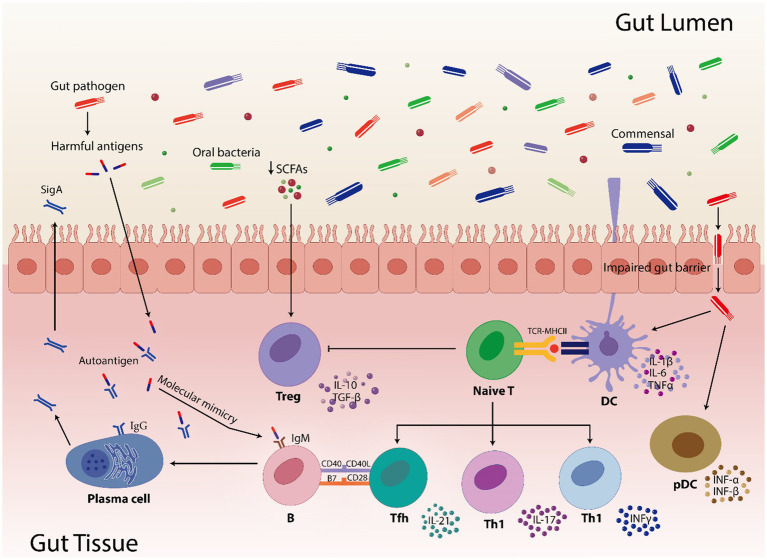
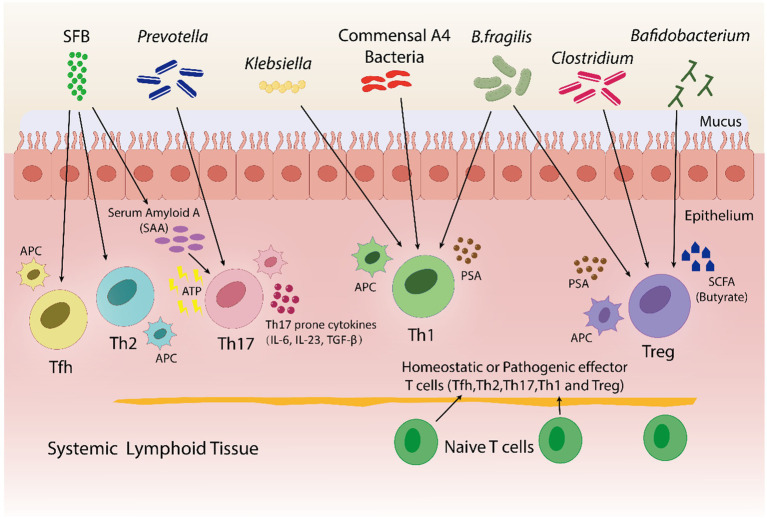
Gut microbiota regulates the immune system, the development and progression of autoimmune diseases (AIDs) and overall health. Recent studies have played a crucial part in understanding the specific role of different gut bacterial strains and their metabolites in different AIDs. Microbial signatures in AIDs are revealed by advanced sequencing and metabolomics studies. Microbes such as sp. sp. sp., , sp. sp. sp. sp. sp. sp., sp. and sp. help maintain immune homeostasis; whereas, sp. sp. sp. sp., , , sp., and sp. cause immuno-pathogenesis. A complex web of interactions is revealed by understanding the influence of gut microbiota on immune cells and various T cell subsets such as CD4+ T cells, CD8+ T cells, natural killer T cells, γδ T cells, etc. Certain AIDs, including rheumatoid arthritis, diabetes mellitus, atopic asthma, inflammatory bowel disease and non-alcoholic fatty liver disease exhibit a state of dysbiosis, characterized by alterations in microbial diversity and relative abundance of specific taxa. This review summarizes recent developments in understanding the role of certain microbiota composition in specific AIDs, and the factors affecting specific regulatory T cells through certain microbial metabolites and also focuses the potential application and therapeutic significance of gut microbiota-based interventions as novel adjunctive therapies for AIDs. Further research to determine the precise association of each gut bacterial strain in specific diseases is required.
肠道微生物群调节免疫系统、自身免疫性疾病(AIDs)的发展和进程以及整体健康。最近的研究在理解不同肠道细菌菌株及其代谢产物在不同自身免疫性疾病中的具体作用方面发挥了关键作用。先进的测序和代谢组学研究揭示了自身免疫性疾病中的微生物特征。诸如sp. sp. sp.,, sp. sp. sp. sp. sp. sp., sp.和sp.等微生物有助于维持免疫稳态;而sp. sp. sp. sp.,,, sp.和sp.则会引发免疫发病机制。通过了解肠道微生物群对免疫细胞和各种T细胞亚群(如CD4+ T细胞、CD8+ T细胞、自然杀伤T细胞、γδ T细胞等)的影响,揭示了一个复杂的相互作用网络。某些自身免疫性疾病,包括类风湿性关节炎、糖尿病、特应性哮喘、炎症性肠病和非酒精性脂肪性肝病,呈现出一种生态失调状态,其特征是微生物多样性和特定分类群的相对丰度发生改变。本综述总结了在理解特定微生物群组成在特定自身免疫性疾病中的作用方面的最新进展,以及通过某些微生物代谢产物影响特定调节性T细胞的因素,并着重介绍了基于肠道微生物群的干预措施作为自身免疫性疾病新型辅助疗法的潜在应用和治疗意义。需要进一步研究以确定每种肠道细菌菌株在特定疾病中的精确关联。