Fischer Marina, Veit Susanne, Buspavanich Pichit, Stadler Gertraud
Research Unit Gender in Medicine, Charité-Universitätsmedizin Berlin, Berlin, Germany.
Research Unit Good Work in a Transformative World, Berlin Social Science Center (WZB), Berlin, Germany.
PLoS One. 2025 Jan 3;20(1):e0315089. doi: 10.1371/journal.pone.0315089. eCollection 2025.
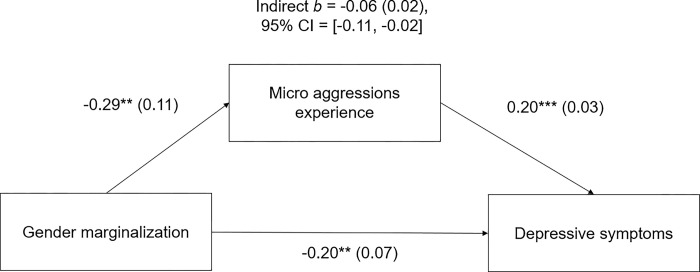
Hostile, discriminatory, and violent behavior within the creative industries has attracted considerable public interest and existing inequalities have been discussed broadly. However, few empirical studies have examined experiences of hostile behavior in creative higher education and associated mental health outcomes of early career artists. To address this gap, we conducted a survey among individuals studying at higher education institutions for art and music (N = 611). In our analyses of different types of hostile behaviors and their associations with mental health and professional thriving, we focused on differences and similarities between marginalized and more privileged groups across multiple diversity domains. A substantial percentage of participants reported hostile behaviors in their creative academic environments. Individuals from marginalized groups reported more hostile behaviors, which partially explained their worse mental health and lower professional thriving. These findings indicate a clear need for the creative sector to implement strategies to create safer environments, particularly for early career artists from specific socio-demographic backgrounds. We conclude by suggesting strategies for prevention in this highly competitive industry.
创意产业中的敌意、歧视和暴力行为引起了公众的广泛关注,现有的不平等现象也得到了广泛讨论。然而,很少有实证研究考察创意高等教育中的敌意行为经历以及早期职业艺术家的相关心理健康结果。为了填补这一空白,我们对在艺术和音乐高等教育机构学习的个人进行了一项调查(N = 611)。在我们对不同类型的敌意行为及其与心理健康和职业蓬勃发展的关联分析中,我们关注了多个多样性领域中边缘化群体和更具优势群体之间的差异和相似之处。相当比例的参与者报告了他们在创意学术环境中的敌意行为。来自边缘化群体的个人报告了更多的敌意行为,这部分解释了他们较差的心理健康状况和较低的职业蓬勃发展水平。这些发现表明,创意部门显然需要实施策略来创造更安全的环境,特别是为来自特定社会人口背景的早期职业艺术家。我们最后提出了在这个竞争激烈的行业中进行预防的策略。