Klein Lukas, Tu Mengyu, Krebs Niklas, Urbach Laura, Grimm Daniela, Latif Muhammad Umair, Penz Frederike, Blandau Anna, Wu Xueyan, Samuel Rebecca Diya, Küffer Stefan, Wegwitz Florian, Chan Nathan, Aliar Kazeera, Vyas Foram, Kishore Uday, Hessmann Elisabeth, Trumpp Andreas, Espinet Elisa, Papantonis Argyris, Khokha Rama, Ellenrieder Volker, Grünwald Barbara T, Singh Shiv K
Department of Gastroenterology, Gastrointestinal Oncology and Endocrinology, University Medical Center Göttingen, Göttingen, Germany.
Department of Medical Oncology, West German Cancer Center, University Hospital Essen, Essen, Germany.
Nat Commun. 2025 Jan 6;16(1):335. doi: 10.1038/s41467-024-55330-7.
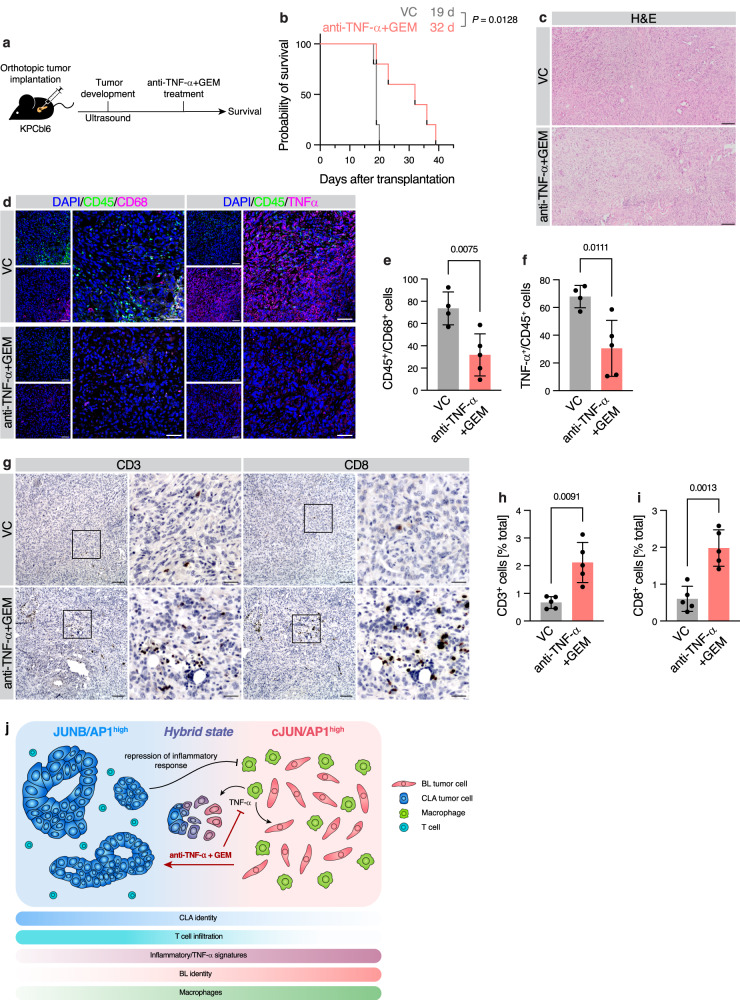
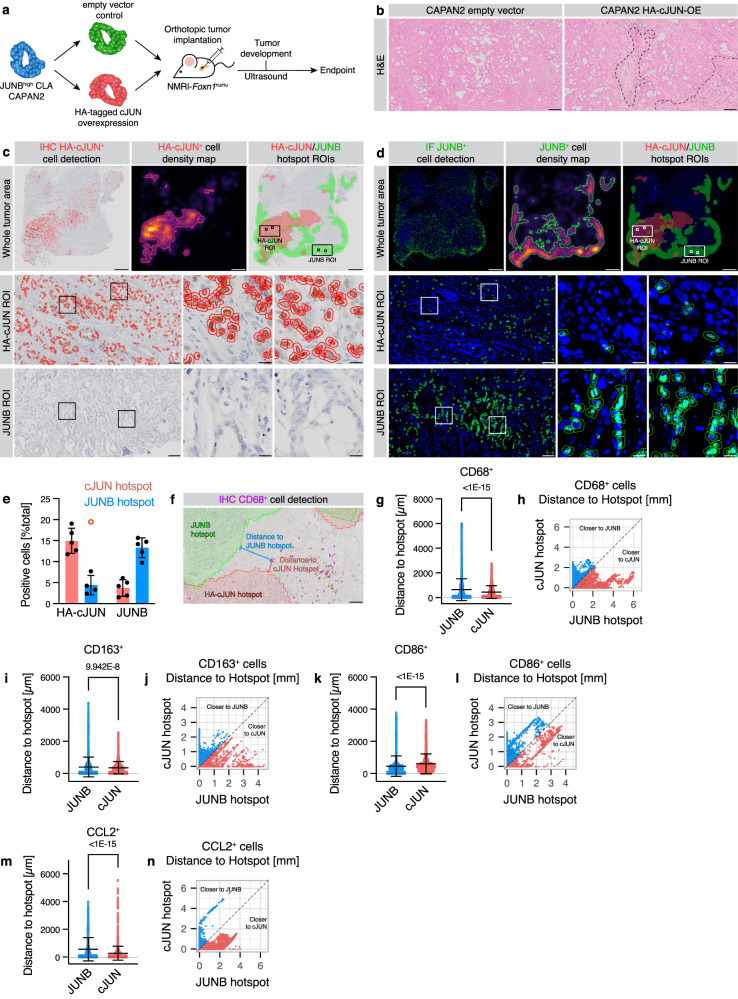
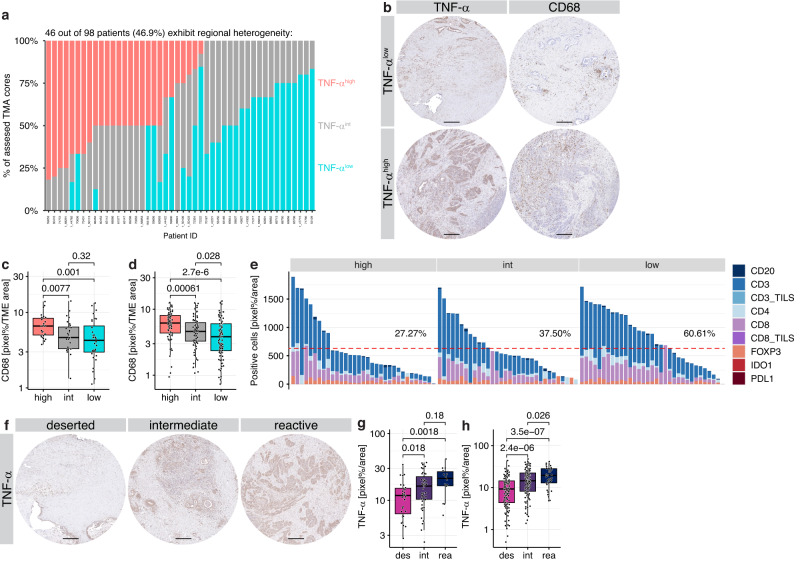
Pancreatic ductal adenocarcinoma (PDAC) displays a high degree of spatial subtype heterogeneity and co-existence, linked to a diverse microenvironment and worse clinical outcome. However, the underlying mechanisms remain unclear. Here, by combining preclinical models, multi-center clinical, transcriptomic, proteomic, and patient bioimaging data, we identify an interplay between neoplastic intrinsic AP1 transcription factor dichotomy and extrinsic macrophages driving subtype co-existence and an immunosuppressive microenvironment. ATAC-, ChIP-, and RNA-seq analyses reveal that JUNB/AP1- and HDAC-mediated epigenetic programs repress pro-inflammatory signatures in tumor cells, antagonizing cJUN/AP1 signaling, favoring a therapy-responsive classical neoplastic state. This dichotomous regulation is amplified via regional TNF-α macrophages, which associates with a reactive phenotype and reduced CD8 T cell infiltration in patients. Consequently, combined preclinical anti-TNF-α immunotherapy and chemotherapy reduces macrophages and promotes CD3/CD8 T cell infiltration in basal-like PDAC, improving survival. Hence, tumor cell-intrinsic epigenetic programs, together with extrinsic microenvironmental cues, facilitate intratumoral subtype heterogeneity and disease progression.
胰腺导管腺癌(PDAC)表现出高度的空间亚型异质性和共存性,这与多样的微环境及更差的临床结局相关。然而,其潜在机制仍不清楚。在此,通过整合临床前模型、多中心临床、转录组学、蛋白质组学和患者生物成像数据,我们确定了肿瘤内在的AP1转录因子二分法与外在巨噬细胞之间的相互作用,这种相互作用驱动了亚型共存及免疫抑制微环境的形成。ATAC、ChIP和RNA测序分析表明,JUNB/AP1和HDAC介导的表观遗传程序抑制肿瘤细胞中的促炎特征,拮抗cJUN/AP1信号传导,从而有利于对治疗有反应的经典肿瘤状态。这种二分调控通过局部TNF-α巨噬细胞得以放大,这与患者的反应性表型及CD8 T细胞浸润减少相关。因此,临床前联合抗TNF-α免疫疗法和化疗可减少巨噬细胞,并促进基底样PDAC中CD3/CD8 T细胞浸润,从而提高生存率。因此,肿瘤细胞内在的表观遗传程序与外在微环境线索共同促进了肿瘤内亚型异质性和疾病进展。