Mamdouh Salma, Shehata M, Fekry A M, Ameer M A
Chemistry Department, Faculty of Science, Cairo University, Giza, 12613, Egypt.
Sci Rep. 2025 Jan 6;15(1):980. doi: 10.1038/s41598-024-79614-6.
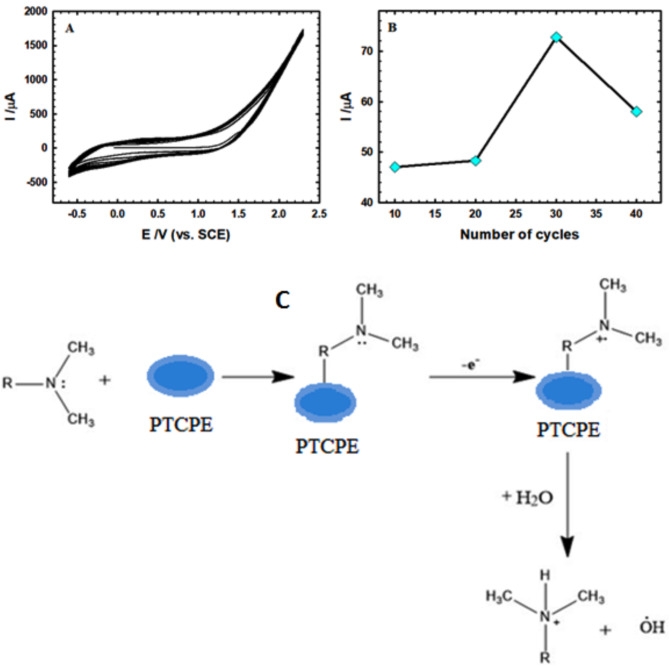
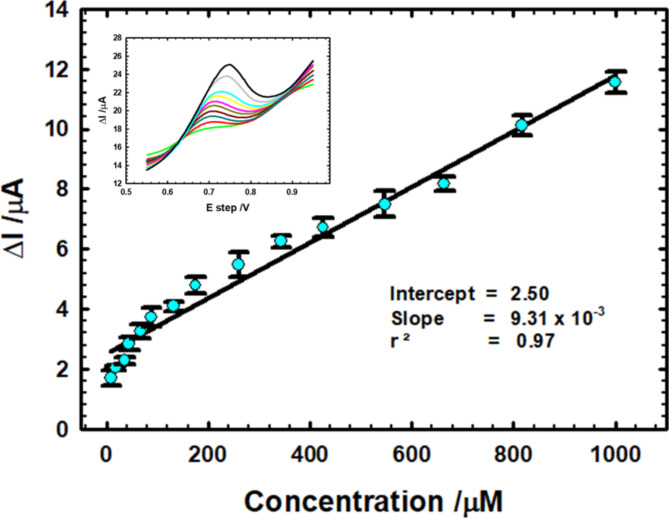
Azithromycin (AM) is one of the prescribed drugs in pandemic medication treatment which has paid great attention. We developed in this study a simply modified carbon paste electrode (CPE) to detect AM using poly-threonine (PT). PT or similar polymers are used as carriers to enhance the delivery and effectiveness of AM. The work was characterised via Cyclic Voltammetry (CV), electrochemical impedance spectroscopy (EIS) and scanning electron microscopy (SEM). We take into consideration the effects of pH, scan rate, accumulation time, interference, and calibration curve.A very sensitive response to the oxidation of 1.0 mM from AM in phosphate buffer solution (PBS) over a pH range of 5.0 to 10.0 was observed using the developed poly-threonine carbon paste electrode (PTCPE). The impact of different AM concentrations was investigated resulting in a detection limit of 0.32 µM and a quantification limit of 1.07 µM at PBS (pH 7.4). Finally, the recently used electrode realized acceptable sensitivity and consistency for AM detection in pharmaceutical drugs.
阿奇霉素(AM)是大流行药物治疗中备受关注的处方药之一。在本研究中,我们开发了一种简单改性的碳糊电极(CPE),使用聚苏氨酸(PT)来检测AM。PT或类似聚合物用作载体,以增强AM的递送和有效性。通过循环伏安法(CV)、电化学阻抗谱(EIS)和扫描电子显微镜(SEM)对该工作进行了表征。我们考虑了pH值、扫描速率、富集时间、干扰和校准曲线的影响。使用所开发的聚苏氨酸碳糊电极(PTCPE),在5.0至10.0的pH范围内,观察到在磷酸盐缓冲溶液(PBS)中对1.0 mM AM的氧化有非常灵敏的响应。研究了不同AM浓度的影响,在PBS(pH 7.4)中检测限为0.32 μM,定量限为1.07 μM。最后,最近使用的电极在药物中AM检测方面实现了可接受的灵敏度和一致性。