Zhong Tian, Meng Xi
Innovation Institute for Sustainable Maritime Architecture Research and Technology, Qingdao University of Technology, Qingdao, 266033, People's Republic of China.
Sci Rep. 2025 Jan 6;15(1):919. doi: 10.1038/s41598-025-85533-x.
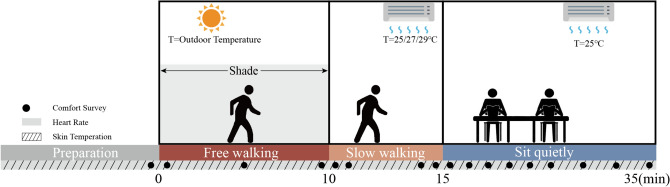
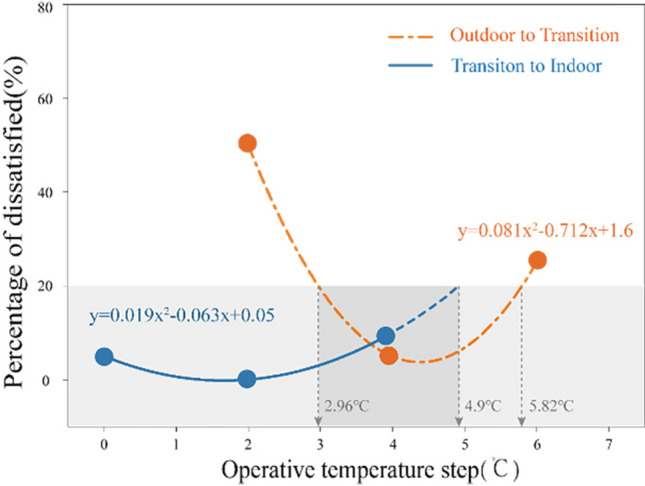
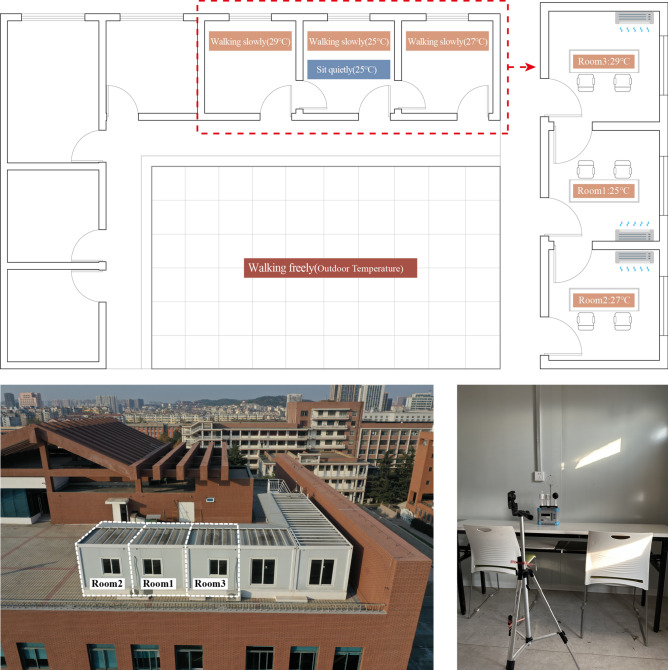
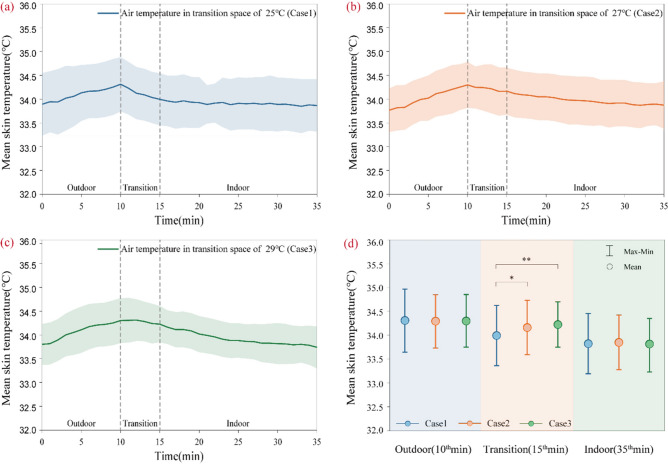
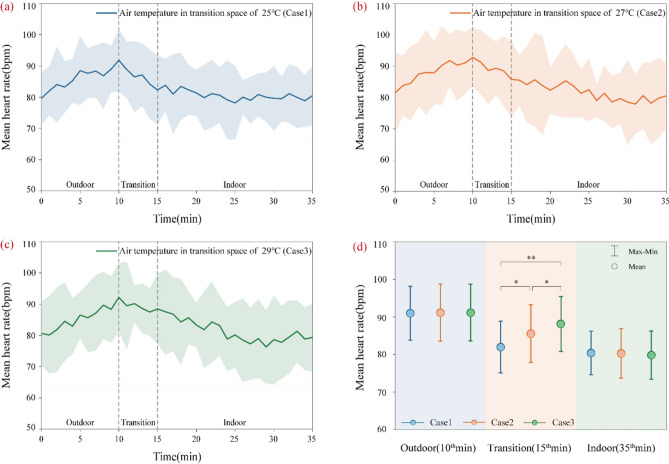
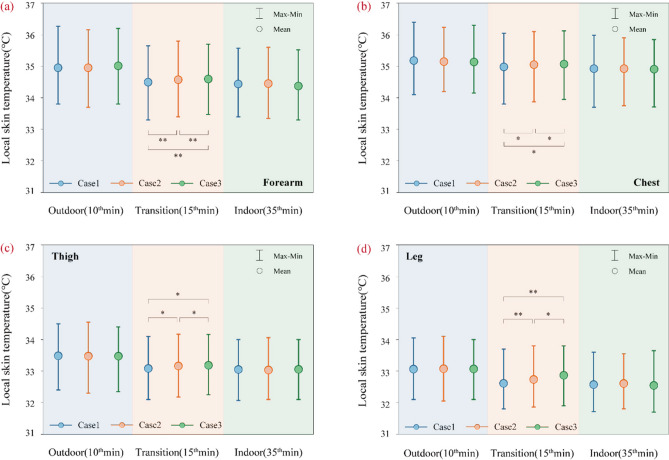
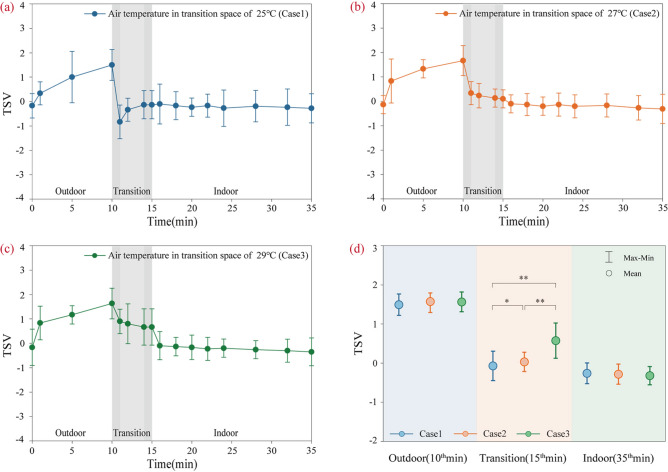
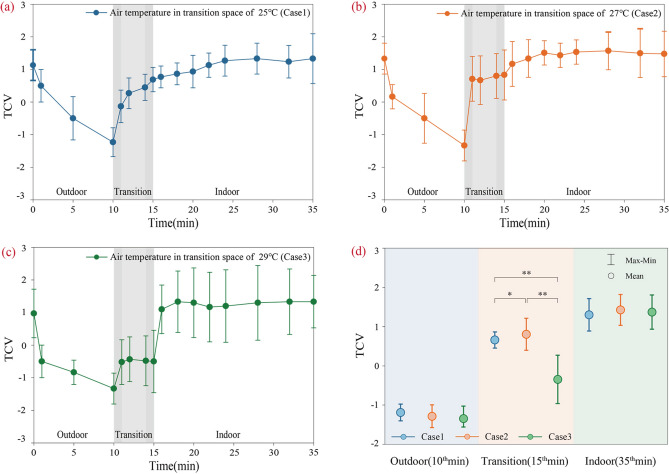
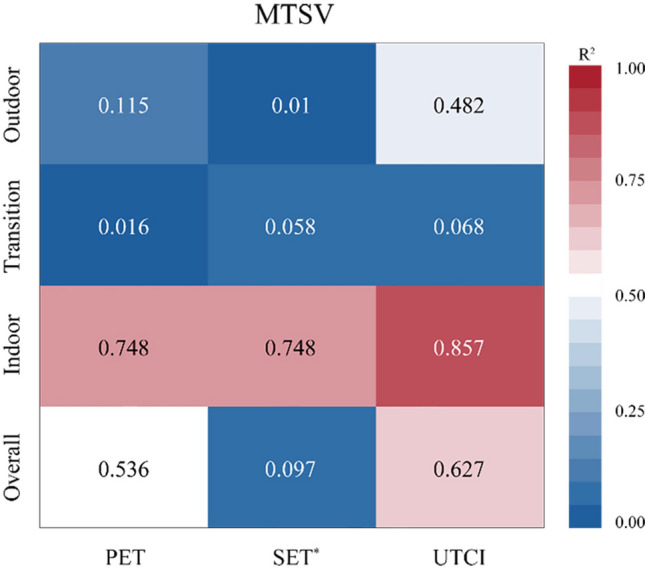
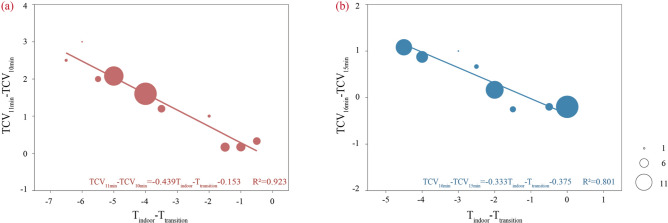
During the hot summer months, the significant temperature disparity between outdoor and indoor air-conditioned spaces can lead to thermal discomfort and pose a potential health risk. Transition areas such as corridors and elevator lobbies, serving as intermediary zones connecting indoors and outdoors, have been found effective in mitigating this thermal discomfort. In this study, three different temperatures (25 °C-case 1, 27 °C-case 2, and 29 °C-case 3) were employed to investigate the dynamic physiological regulation and thermal perception response of individuals when transitioning from an outdoor environment into an indoor neutral room through a transition space. The findings revealed that mT decreased by 0.31 °C, 0.13 °C, and 0.07 °C; TSV decreased by 1.63, 1.56, and 0.9 units; while TCV increased by 1.9, 2.16 ,and 0.81units for cases1-3 respectively indicating that an air temperature of around 27 °C is most suitable for achieving optimal comfort levels in these transition spaces. The correlation between UTCI index with MTSV was stronger compared to PET or SET* throughout the entire process; moreover, a better linear relationship was observed between ΔTSV and ΔT than ΔTCV. Furthermore, a second-order polynomial function model was established using dissatisfaction rate at initial entry moment into new environment along with operative temperature difference, resulting in acceptable temperatures ranging from 25.3 °C to 27.93 °C within current experimental conditions.
在炎热的夏季,室外与室内空调空间之间显著的温度差异会导致热不适,并带来潜在的健康风险。走廊和电梯前厅等过渡区域作为连接室内和室外的中间地带,已被证明能有效减轻这种热不适。在本研究中,采用了三种不同温度(25°C——案例1、27°C——案例2和29°C——案例3)来研究个体从室外环境通过过渡空间进入室内中性房间时的动态生理调节和热感知反应。研究结果显示,案例1 - 3中,平均体温分别下降了0.31°C、0.13°C和0.07°C;热感觉投票分别下降了1.63、1.56和0.9个单位;而热舒适投票分别增加了1.9、2.16和0.81个单位,这表明27°C左右的气温最适合在这些过渡空间实现最佳舒适度。在整个过程中,与预测平均投票(PET)或标准有效温度(SET*)相比,通用热气候指数(UTCI)与热感觉投票(MTSV)之间的相关性更强;此外,热感觉投票变化量(ΔTSV)与温度变化量(ΔT)之间的线性关系比热舒适投票变化量(ΔTCV)更好。此外,利用进入新环境初始时刻的不满意率和运行温度差建立了二阶多项式函数模型,在当前实验条件下得出可接受温度范围为25.3°C至27.93°C。