Xu Jialu, Li Chunyu, Fan Rongping, Yin Jiaxin, Xie Lei, Peng Xuemin, Tao Jing, Xu Weijie, Zhang Shujun, Shi Xiaoli, Dong Kun, Yu Xuefeng, Chen Xi, Yang Yan
Department of Endocrinology, Tongji Hospital, Tongji Medical College, Huazhong University of Science and Technology, Wuhan, Hubei, 430030, China.
Branch of National Clinical Research Center for Metabolic Diseases, Hubei, China.
Cell Commun Signal. 2025 Jan 6;23(1):7. doi: 10.1186/s12964-024-02019-5.
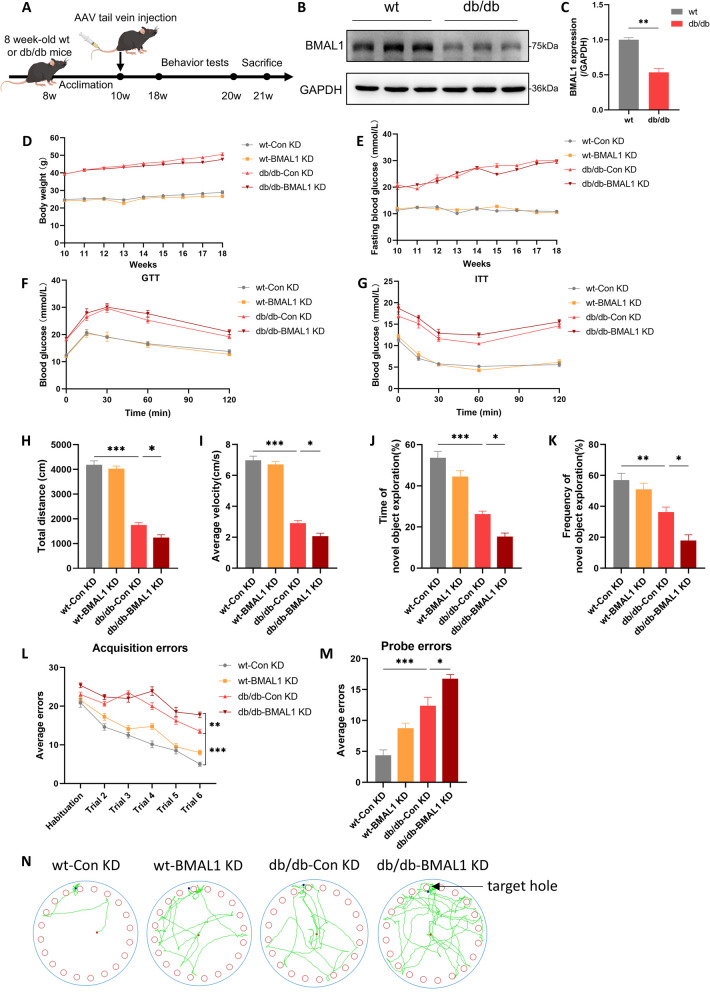
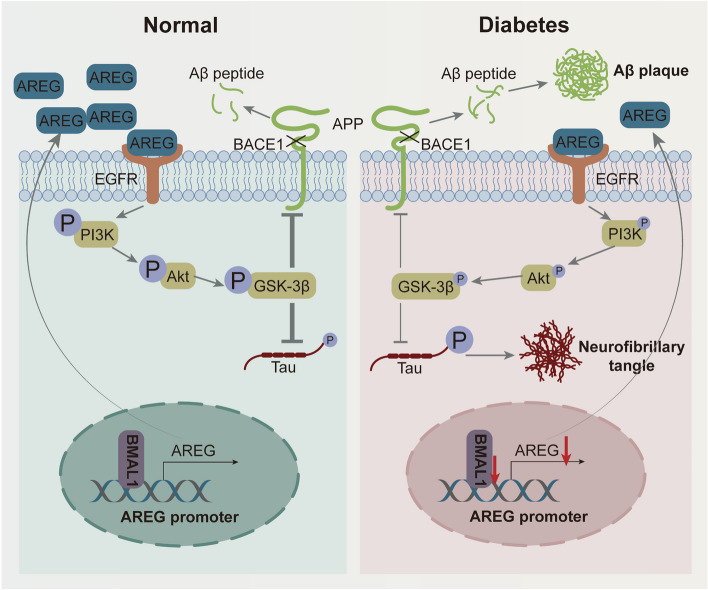
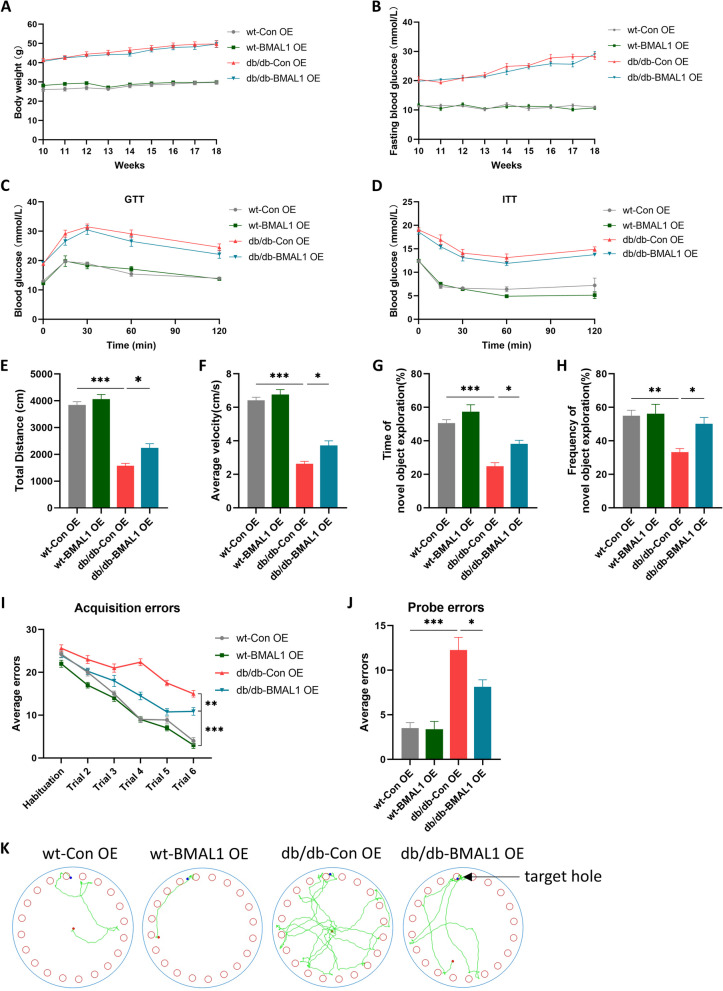
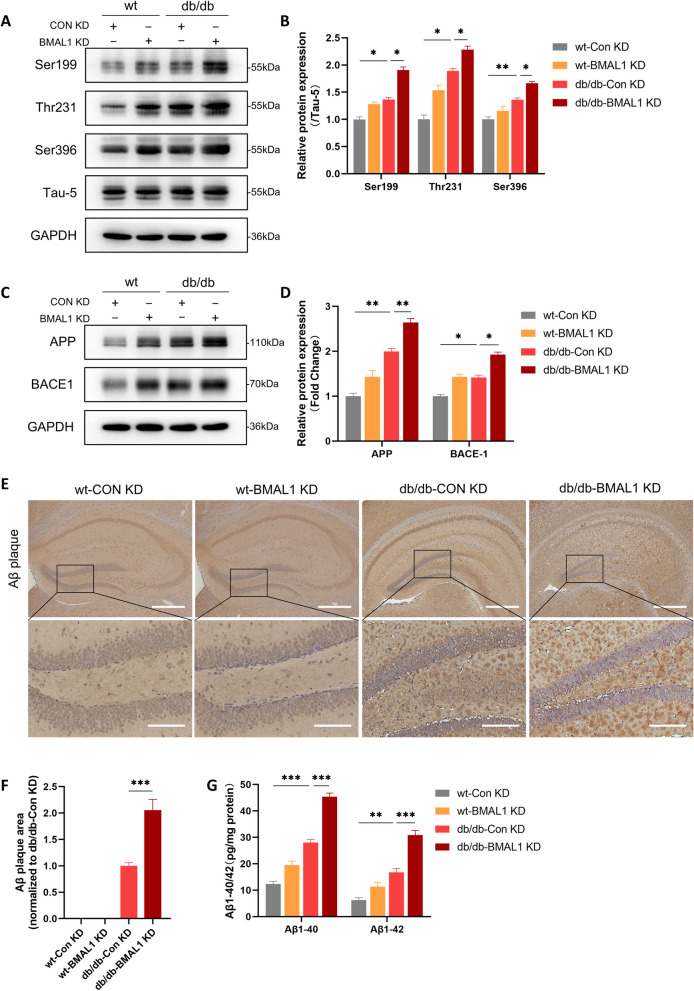
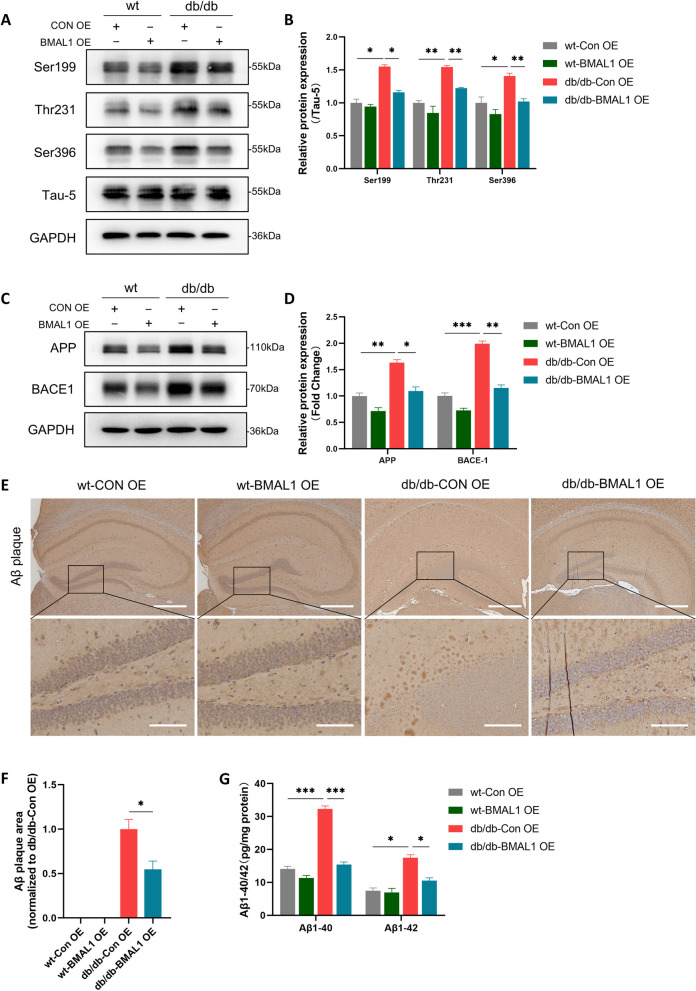
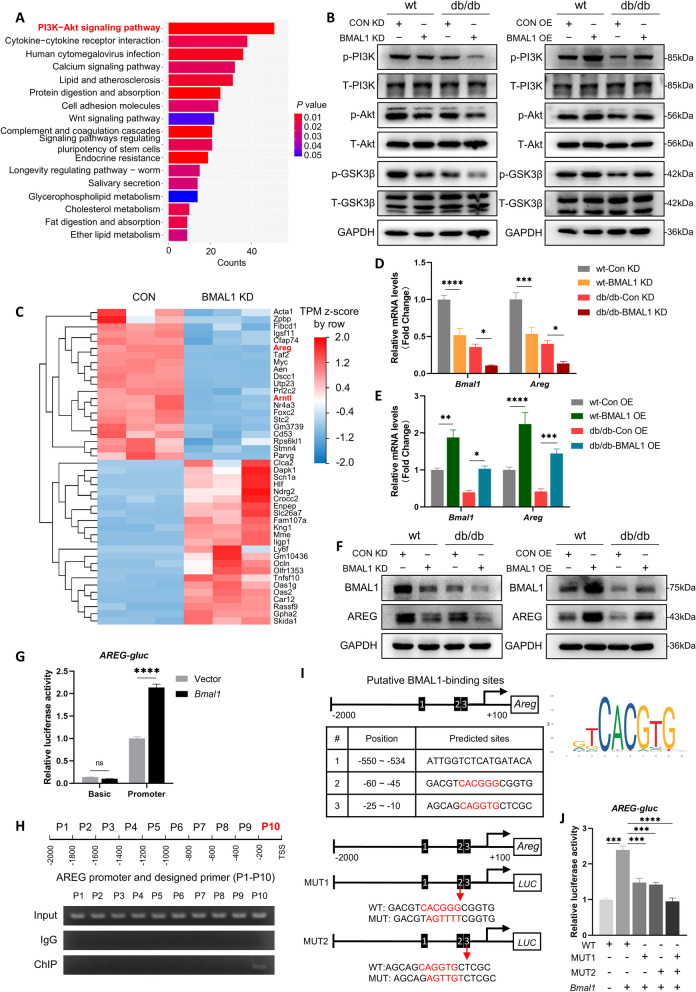
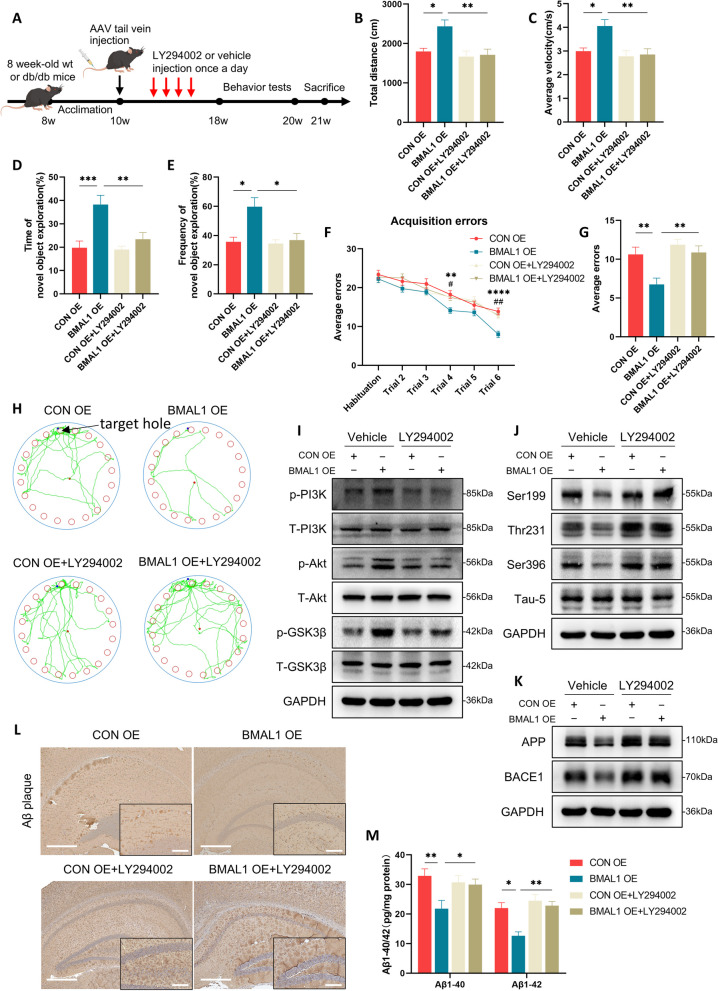
Cognitive impairment is a significant complication of type 2 diabetes mellitus (T2DM). However, the mechanisms underlying the development of cognitive dysfunction in individuals with T2DM remain elusive. Herein, we discussed the role of Bmal1, a core circadian rhythm-regulating gene, in the process of T2DM-associated cognitive dysfunction. We identified a marked decrease in BMAL1 levels in the hippocampus of db/db mice, followed by gain- and loss-of-function studies to explore the impact of BMAL1 on cognitive function. Our findings indicated that BMAL1 downregulation led to cognitive deficits, characterized by tau hyperphosphorylation and accumulated amyloid plaque. Conversely, BMAL1 overexpression mitigated these Alzheimer-like pathologies. Further investigation revealed that BMAL1 directly activated the transcription of Areg, thereby activating the PI3K/Akt/GSK-3β pathway and ameliorating cognitive dysfunction. Moreover, these effects of BMAL1 were attenuated by LY294002, a PI3K inhibitor. Collectively, these results underscore the significant role of BMAL1 in T2DM-associated cognitive impairment, proposing a novel intervention strategy for individuals exposed to risk factors of T2DM.
认知障碍是2型糖尿病(T2DM)的一种重要并发症。然而,T2DM患者认知功能障碍发生发展的潜在机制仍不清楚。在此,我们探讨了核心昼夜节律调节基因Bmal1在T2DM相关认知功能障碍过程中的作用。我们发现db/db小鼠海马中BMAL1水平显著降低,随后进行了功能获得和功能缺失研究,以探究BMAL1对认知功能的影响。我们的研究结果表明,BMAL1下调导致认知缺陷,其特征为tau蛋白过度磷酸化和淀粉样斑块积累。相反,BMAL1过表达减轻了这些阿尔茨海默样病理改变。进一步研究发现,BMAL1直接激活Areg的转录,从而激活PI3K/Akt/GSK-3β信号通路并改善认知功能障碍。此外,PI3K抑制剂LY294002减弱了BMAL1的这些作用。总体而言,这些结果强调了BMAL1在T2DM相关认知障碍中的重要作用,为面临T2DM危险因素的个体提出了一种新的干预策略。