Zhuang Haotian, Shang Xinyi, Hou Wenpin, Ji Zhicheng
Department of Biostatistics and Bioinformatics, Duke University School of Medicine, Durham, NC, USA.
Department of Biostatistics, Columbia University Mailman School of Public Health, New York City, NY, USA.
Res Sq. 2024 Dec 19:rs.3.rs-5655066. doi: 10.21203/rs.3.rs-5655066/v1.
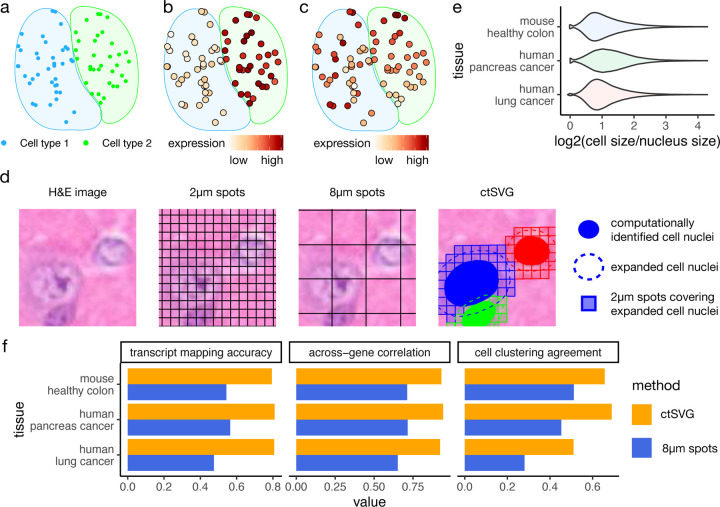
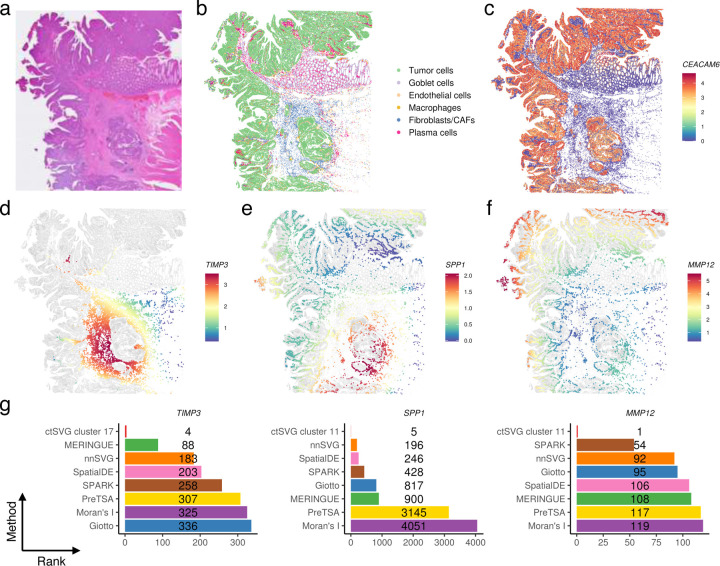
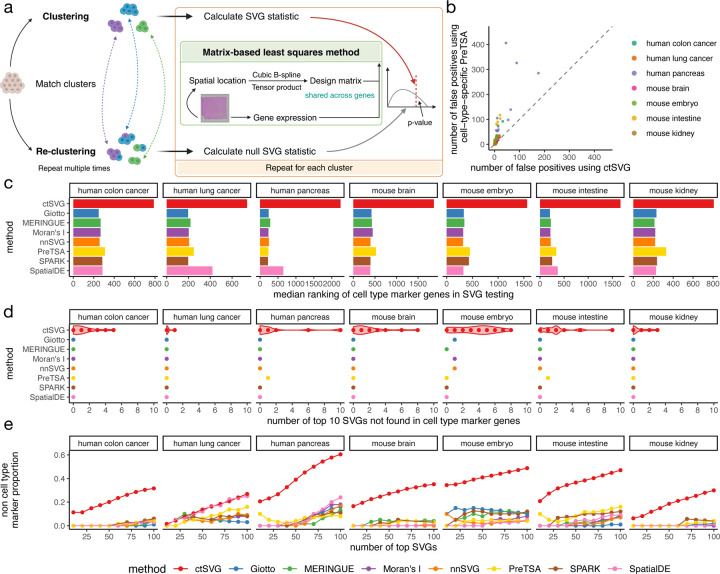
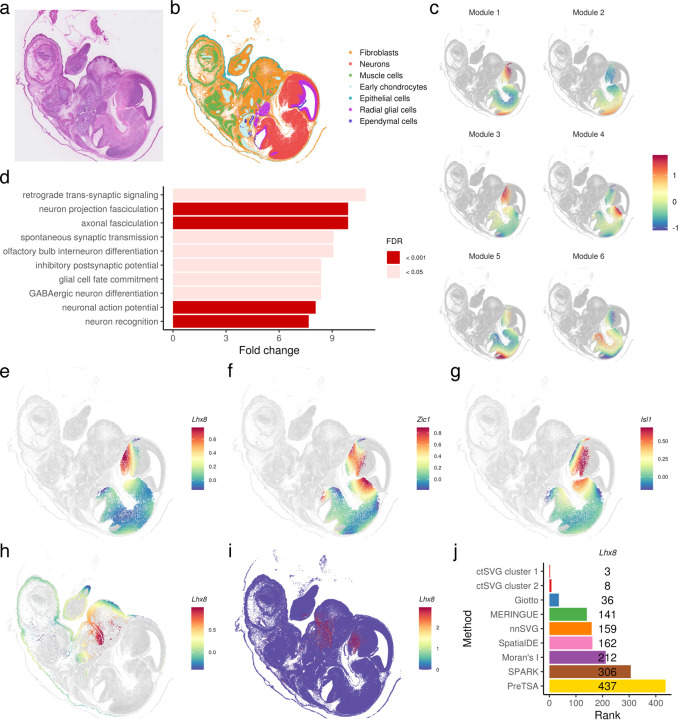
Spatially variable genes (SVGs) reveal the molecular and functional heterogeneity of cells across different spatial regions of a tissue. We found that sample-wide SVGs, identified by previous methods across the whole sample, largely overlap with cell-type marker genes derived from single-cell gene expression, leaving the spatial location information largely underutilized. We developed ctSVG, a computational method specifically tailored for Visium HD spatial transcriptomics at single-cell resolution. ctSVG accurately assigns Visium squares to cells and identifies cell-type-specific SVGs. We show that cell-type-specific SVGs identified by ctSVG include many new genes that do not overlap with sample-wide SVGs or cell-type marker genes, and that these genes reveal important biological functions in real spatial datasets.
空间可变基因(SVGs)揭示了组织不同空间区域细胞的分子和功能异质性。我们发现,通过先前方法在整个样本中鉴定出的全样本SVGs,与源自单细胞基因表达的细胞类型标记基因有很大重叠,从而导致空间位置信息在很大程度上未得到充分利用。我们开发了ctSVG,这是一种专门针对单细胞分辨率的Visium HD空间转录组学量身定制的计算方法。ctSVG能准确地将Visium方格分配给细胞,并识别细胞类型特异性的SVGs。我们表明,ctSVG鉴定出的细胞类型特异性SVGs包括许多与全样本SVGs或细胞类型标记基因不重叠的新基因,并且这些基因在真实空间数据集中揭示了重要的生物学功能。