Staton Sally, Coles Laetitia, Normore George, Casey Charlotte, Searle Bonnie, Houen Sandy, Potia Azhar, Crompton Rebecca, Long Deborah, Hogan Michael, Thorpe Karen
Queensland Brain Institute, The University of Queensland, St. Lucia, Brisbane 4072, Australia.
School of Nursing, Queensland University of Technology, Brisbane 4059, Australia.
Brain Sci. 2024 Dec 11;14(12):1243. doi: 10.3390/brainsci14121243.
BACKGROUND/OBJECTIVES: Among the developmental sciences, discovery in neuroscience has underpinned research innovations and made a significant contribution to knowledge translation. With the growth of neuroscience discovery, policymakers and practitioner workforces have adopted 'neuro-informed' in decisions targeting the delivery of human, social, and economic wellbeing.
In this scoping review, we examined the use and conceptualization of neuro-informed policy and practice (NPP) over the last two decades. We aim to establish a working definition of NPP and identify the key knowledge bases underpinning the application of NPP, with a specific focus on children and young people.
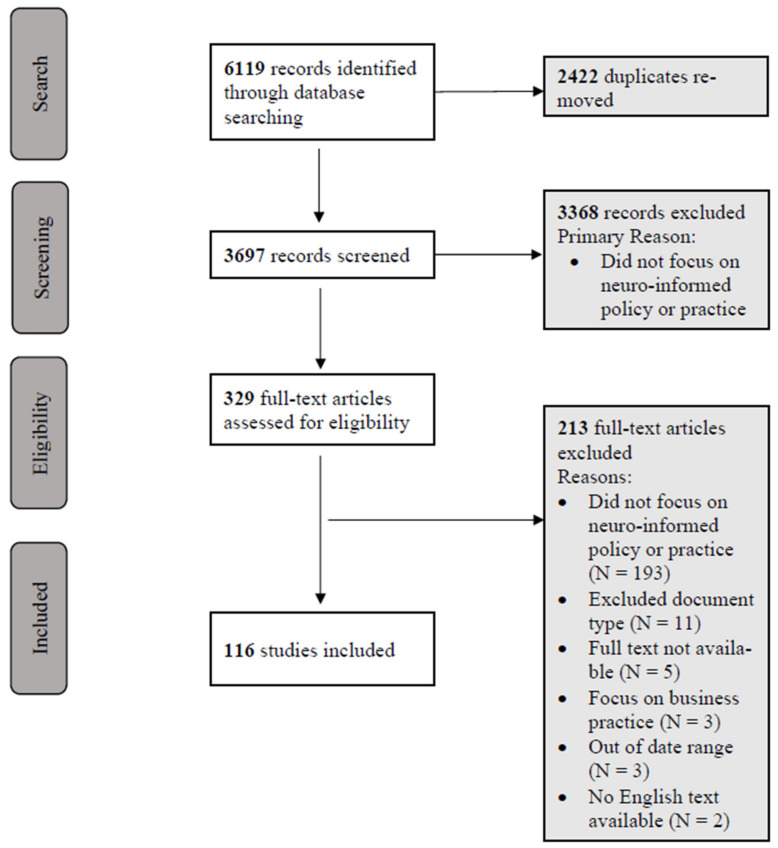
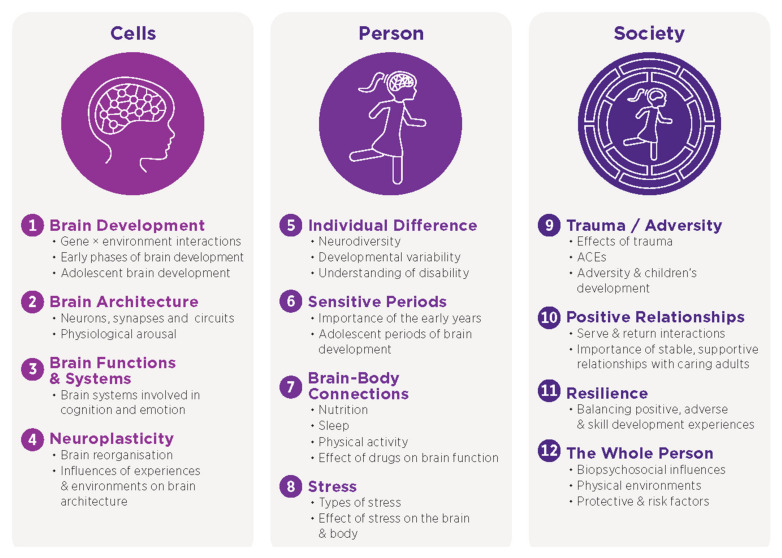
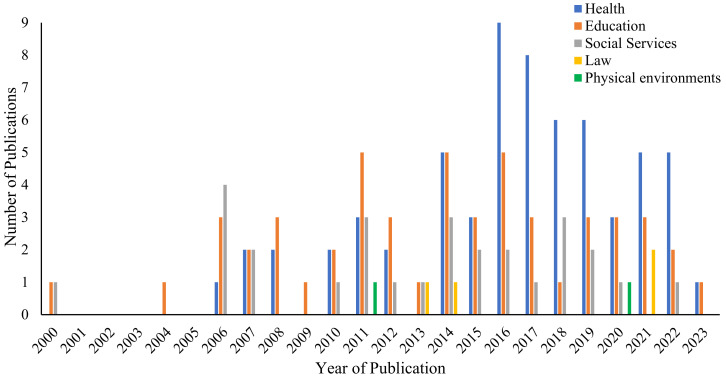
A total of 116 publications related to NPP were identified across academic and policy sources. Publications derived from diverse fields (e.g., psychology, social policy, medicine, urban planning). Health and Education were the most common target areas for NPP; however, applications of NPP to social services, law, and physical environments were also identified. Despite the growth in NPP, concept definitions of NPP were limited and primarily tautological. A four-stage process of concept definition was used to develop a working definition of NPP applicable to different systems, workforces, and contexts. By applying content analysis, 12 distinct knowledge bases underpinning NPP were identified.
Our scoping review highlights the importance of defining the concept of neuro-informed policy and practice, extending beyond the brain or individual in isolation to include consideration of the brain in context.
背景/目标:在发展科学领域,神经科学的发现为研究创新奠定了基础,并为知识转化做出了重大贡献。随着神经科学发现的不断增加,政策制定者和从业者在制定旨在促进人类、社会和经济福祉的决策时采用了“神经科学信息指导”的方法。
在这项范围综述中,我们考察了过去二十年中神经科学信息指导政策与实践(NPP)的应用及概念界定。我们旨在确立NPP的实用定义,并确定支撑NPP应用的关键知识库,特别关注儿童和青少年。
在学术和政策来源中总共识别出116篇与NPP相关的出版物。这些出版物来自不同领域(如心理学、社会政策、医学、城市规划)。健康和教育是NPP最常见的目标领域;不过,也发现了NPP在社会服务、法律和物理环境方面的应用。尽管NPP有所发展,但其概念定义有限且主要是同义反复。我们采用了一个四阶段的概念定义过程来制定适用于不同系统、劳动力和背景的NPP实用定义。通过应用内容分析,确定了支撑NPP的12个不同的知识库。
我们的范围综述强调了定义神经科学信息指导政策与实践概念的重要性,这一概念不应局限于孤立的大脑或个体,而应将大脑置于具体情境中加以考量。