Anwar Sani Rianna, Sunandar Sunandar, Rachmawati Annisa, Pertela Gian, Susanti Oli, Rahayu Kanti Puji, Allamanda Puttik, Suandy Imron, Nurbiyanti Nofita, Jahja Elvina J, Purwanto Budi, Velkers Francisca C, Dinar Tagrid, Wagenaar Jaap A, Speksnijder David C
Division of Infectious Diseases and Immunology, Faculty of Veterinary Medicine, Utrecht University, 3584 CL Utrecht, The Netherlands.
Center for Indonesian Veterinary Analytical Studies (CIVAS), Bogor 16130, Indonesia.
Antibiotics (Basel). 2024 Dec 5;13(12):1181. doi: 10.3390/antibiotics13121181.
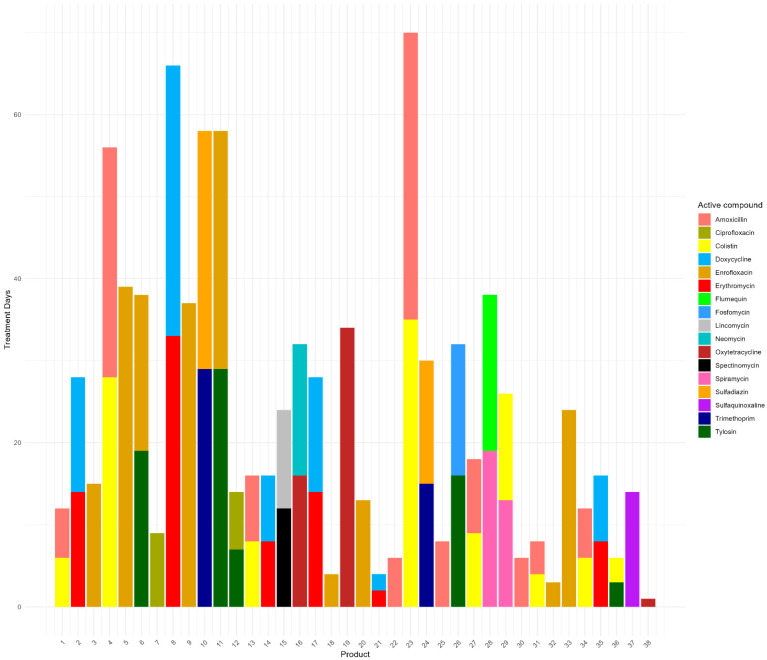
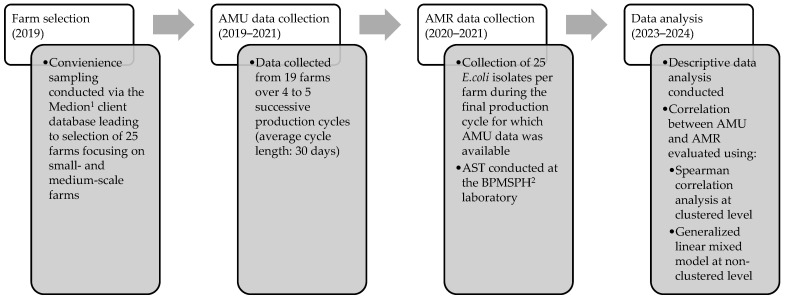
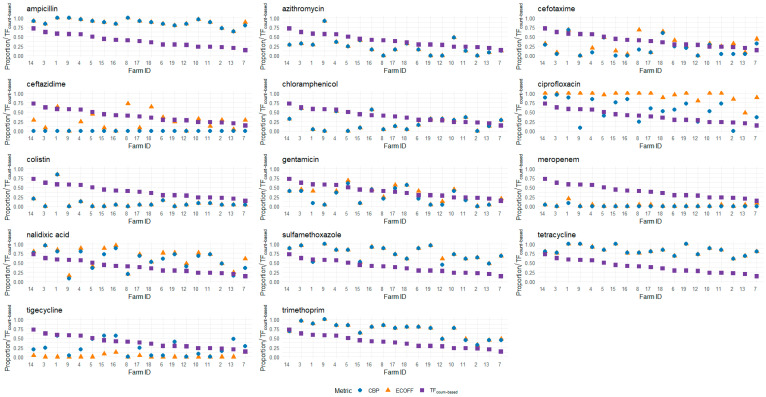
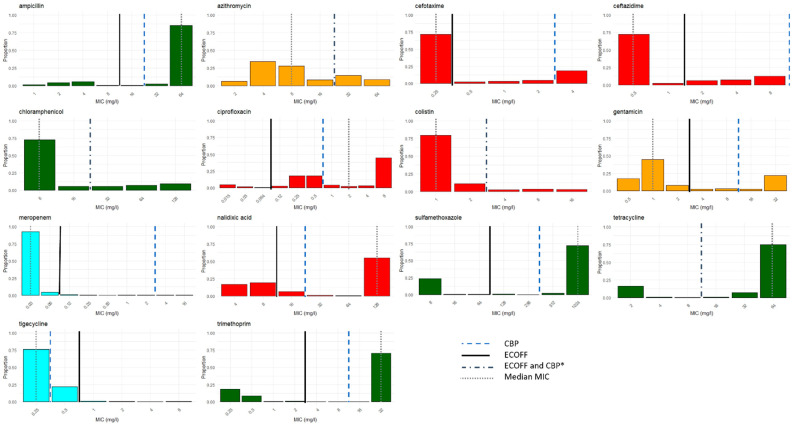
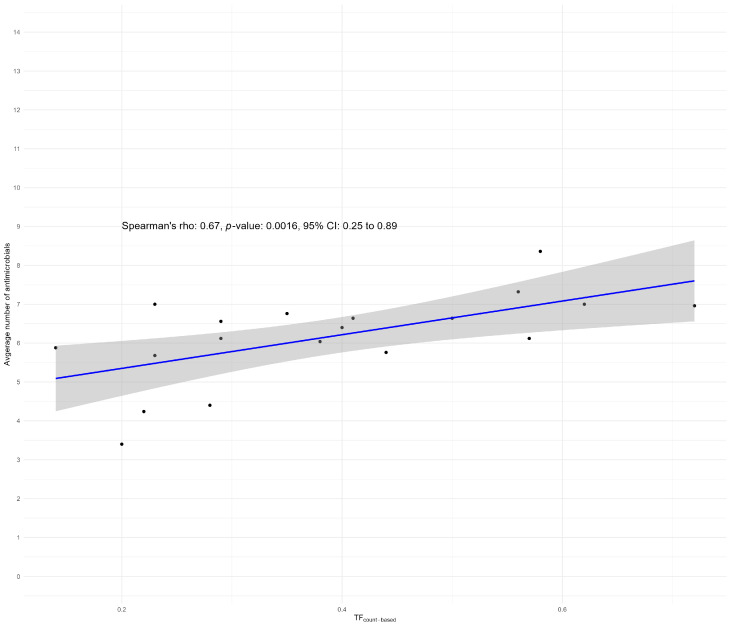
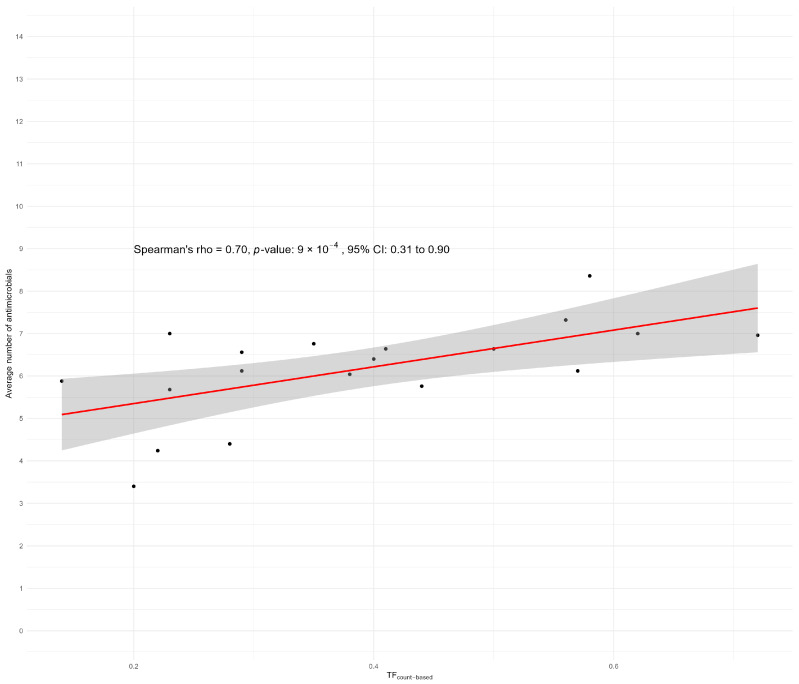
Antimicrobial resistance (AMR) is a global public health threat, with antimicrobial use (AMU) in livestock recognized as a significant driver. This study examines farm-level AMU and AMR as well as the relationship between AMU and AMR on broiler farms in Indonesia. Data were collected from 19 farms in West Java between 2019 and 2021 to examine AMU in depth across four to five successive production cycles. The correlation between AMU and AMR in commensal () was investigated. AMU was recorded as treatment days per 30-day production cycle, and antimicrobial susceptibility was assessed using epidemiological cut-off (ECOFF) values to differentiate wildtype (WT) and non-wildtype (NWT) . The average AMU was 12 treatment days per 30-day production cycle, with a wide range of 4 to 22 days. On average, isolates from each farm exhibited NWT phenotypes, reflecting AMR levels, for 6 out of 14 antimicrobials tested. This included notable levels for the highest priority critically important antimicrobials (HPCIAs) ciprofloxacin (93%) and nalidixic acid (64%). A significant correlation (Spearman ρ = 0.67, < 0.05) was observed between the total farm-level AMU and the number of antimicrobials for which NWT isolates were found. However, no significant correlation was found between AMU and AMR for the five most frequently used antimicrobials, likely due to a high baseline prevalence of NWT isolates and relatively few independent observations. These findings highlight the urgent need to reduce AMU in general, specifically the use of (HP)CIAs, to mitigate AMR on Indonesian broiler farms.
抗菌药物耐药性(AMR)是全球公共卫生面临的威胁,牲畜中抗菌药物的使用(AMU)被认为是一个重要驱动因素。本研究调查了印度尼西亚肉鸡养殖场的农场层面抗菌药物使用情况和抗菌药物耐药性,以及抗菌药物使用与耐药性之间的关系。2019年至2021年期间,从西爪哇省的19个养殖场收集数据,以深入研究四到五个连续生产周期中的抗菌药物使用情况。研究了共生菌中抗菌药物使用与耐药性之间的相关性。抗菌药物使用记录为每30天生产周期的治疗天数,并使用流行病学临界值(ECOFF)评估抗菌药物敏感性,以区分野生型(WT)和非野生型(NWT)。每30天生产周期的平均抗菌药物使用天数为12天,范围为4至22天。平均而言,在测试的14种抗菌药物中,每个养殖场分离出的菌株有6种表现出非野生型表型,反映了耐药水平。这包括最高优先级的 critically important antimicrobials(HPCIAs)环丙沙星(93%)和萘啶酸(64%)的显著耐药水平。在农场层面的总抗菌药物使用量与发现非野生型菌株的抗菌药物数量之间观察到显著相关性(Spearman ρ = 0.67,P < 0.05)。然而,对于五种最常用的抗菌药物,未发现抗菌药物使用与耐药性之间存在显著相关性,这可能是由于非野生型菌株的基线患病率较高且独立观察相对较少。这些发现凸显了总体上减少抗菌药物使用,特别是减少使用HPCIAs以减轻印度尼西亚肉鸡养殖场抗菌药物耐药性的迫切需求。