Wasyluk Łukasz, Hreniak Dariusz, Boiko Vitalii, Sobieszczańska Beata, Bologna Emanuela, Zingales Massimiliano, Pasławski Robert, Arkowski Jacek, Sareło Przemysław, Wawrzyńska Magdalena
Division of Optical Spectroscopy, Institute of Low Temperature and Structure Research, Polish Academy of Sciences, Okólna 2, 50-422 Wrocław, Poland.
Carbonmed Ltd., Okólna 2, 50-422 Wrocław, Poland.
Int J Mol Sci. 2024 Dec 12;25(24):13345. doi: 10.3390/ijms252413345.
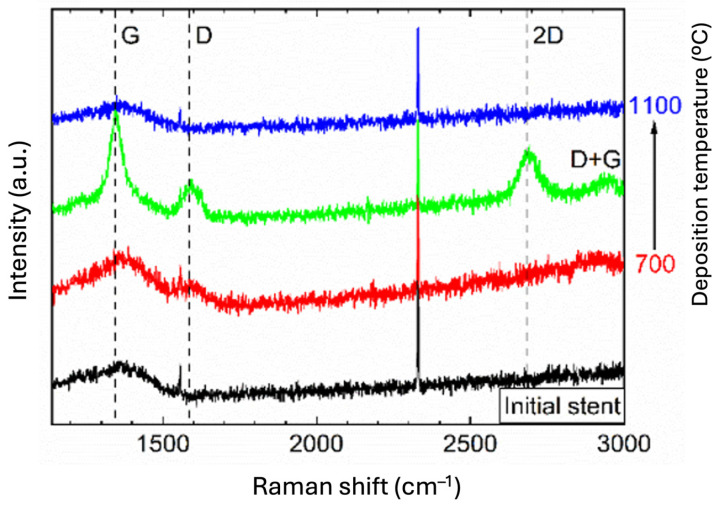
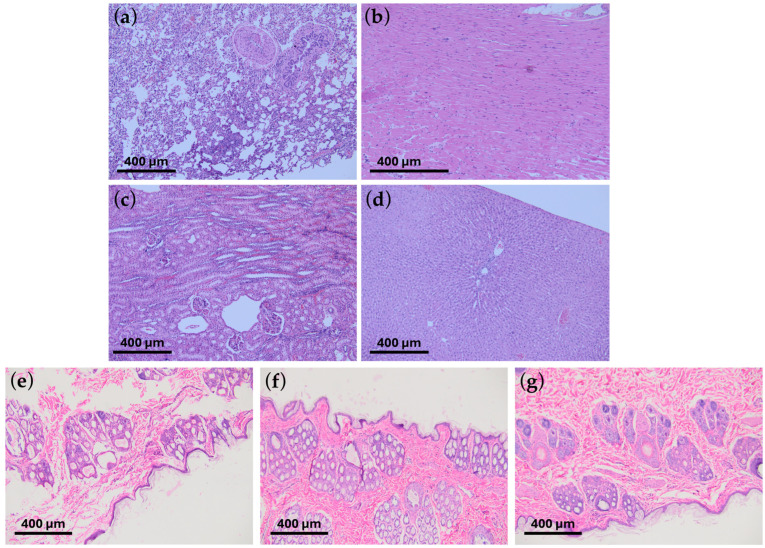
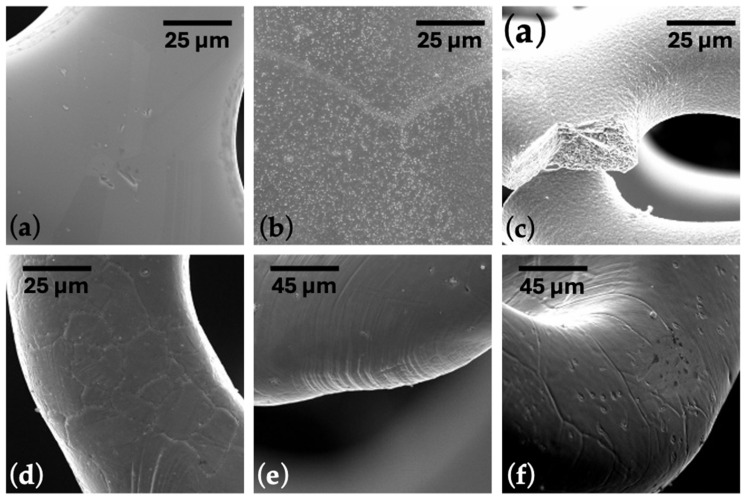
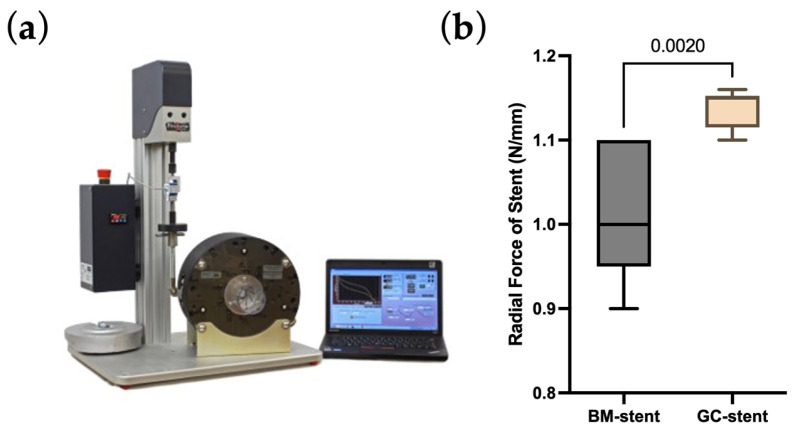
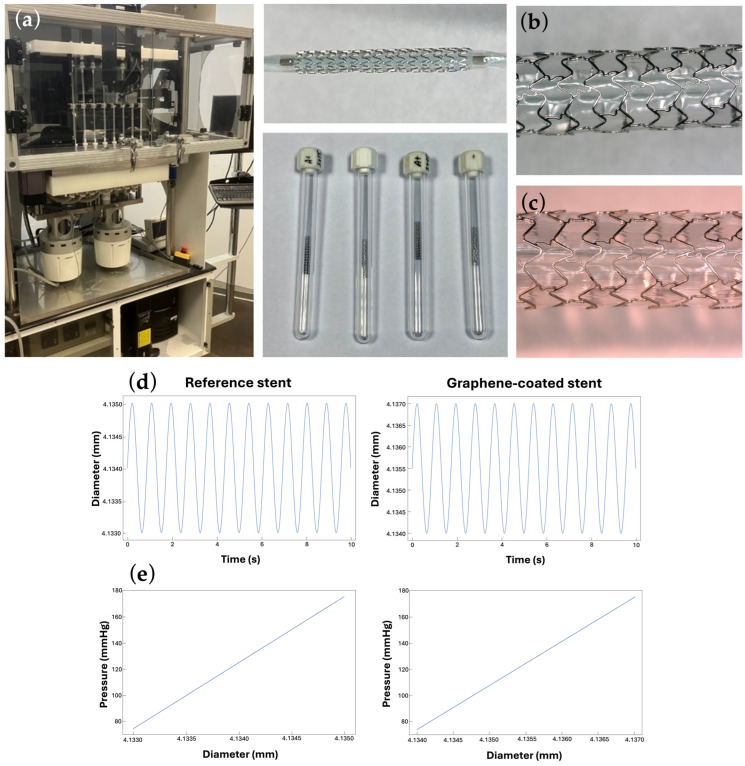
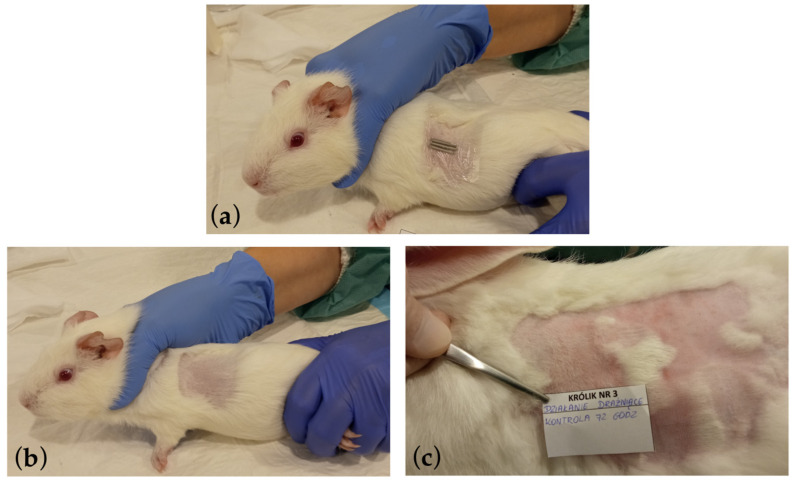
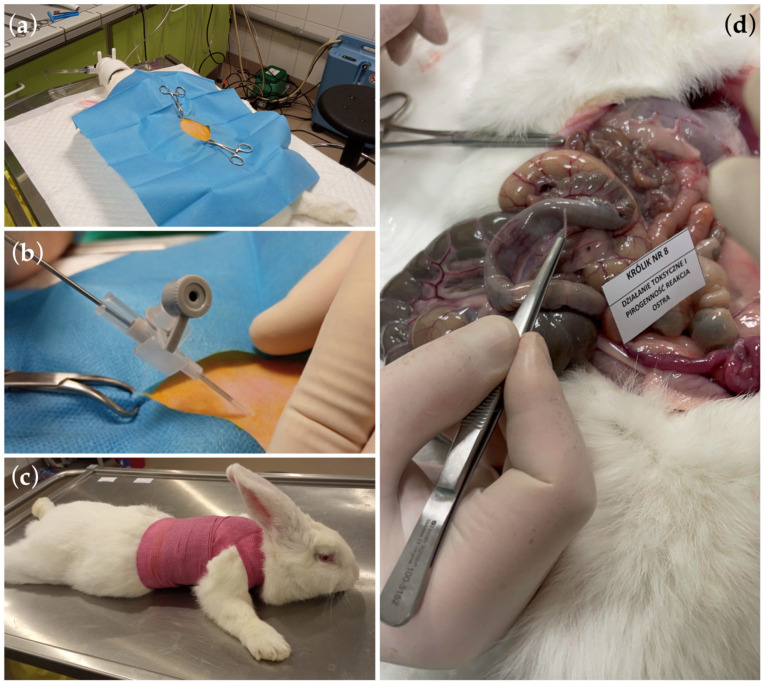
Percutaneous Coronary Intervention (PCI) is a treatment method that involves reopening narrowed arteries with a balloon catheter that delivers a cylindrical, mesh-shaped implant device to the site of the stenosis. Currently, by applying a coating to a bare metal stent (BMS) surface to improve biocompatibility, the main risks after PCI, such as restenosis and thrombosis, are reduced while maintaining the basic requirements for the mechanical behavior of the stent itself. In this work, for the first time, the development and optimization process of the spatial structure of the Co-Cr stent (L-605) with a graphene-based coating using cold-wall chemical vapor deposition (CW-CVD) to ensure uniform coverage of the implant was attempted. The CW-CVD process allows the coating of 3D structures, minimizing thermal stress on the surrounding equipment and allowing the deposition of coatings on temperature-sensitive materials. It produces uniform and high-purity films with control over the thickness and composition. The reduced heating of the chamber walls minimizes unwanted reactions, leading to fewer impurities in the final coating. The graphene layers obtained using Raman spectroscopy at different parameters of the CW-CVD process were verified, their properties were investigated, and the functional mechanical behavior of the studied graphene-covered stent was confirmed. In vitro, graphene-coated stents promoted rapid endothelial cell repopulation, an advantage over gold-standard drug-eluting stents delaying re-endothelialization. Also, full-range biocompatibility studies on potential allergic, irritation, toxicological, and pyrogenic reactions of new material in vivo on small animal models demonstrated excellent biocompatibility of the graphene-coated stents.
经皮冠状动脉介入治疗(PCI)是一种治疗方法,它使用球囊导管重新开通狭窄的动脉,该球囊导管将圆柱形网状植入装置输送到狭窄部位。目前,通过在裸金属支架(BMS)表面涂覆涂层以提高生物相容性,在保持支架本身机械性能基本要求的同时,降低了PCI后的主要风险,如再狭窄和血栓形成。在这项工作中,首次尝试了使用冷壁化学气相沉积(CW-CVD)技术开发和优化具有石墨烯基涂层的钴铬支架(L-605)的空间结构,以确保植入物的均匀覆盖。CW-CVD工艺允许对三维结构进行涂层,将周围设备上的热应力降至最低,并允许在对温度敏感的材料上沉积涂层。它可以生产出均匀且高纯度的薄膜,同时可以控制薄膜的厚度和成分。腔壁加热的减少使不必要的反应降至最低,从而使最终涂层中的杂质更少。通过拉曼光谱对在不同CW-CVD工艺参数下获得的石墨烯层进行了验证,研究了它们的性能,并证实了所研究的石墨烯涂层支架的功能力学行为。在体外,石墨烯涂层支架促进了内皮细胞的快速重新生长,这是优于延迟再内皮化的金标准药物洗脱支架的一个优势。此外,在小动物模型上对新材料在体内潜在的过敏、刺激、毒理学和热原反应进行的全面生物相容性研究表明,石墨烯涂层支架具有优异的生物相容性。