Văduva Mirela, Nila Andreea, Udrescu Adelina, Cramariuc Oana, Baibarac Mihaela
National Institute of Materials Physics, Atomistilor Street, No 405 A, 077125 Magurele, Romania.
IT Center for Science and Technology, 25 No. Av. Radu Beller Str., 011702 Bucharest, Romania.
Materials (Basel). 2024 Dec 14;17(24):6127. doi: 10.3390/ma17246127.
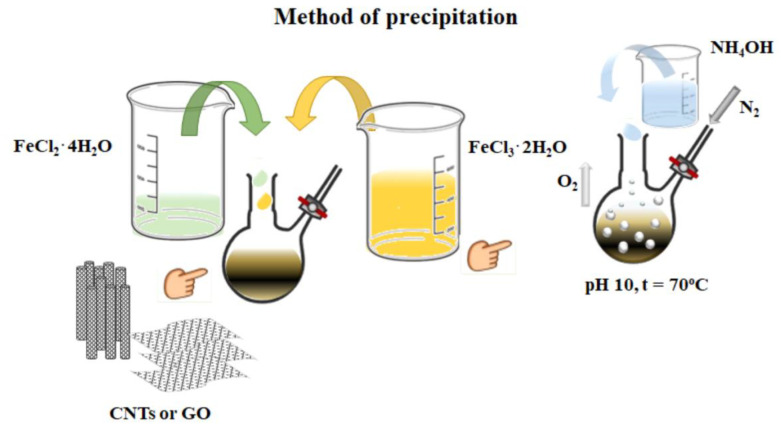
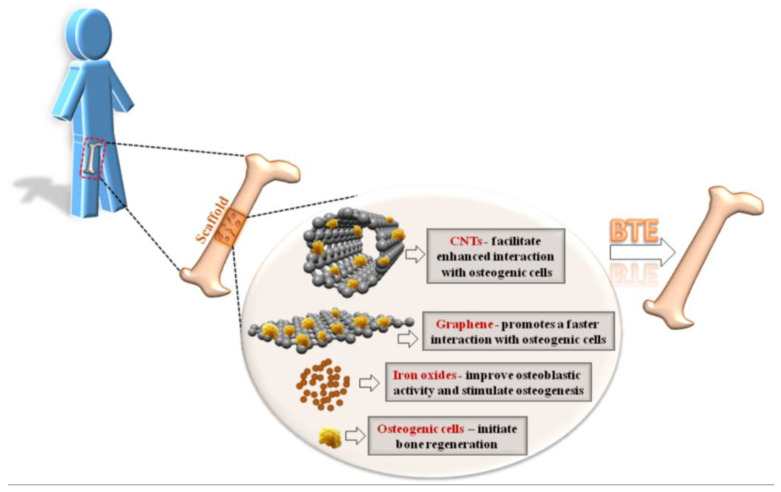
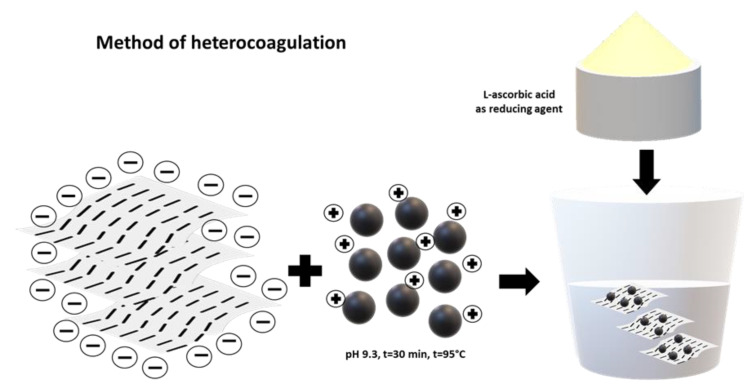
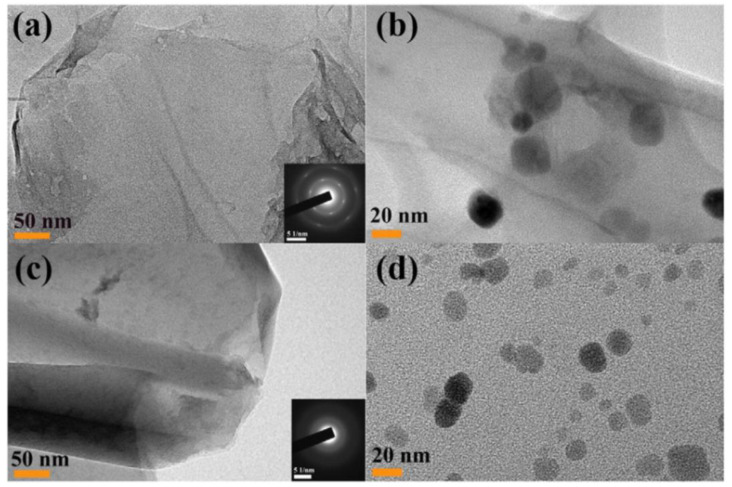
Nanocomposites based on FeO and carbonaceous nanoparticles (CNPs), including carbon nanotubes (CNTs) and graphene derivatives (graphene oxide (GO) and reduced graphene oxide (RGO)), such as FeO@GO, FeO@RGO, and FeO@CNT, have demonstrated considerable potential in a number of health applications, including tissue regeneration and innovative cancer treatments such as hyperthermia (HT). This is due to their ability to transport drugs and generate localized heat under the influence of an alternating magnetic field on FeO. Despite the promising potential of CNTs and graphene derivatives as drug delivery systems, their use in biological applications is hindered by challenges related to dispersion in physiological media and particle agglomeration. Hence, a solid foundation has been established for the integration of various synthesis techniques for these nanocomposites, with the wet co-precipitation method being the most prevalent. Moreover, the dimensions and morphology of the composite nanoparticles are directly correlated with the value of magnetic saturation, thus influencing the efficiency of the composite in drug delivery and other significant biomedical applications. The current demand for this type of material is related to the loading of a larger quantity of drugs within the hybrid structure of the carrier, with the objective of releasing this amount into the tumor cells. A second demand refers to the biocompatibility of the drug carrier and its capacity to permeate cell membranes, as well as the processes occurring within the drug carriers. The main objective of this paper is to review the synthesis methods used to prepare hybrids based on FeO and CNPs, such as GO, RGO, and CNTs, and to examinate their role in the formation of hybrid nanoparticles and the correlation between their morphology, the dimensions, and optical/magnetic properties.
基于FeO和碳质纳米颗粒(CNPs)的纳米复合材料,包括碳纳米管(CNTs)和石墨烯衍生物(氧化石墨烯(GO)和还原氧化石墨烯(RGO)),如FeO@GO、FeO@RGO和FeO@CNT,已在包括组织再生和热疗(HT)等创新癌症治疗在内的许多健康应用中展现出巨大潜力。这是由于它们具有运输药物以及在交变磁场作用下使FeO产生局部热的能力。尽管碳纳米管和石墨烯衍生物作为药物递送系统具有广阔前景,但它们在生物应用中的使用受到生理介质中分散性和颗粒团聚等相关挑战的阻碍。因此,已为这些纳米复合材料的各种合成技术的整合奠定了坚实基础,其中湿共沉淀法最为普遍。此外,复合纳米颗粒的尺寸和形态与磁饱和度值直接相关,从而影响复合材料在药物递送和其他重要生物医学应用中的效率。目前对这类材料的需求涉及在载体的混合结构中负载更大量的药物,目的是将这些药物释放到肿瘤细胞中。第二个需求涉及药物载体的生物相容性及其渗透细胞膜的能力,以及药物载体内发生的过程。本文的主要目的是综述用于制备基于FeO和CNPs(如GO、RGO和CNTs)的杂化物的合成方法,并研究它们在杂化纳米颗粒形成中的作用以及它们的形态、尺寸与光学/磁性性质之间的相关性。