Zhou Junyu, Liu Meiling, Park Sunmin
Institute of Advanced Clinical Medicine, Peking University, Beijing 100191, China.
Department of Chemical Engineering, Shanxi Institute of Science and Technology, Jincheng 048011, China.
Nutrients. 2024 Dec 11;16(24):4273. doi: 10.3390/nu16244273.
Myocardial infarction (MI) can range from mild to severe cardiovascular events and typically develops through complex interactions between genetic and lifestyle factors.
We aimed to understand the genetic predisposition associated with MI through genetic correlation, colocalization analysis, and cells' gene expression values to develop more effective prevention and treatment strategies to reduce its burden.
A polygenic risk score (PRS) was employed to estimate the genetic risk for MI and to analyze the dietary interactions with PRS that affect MI risk in adults over 45 years ( = 58,701). Genetic correlation (rg) between MI and metabolic syndrome-related traits was estimated with linkage disequilibrium score regression. Single-cell RNA sequencing (scRNA-seq) analysis was performed to investigate cellular heterogeneity in MI-associated genes.
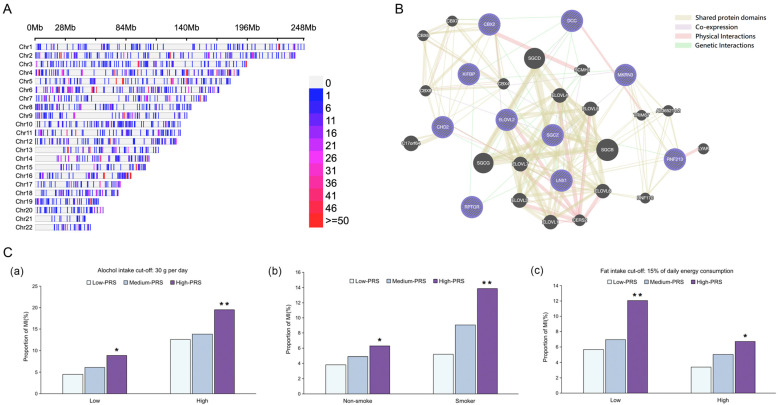
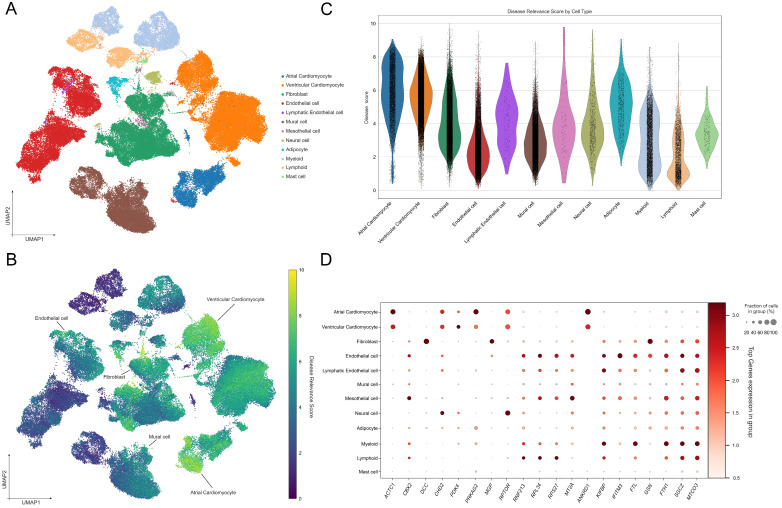
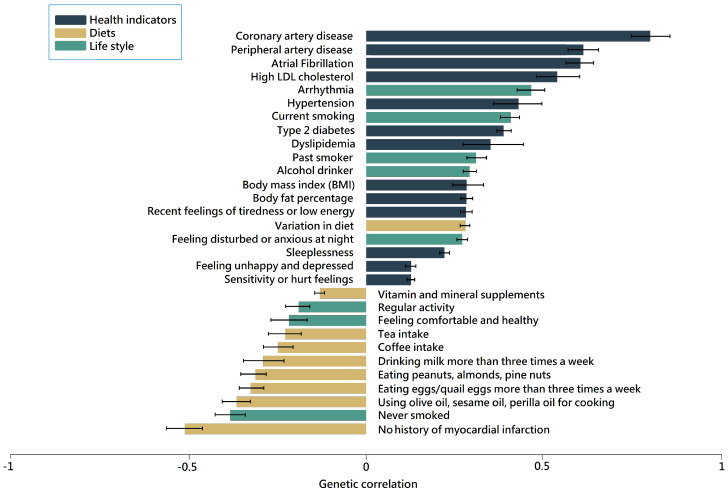
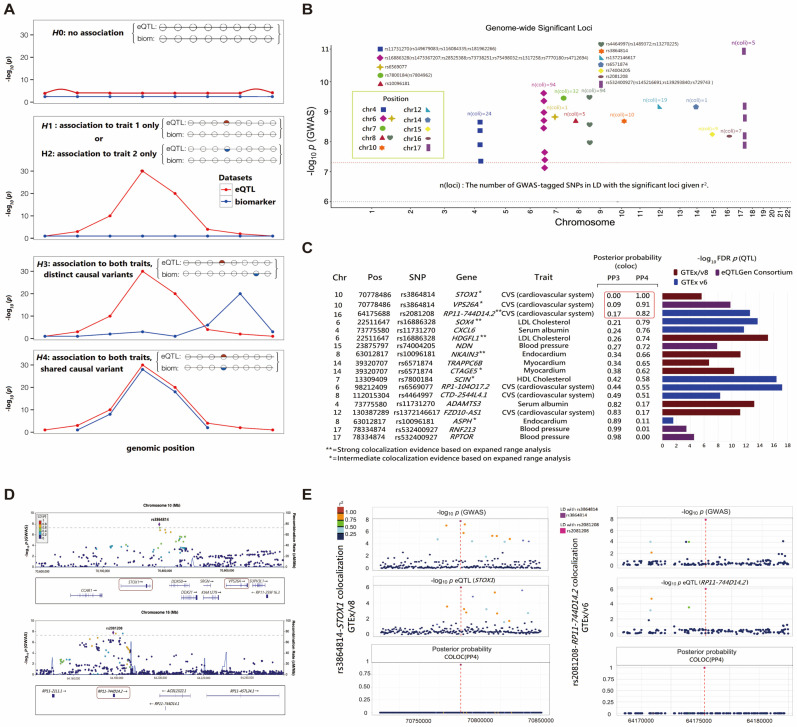
Ten significant genetic variants associated with MI risk were related to cardiac, immune, and brain functions. A high PRS was associated with a threefold increase in MI risk (OR: 3.074, 95% CI: 2.354-4.014, < 0.001). This increased the risk of MI plus obesity, hyperglycemia, dyslipidemia, and hypertension by about twofold after adjusting for MI-related covariates ( < 0.001). The PRS interacted with moderate fat intake (>15 energy percent), alcohol consumption (<30 g/day), and non-smoking, reducing MI risk in participants with a high PRS. MI was negatively correlated with the consumption of olive oil, sesame oil, and perilla oil used for cooking (rg = -0.364). MI risk was associated with storkhead box 1 () and vacuolar protein sorting-associated protein 26A () in atrial and ventricular cardiomyocytes and fibroblasts.
This study identified novel genetic variants and gene expression patterns associated with MI risk, influenced by their interaction with fat and alcohol intake, and smoking status. Our findings provide insights for developing personalized prevention and treatment strategies targeting this complex clinical presentation of MI.
心肌梗死(MI)涵盖从轻度到重度的心血管事件,通常通过遗传因素和生活方式因素之间的复杂相互作用发展而来。
我们旨在通过遗传相关性、共定位分析和细胞基因表达值来了解与心肌梗死相关的遗传易感性,以制定更有效的预防和治疗策略,减轻其负担。
采用多基因风险评分(PRS)来估计心肌梗死的遗传风险,并分析与PRS的饮食相互作用,这些相互作用会影响45岁以上成年人(n = 58701)的心肌梗死风险。通过连锁不平衡评分回归估计心肌梗死与代谢综合征相关性状之间的遗传相关性(rg)。进行单细胞RNA测序(scRNA-seq)分析,以研究心肌梗死相关基因中的细胞异质性。
与心肌梗死风险相关的10个显著遗传变异与心脏、免疫和脑功能有关。高PRS与心肌梗死风险增加两倍相关(比值比:3.074,95%置信区间:2.354 - 4.014,P < 0.001)。在校正与心肌梗死相关的协变量后,这使心肌梗死加肥胖、高血糖、血脂异常和高血压的风险增加了约两倍(P < 0.001)。PRS与中等脂肪摄入量(>15%能量百分比)、饮酒量(<30克/天)和不吸烟相互作用,降低了高PRS参与者的心肌梗死风险。心肌梗死与用于烹饪的橄榄油、芝麻油和紫苏油的消费量呈负相关(rg = -0.364)。心肌梗死风险与心房和心室心肌细胞及成纤维细胞中的叉头框蛋白1(FOXO1)和液泡蛋白分选相关蛋白26A(VPS26A)有关。
本研究确定了与心肌梗死风险相关的新遗传变异和基因表达模式,这些受其与脂肪和酒精摄入量以及吸烟状况的相互作用影响。我们的研究结果为制定针对心肌梗死这种复杂临床表现的个性化预防和治疗策略提供了见解。