Brišar Nuša, Šuster Katja, Cör Andrej
Faculty of Health Sciences, University of Primorska, 6310 Izola, Slovenia.
Faculty of Medicine, University of Ljubljana, 1000 Ljubljana, Slovenia.
Viruses. 2024 Nov 29;16(12):1855. doi: 10.3390/v16121855.
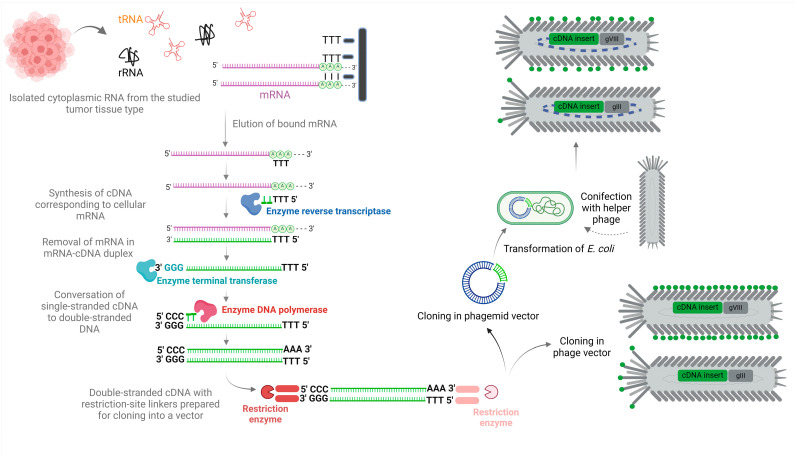
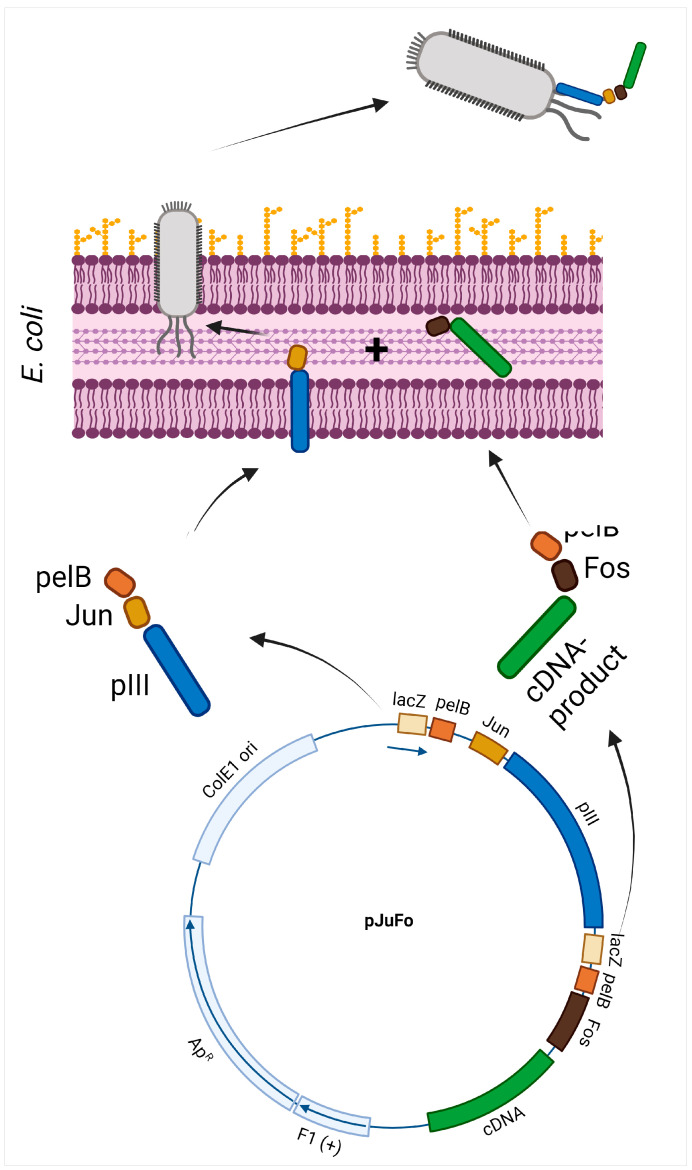
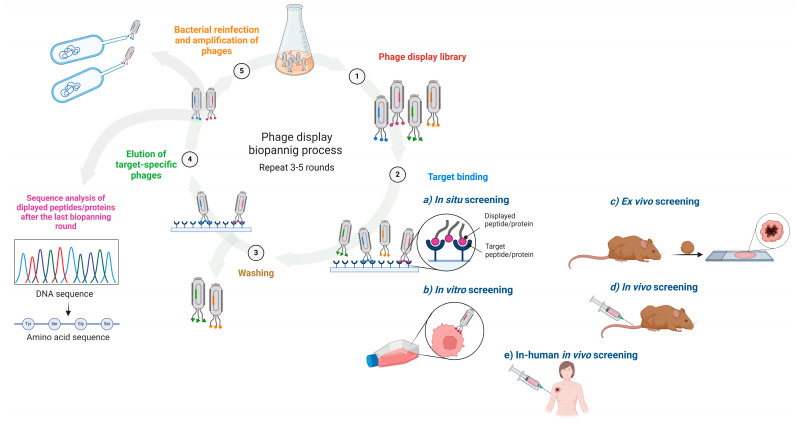
Cancer continues to represent a substantial burden in terms of its morbidity and mortality, underscoring the imperative for the development of novel and efficacious treatment modalities. Recent advances in cancer immunotherapy have highlighted the importance of identifying tumour-specific antigens, which can assist the immune system in targeting malignant cells effectively. Phage display technology has emerged as an effective tool for the discovery of novel antigens through cDNA library screening, representing a significant advancement in the field of immunological research. This review examines the discovery of tumour antigens using phage display technology, emphasising the construction of cDNA libraries, their subsequent display on bacteriophages and the utilisation of diverse biopanning techniques. These elements play a pivotal role in advancing the discovery of novel tumour antigens and the development of targeted cancer therapies. This review addresses the challenges associated with the filamentous phage display of cDNA libraries and proposes strategies to improve the effectiveness of this approach, encouraging further research for clinical applications.
癌症在发病率和死亡率方面仍然是一个巨大的负担,这凸显了开发新型有效治疗方法的紧迫性。癌症免疫疗法的最新进展突出了识别肿瘤特异性抗原的重要性,这些抗原可以帮助免疫系统有效靶向恶性细胞。噬菌体展示技术已成为通过cDNA文库筛选发现新型抗原的有效工具,代表了免疫研究领域的重大进展。本综述探讨了利用噬菌体展示技术发现肿瘤抗原的过程,重点介绍了cDNA文库的构建、它们随后在噬菌体上的展示以及各种生物淘选技术的应用。这些要素在推进新型肿瘤抗原的发现和靶向癌症治疗的开发中起着关键作用。本综述讨论了与cDNA文库丝状噬菌体展示相关的挑战,并提出了提高该方法有效性的策略,并鼓励进一步开展临床应用研究。