O'Brien Megan, Marijam Alen, Mitrani-Gold Fanny S, Terry Laura, Taylor-Stokes Gavin, Joshi Ashish V
Adelphi Real World, Macclesfield, United Kingdom.
GSK, Wavre, Belgium.
PLoS One. 2025 Jan 7;20(1):e0313752. doi: 10.1371/journal.pone.0313752. eCollection 2025.
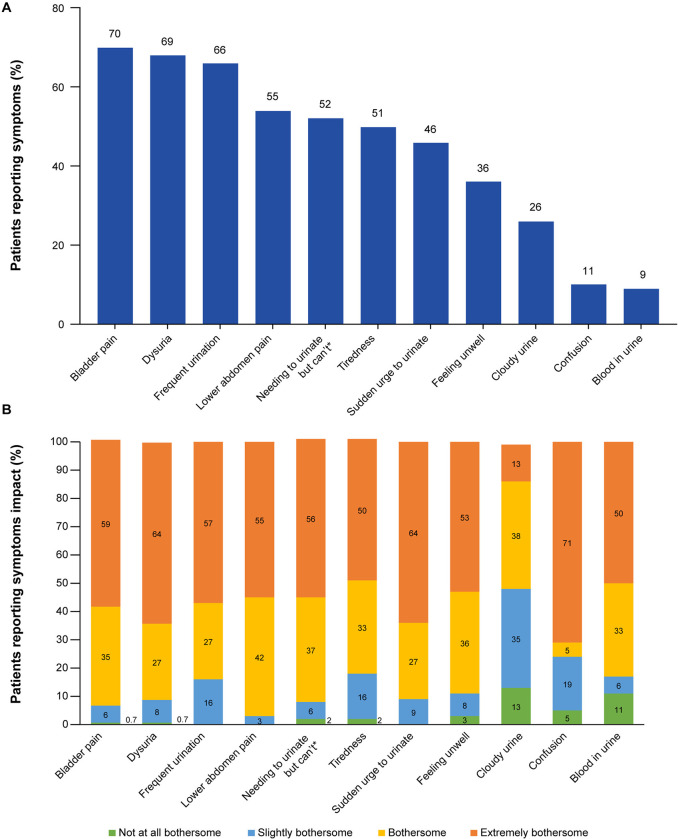
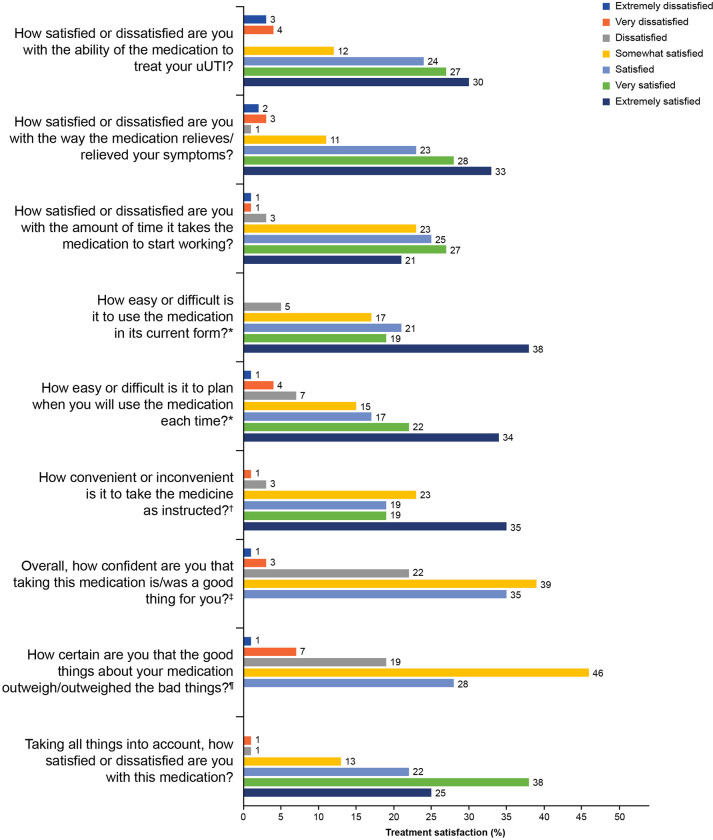
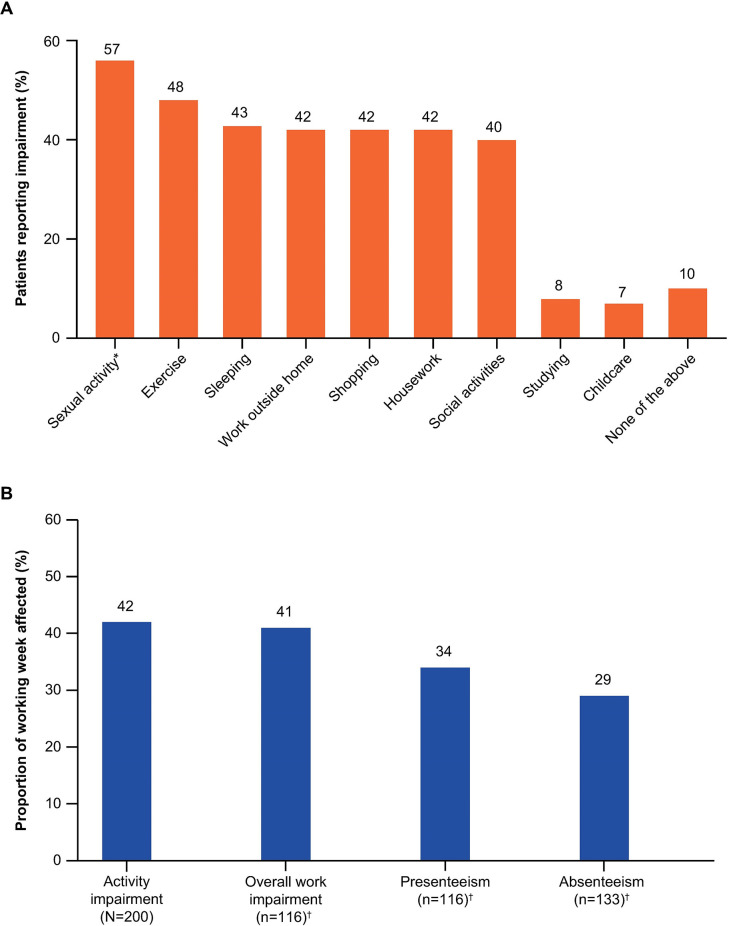
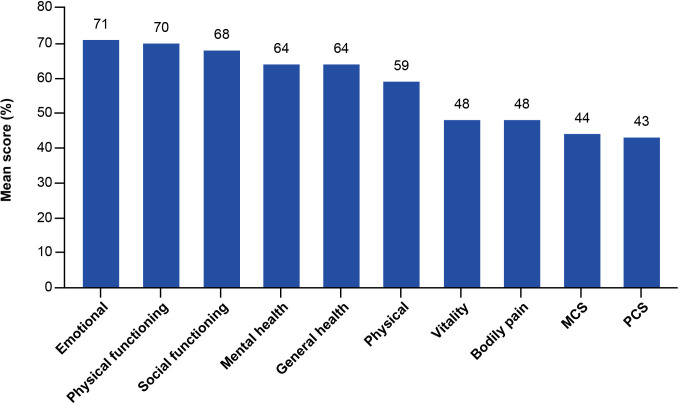
Uncomplicated urinary tract infections (uUTIs) represent a sizable healthcare burden with a substantial negative impact on patients' health-related quality-of-life (HRQoL). However, the HRQoL impact of uUTI from the patient perspective is under-represented in research. A cross-sectional online survey assessed activity impairment and work productivity, HRQoL, costs, and treatment satisfaction of female patients with uUTIs in the US; the current study applies this earlier methodology to Germany to provide a European perspective. We examined: activity impairment and work productivity using Activity Impairment Assessment (AIA), and Work Productivity and Activity Impairment (WPAI) questionnaires, respectively; HRQoL using a modified Short Form-36, and participants completed the treatment satisfaction questionnaire for medication. Participants (≥ 12 years) self-reported a uUTI treated with oral antibiotics in the last 60 days, had no evidence of complicated UTI, and were recruited via a consumer panel. In the patient (N = 200) survey, bladder pain (70%), dysuria (69%), and frequent urination (66%) were the most common uUTI symptoms reported. Activities frequently affected by uUTI were sexual activity (56%) and exercise (48%), resulting in an overall AIA score of 8.2 indicating that activities among patients were impaired 'most of the time' during their recent uUTI. Absenteeism was 29% (of a 40-hour work week); presenteeism, 34%; and overall work impairment, 41%. Indirect costs due to impact of uUTI were €7.62/hour/participant, representing a loss for the employer. The lowest HRQoL scores were for mental (44%) and physical components (43%); emotional and physical functioning scores were 71% and 70%, respectively. Mean direct costs of €20.10 for medical treatments and €11.30 for other treatment costs were reported. Overall, most participants were satisfied with the uUTI treatment (76% satisfaction score). Results demonstrate the patient-reported burden of uUTI for patients and employers, with activities and ability to work impacted, resulting in a notable indirect burden in Europe.
单纯性尿路感染(uUTIs)给医疗保健带来了相当大的负担,对患者的健康相关生活质量(HRQoL)产生了重大负面影响。然而,从患者角度来看,uUTI对HRQoL的影响在研究中未得到充分体现。一项横断面在线调查评估了美国uUTIs女性患者的活动障碍、工作效率、HRQoL、成本和治疗满意度;本研究将这种早期方法应用于德国,以提供欧洲视角。我们分别使用活动障碍评估(AIA)问卷和工作效率与活动障碍(WPAI)问卷来检查活动障碍和工作效率;使用改良的简短健康调查问卷(Short Form-36)来评估HRQoL,参与者还完成了药物治疗满意度问卷。参与者(≥12岁)自我报告在过去60天内接受过口服抗生素治疗的uUTI,无复杂性UTI证据,通过消费者小组招募。在患者(N = 200)调查中,膀胱疼痛(70%)、排尿困难(69%)和尿频(66%)是报告的最常见uUTI症状。经常受到uUTI影响的活动是性活动(56%)和运动(48%),AIA总分为8.2,表明患者在最近的uUTI期间“大部分时间”活动受到损害。旷工率为29%(每周40小时工作时间);出勤障碍率为34%;总体工作障碍率为41%。uUTI影响导致的间接成本为每位参与者每小时7.62欧元,对雇主来说是一种损失。HRQoL得分最低的是心理(44%)和身体方面(43%);情绪和身体功能得分分别为71%和70%。报告的医疗治疗平均直接成本为20.10欧元,其他治疗成本为11.30欧元。总体而言,大多数参与者对uUTI治疗感到满意(满意度得分76%)。结果表明,患者报告了uUTI给患者和雇主带来的负担,活动和工作能力受到影响,在欧洲造成了显著的间接负担。