Kunz Lukas, Jigisha Jigisha, Menardo Fabrizio, Sotiropoulos Alexandros G, Zbinden Helen, Zou Shenghao, Tang Dingzhong, Hückelhoven Ralph, Keller Beat, Müller Marion C
Department of Plant and Microbial Biology, University of Zurich, Zurich, Switzerland.
Centre for Crop Health, University of Southern Queensland, Toowoomba, Queensland, Australia.
PLoS Pathog. 2025 Jan 7;21(1):e1012799. doi: 10.1371/journal.ppat.1012799. eCollection 2025 Jan.
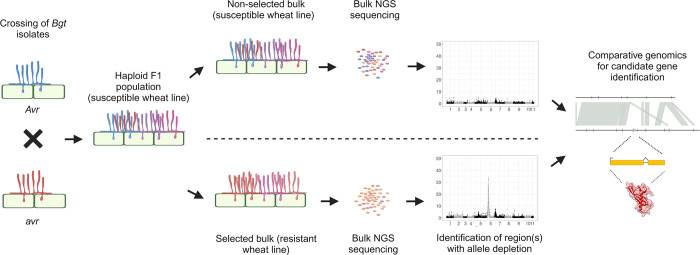
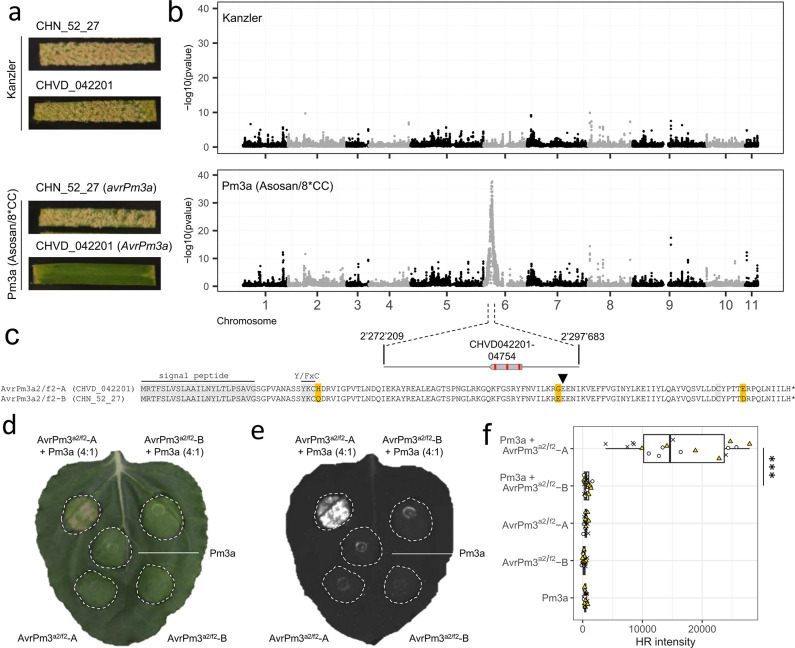
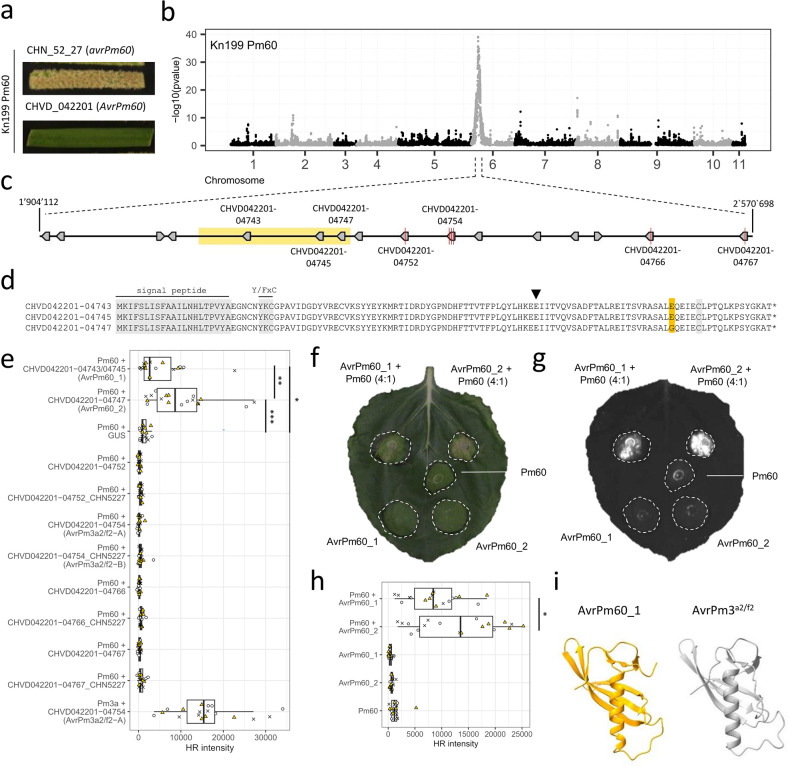
Wheat production is threatened by multiple fungal pathogens, such as the wheat powdery mildew fungus (Blumeria graminis f. sp. tritici, Bgt). Wheat resistance breeding frequently relies on the use of resistance (R) genes that encode diverse immune receptors which detect specific avirulence (AVR) effectors and subsequently induce an immune response. While R gene cloning has accelerated recently, AVR identification in many pathogens including Bgt lags behind, preventing pathogen-informed deployment of resistance sources. Here we describe a new "avirulence depletion (AD) assay" for rapid identification of AVR genes in Bgt. This assay relies on the selection of a segregating, haploid F1 progeny population on a resistant host, followed by bulk sequencing, thereby allowing rapid avirulence candidate gene identification with high mapping resolution. In a proof-of-concept experiment we mapped the AVR component of the wheat immune receptor Pm3a to a 25 kb genomic interval in Bgt harboring a single effector, the previously described AvrPm3a2/f2. Subsequently, we applied the AD assay to map the unknown AVR effector recognized by the Pm60 immune receptor. We show that AvrPm60 is encoded by three tandemly arrayed, nearly identical effector genes that trigger an immune response upon co-expression with Pm60 and its alleles Pm60a and Pm60b. We furthermore provide evidence that Pm60 outperforms Pm60a and Pm60b through more efficient recognition of AvrPm60 effectors, suggesting it should be prioritized for wheat breeding. Finally, we show that virulence towards Pm60 is caused by simultaneous deletion of all AvrPm60 gene paralogs and that isolates lacking AvrPm60 are especially prevalent in the US thereby limiting the potential of Pm60 in this region. The AD assay is a powerful new tool for rapid and inexpensive AVR identification in Bgt with the potential to contribute to pathogen-informed breeding decisions for the use of novel R genes and regionally tailored gene deployment.
小麦生产受到多种真菌病原体的威胁,如小麦白粉病菌(Blumeria graminis f. sp. tritici,Bgt)。小麦抗性育种通常依赖于使用抗性(R)基因,这些基因编码多种免疫受体,可检测特定的无毒(AVR)效应子,随后诱导免疫反应。虽然R基因克隆最近有所加速,但包括Bgt在内的许多病原体中的AVR鉴定却滞后了,这阻碍了基于病原体信息的抗性资源部署。在此,我们描述了一种用于快速鉴定Bgt中AVR基因的新“无毒力消减(AD)分析方法”。该分析方法依赖于在抗性宿主上选择一个分离的单倍体F1后代群体,然后进行混合测序,从而能够以高定位分辨率快速鉴定无毒力候选基因。在一个概念验证实验中,我们将小麦免疫受体Pm3a的AVR组分定位到Bgt中一个25 kb的基因组区间,该区间包含一个效应子,即先前描述的AvrPm3a2/f2。随后,我们应用AD分析方法来定位Pm60免疫受体识别的未知AVR效应子。我们表明,AvrPm60由三个串联排列、几乎相同的效应子基因编码,这些基因在与Pm60及其等位基因Pm60a和Pm60b共表达时会触发免疫反应。我们还提供证据表明,Pm60通过更有效地识别AvrPm60效应子而优于Pm60a和Pm60b,这表明在小麦育种中应优先考虑Pm60。最后,我们表明对Pm60的毒力是由所有AvrPm60基因旁系同源物的同时缺失引起的,并且缺乏AvrPm60的分离株在美国尤为普遍,从而限制了Pm60在该地区的应用潜力。AD分析方法是一种强大的新工具,可用于在Bgt中快速且廉价地鉴定AVR,有可能为基于病原体信息的新型R基因使用和区域定制基因部署的育种决策提供帮助。