Islam Fakir M Amirul
School of Health Sciences, Swinburne University of Technology, Hawthorn, VIC, Australia.
Organisation for Rural Community Development (ORCD), Dariapur, Narail, Bangladesh.
PLoS One. 2025 Jan 7;20(1):e0317113. doi: 10.1371/journal.pone.0317113. eCollection 2025.
The global population of older adults has steadily increased in recent decades. Little is known about the gender difference in the quality of life (QoL) of older adults in the general population. This study aimed to identify factors associated with QoL among older adults by gender.
Data on QoL using the World Health Organization Quality of Life (WHOQoL-BREF) questionnaire and socio-demographic characteristics, including living status and sources of income, were collected from 1147 older adults. The WHOQoL-BREF has four domains: physical, psychological, social and environmental. Rasch analysis was used to compute a combined score from Likert-type data to a continuous scale ranging from 0% satisfaction to 100% satisfaction in terms of QoL for each domain. We used a generalized linear model to compare the mean rate of QoL for different factors, and logistic regression analysis was used to quantify the associations of factors with below-average QoL measured as 50% or less in QoL.
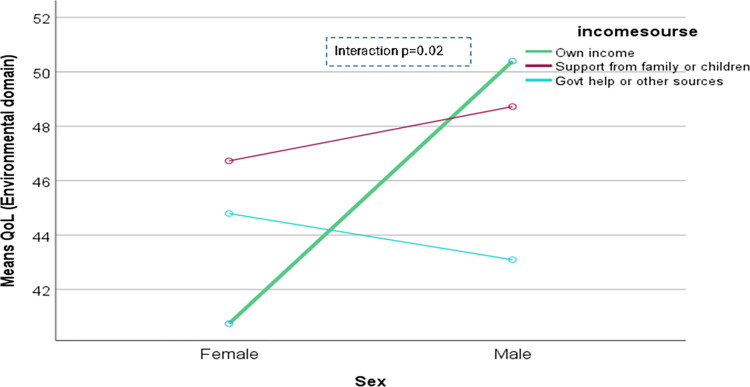
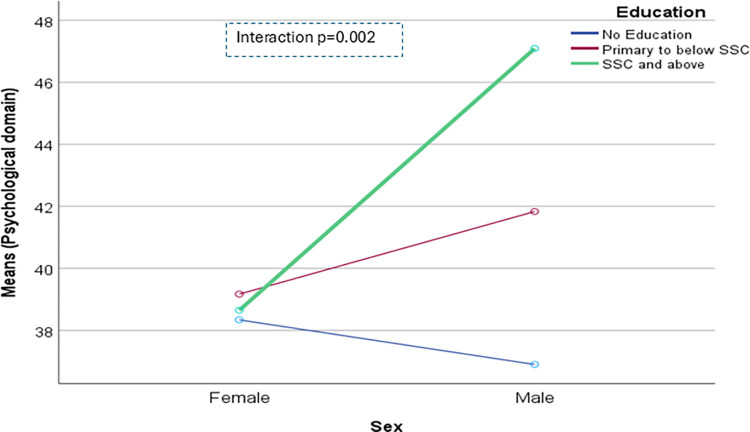
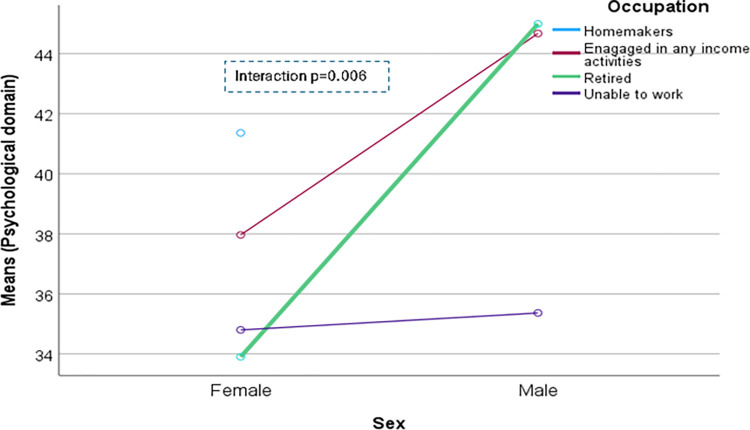
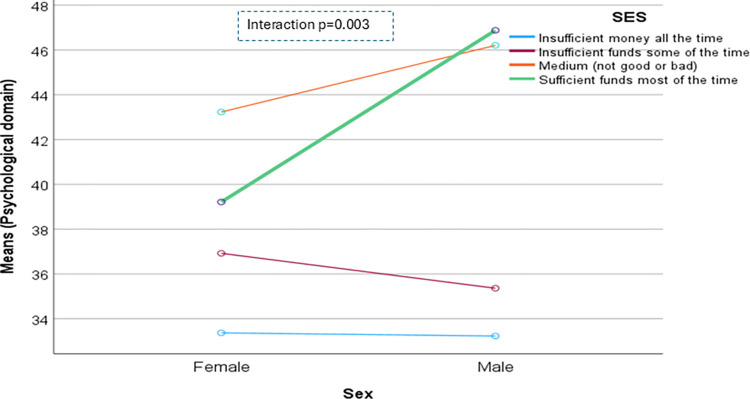
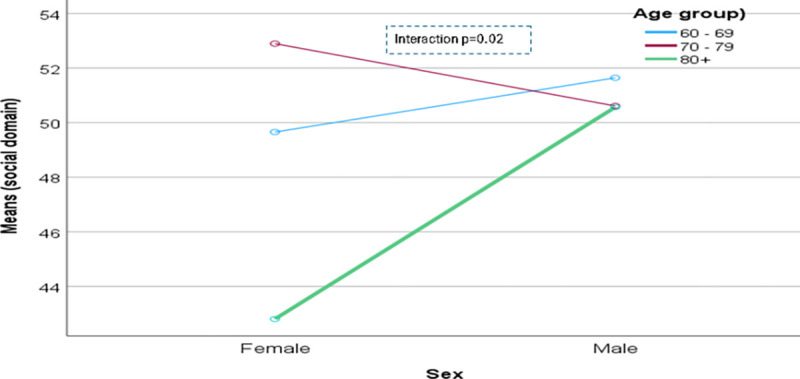
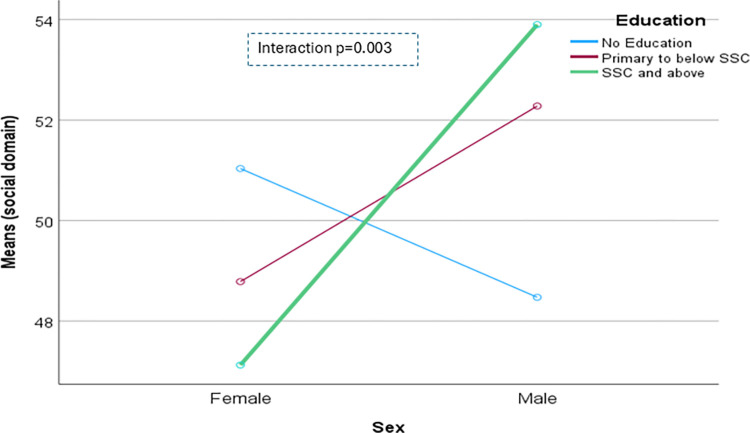
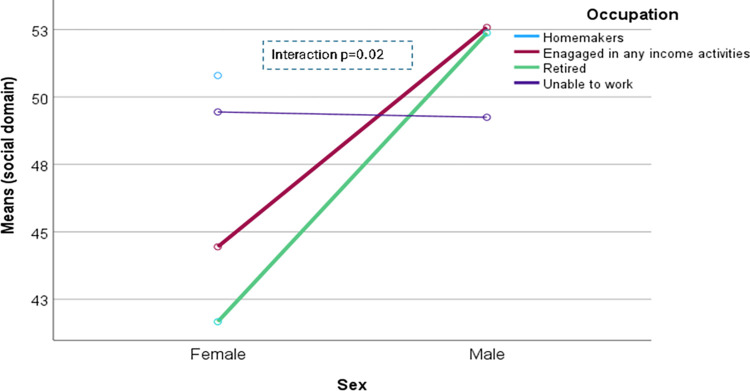
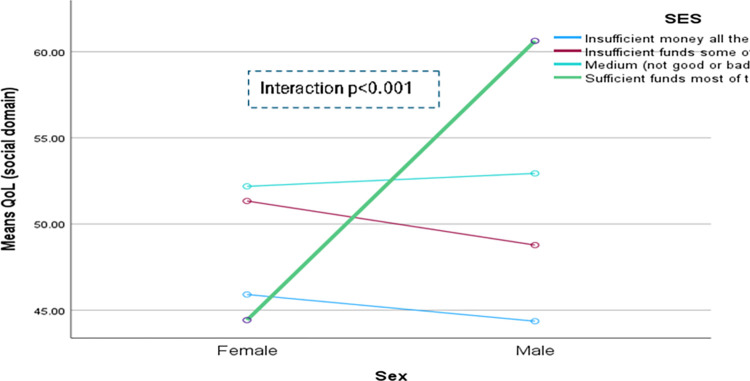
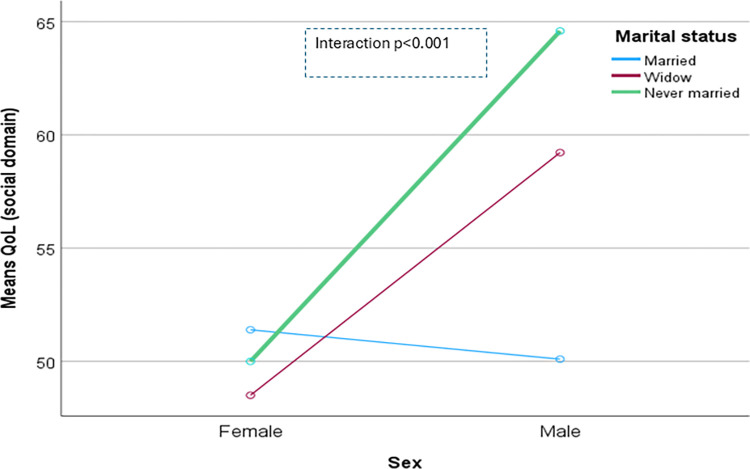
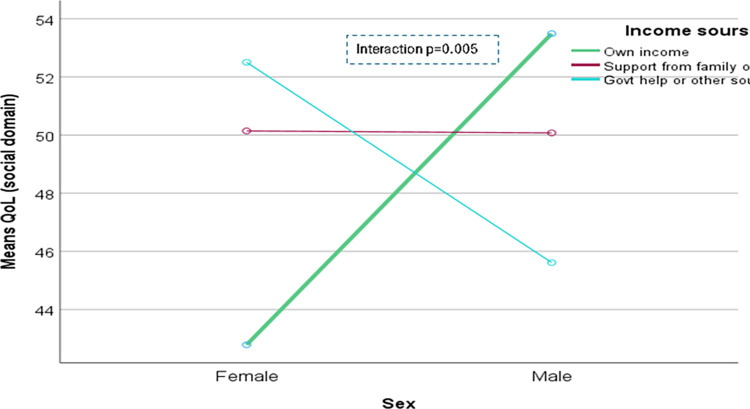
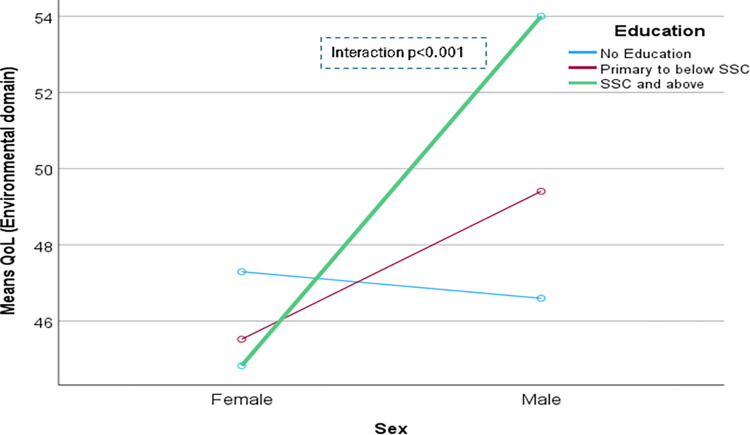
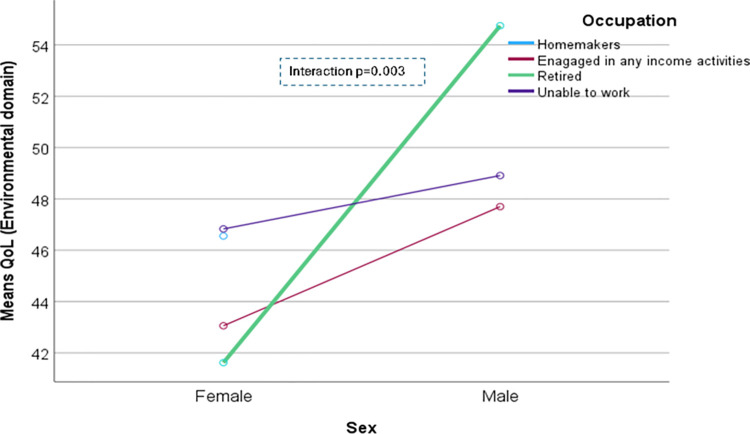
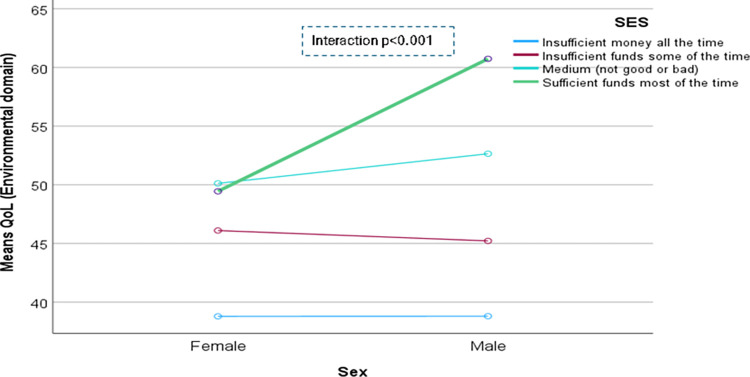
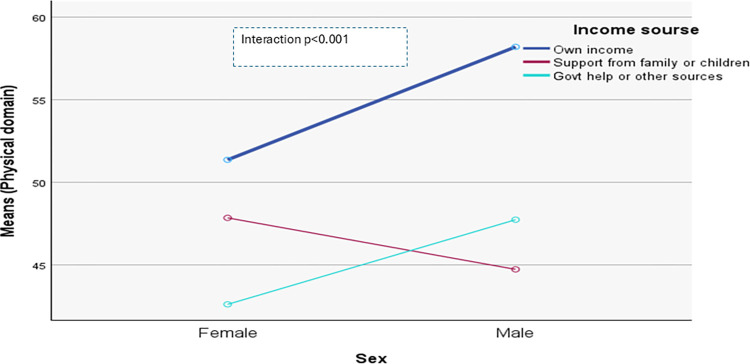
The domain-specific QoL mean (standard error), minimum-maximum values were physical 48.9 (0.41), 7-86, psychological 38.9 (0.51), 4-71, social 50.5 (0.49), 8-92, and environmental domains 47.8 (0.37), 6-91 in the total sample with significant gender difference in all but social domain. The proportion of below average QoL for females vs. males was physical 47.6% vs. 42.6%, psychological 74.4% vs.66.7%; social 34.8% vs. 30.1% and environmental domains 56.1% vs. 49.0%. In females, participants living alone were associated with a higher proportion of below average QoL in physical OR 30.2, 95% CI 2.47, 370, psychological OR 9.54, 95% CI1.09,83.27 and social domains OR 5.94, 95% CI 1.25,28.34. In males, participants' sources of income from relatives were associated with a higher proportion of below average QoL in physical OR 3.6, 95% CI 2.01,6.44, psychological 30.2, 95% CI 2.47, 370, psychological OR 4.63 95% CI 2.56, 8.38, social domains OR 1.81, 95% CI 1.04, 3.16 and environmental domains OR 2.53 95% CI 1.44, 4.43 than those who had own income. Females engaged in income generation activities had better QoL in social and environmental domains than those with house duties, irrespective of their education or socioeconomic status. Males in retired life had the highest QoL in the social and environmental domains if they had better SES.
The study's findings reveal that more than 50% of people had below-average QoL in each domain, which is significant. The study also highlighted that females living alone and males without their own income had the poorest QoL. On a positive note, it was found that females engaged in any income generation activities had better QoL in social and environmental domains. These results provide valuable insights for policymakers and healthcare professionals. They underscore the importance of implementing appropriate intervention programs to enhance the QoL of older adults, reiterating the urgency and necessity of their work to improve the health and well-being of older adults.
近几十年来,全球老年人口稳步增长。对于一般人群中老年人生活质量(QoL)的性别差异知之甚少。本研究旨在按性别确定与老年人生活质量相关的因素。
使用世界卫生组织生活质量(WHOQoL-BREF)问卷收集了1147名老年人的生活质量数据以及社会人口学特征,包括生活状况和收入来源。WHOQoL-BREF有四个领域:身体、心理、社会和环境。采用拉施分析将李克特式数据计算为一个综合分数,以得出每个领域生活质量从0%满意度到100%满意度的连续量表。我们使用广义线性模型比较不同因素的生活质量平均率,并使用逻辑回归分析量化因素与生活质量低于平均水平(以生活质量50%及以下衡量)之间的关联。
在总样本中,特定领域的生活质量均值(标准误差)、最小值 - 最大值分别为:身体领域48.9(0.41),7 - 86;心理领域38.9(0.51),4 - 71;社会领域50.5(0.49),8 - 92;环境领域47.8(0.37),6 - 91,除社会领域外,所有领域均存在显著性别差异。女性与男性生活质量低于平均水平的比例分别为:身体领域47.6%对42.6%,心理领域74.4%对66.7%;社会领域34.8%对30.1%,环境领域56.1%对49.0%。在女性中,独居参与者在身体领域(比值比30.2,95%置信区间2.47,370)、心理领域(比值比9.54,95%置信区间1.09,83.27)和社会领域(比值比5.94,95%置信区间1.25,28.34)生活质量低于平均水平的比例更高。在男性中,来自亲属的收入来源与身体领域(比值比3.6,95%置信区间2.01,6.44)、心理领域(比值比4.63,95%置信区间2.56,8.38)、社会领域(比值比1.81,95%置信区间1.04,3.16)和环境领域(比值比2.53,95%置信区间1.44,4.43)生活质量低于平均水平的比例高于有自己收入的男性。无论教育程度或社会经济地位如何,从事创收活动的女性在社会和环境领域的生活质量均优于承担家务的女性。退休男性如果社会经济地位较好,则在社会和环境领域的生活质量最高。
研究结果表明,超过50%的人在每个领域的生活质量低于平均水平,这一情况值得关注。该研究还强调,独居女性和没有自己收入的男性生活质量最差。积极的一面是,发现从事任何创收活动的女性在社会和环境领域的生活质量更好。这些结果为政策制定者和医疗保健专业人员提供了有价值的见解。它们强调了实施适当干预计划以提高老年人生活质量的重要性,重申了他们为改善老年人健康和福祉而开展工作的紧迫性和必要性。