Bekele Firomsa, Tafese Lalise, Fekadu Ginenus, Dube Geleta Nenko, Dugassa Dinka, Samuel Dagim
Department of Pharmacy, Institute of Health Science, Wallaga University, Nekemte, Ethiopia.
Department of Health Informatics, College of Health Science, Mattu University, Mattu, Ethiopia.
Front Cardiovasc Med. 2024 Dec 24;11:1434265. doi: 10.3389/fcvm.2024.1434265. eCollection 2024.
Heart failure (HF) is a leading cause of morbidity and mortality worldwide. Various factors can exacerbate disease progression in patients with HF and negatively impact treatment outcomes. This study aims to evaluate the pooled prevalence and contributing factors associated with poor heart failure treatment outcomes in Ethiopia.
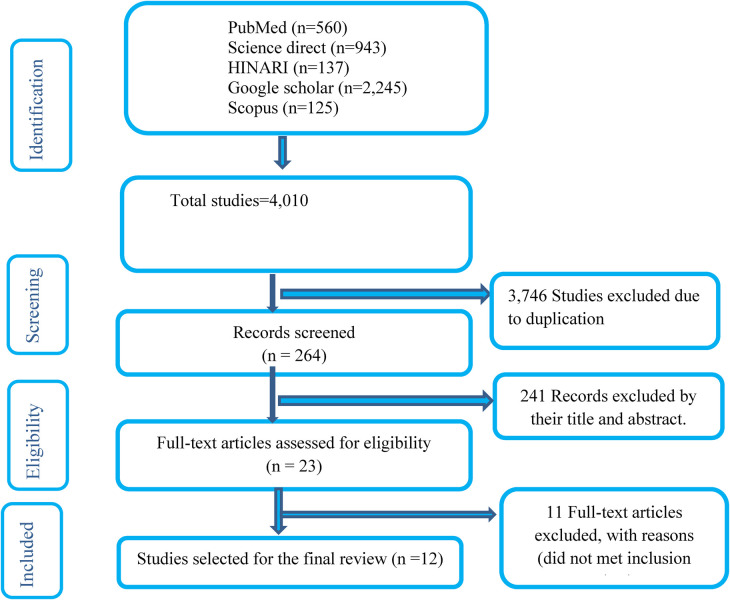
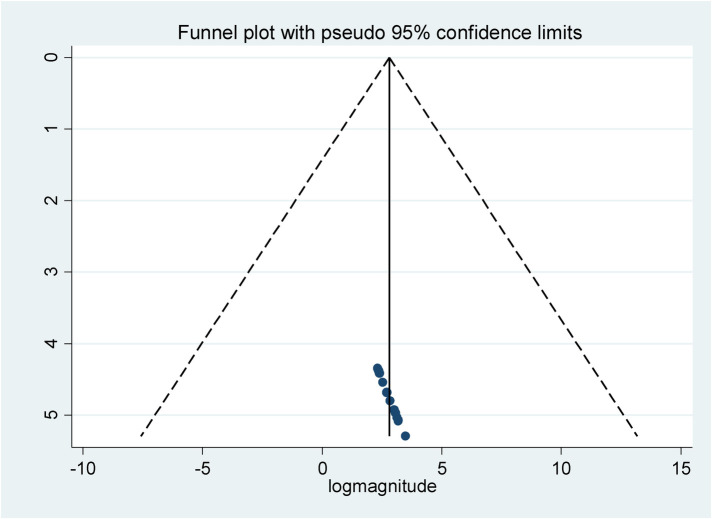
A systematic review and meta-analysis were conducted using five databases: Google Scholar, ScienceDirect, Hinari, PubMed, and Scopus. In total, 12 studies met the eligibility criteria for inclusion in this analysis. The review followed the Preferred Reporting Items for Systematic Reviews and Meta-Analyses 2020 guidelines. Data extraction was performed using a Microsoft Excel spreadsheet, and statistical analysis was conducted with STATA 14. The Joanna Briggs Institute Meta-analysis of Statistics Assessment and Review Instrument was utilized for quality assessment. Heterogeneity among the studies was evaluated using the statistic and the Cochrane test. Publication bias was assessed using Begg's test, Egger's weighted regression, and funnel plots.
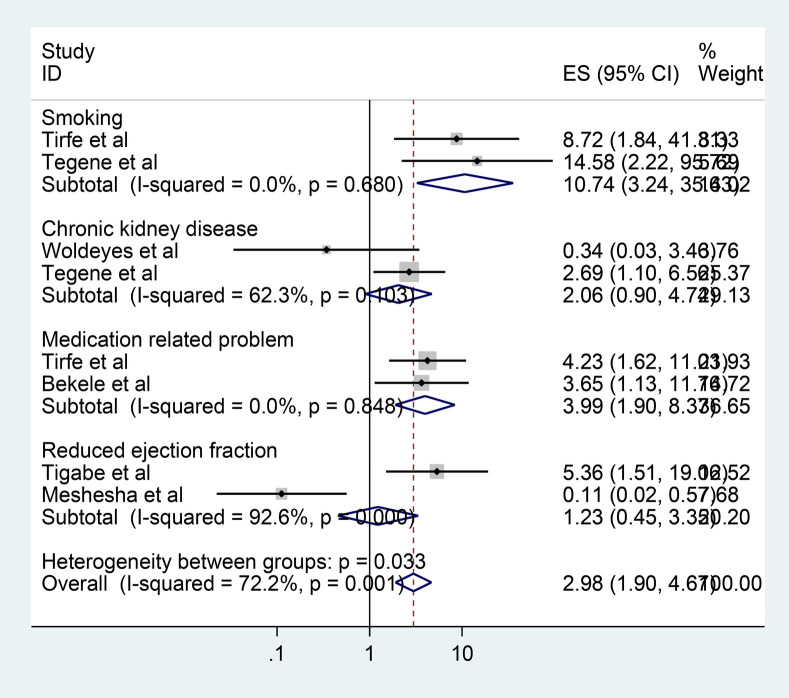
The pooled prevalence of poor HF treatment outcomes was found to be 16.67% [95% confidence interval (CI): 10.67-22.67]. No significant heterogeneity was observed across the included studies ( = 0.0%, = 0.962). Significant predictors of a poor treatment outcome were smoking cigarettes [adjusted odds ratio (AOR) = 10.74; 95% CI: 3.24-35.63] and medication-related problems (AOR = 3.99; 95% CI: 1.90-8.37).
The prevalence of poor HF treatment outcomes in Ethiopia was found to be high. Smoking cigarettes and medication-related problems are significant predictors of these adverse outcomes. Comprehensive health education and improved clinical pharmacy services are essential for addressing these issues.
https://www.crd.york.ac.uk/prospero/display_record.php?ID=CRD42023437397, PROSPERO (CRD42023437397).
心力衰竭(HF)是全球发病和死亡的主要原因。多种因素可加剧HF患者的疾病进展,并对治疗结果产生负面影响。本研究旨在评估埃塞俄比亚心力衰竭治疗效果不佳的合并患病率及相关因素。
使用五个数据库进行系统评价和荟萃分析:谷歌学术、科学Direct、Hinari、PubMed和Scopus。共有12项研究符合纳入本分析的资格标准。该评价遵循《系统评价和荟萃分析的首选报告项目2020》指南。使用Microsoft Excel电子表格进行数据提取,并使用STATA 14进行统计分析。采用乔安娜·布里格斯研究所统计评估和审查工具的荟萃分析进行质量评估。使用 统计量和Cochrane 检验评估研究之间的异质性。使用Begg检验、Egger加权回归和漏斗图评估发表偏倚。
发现HF治疗效果不佳的合并患病率为16.67%[95%置信区间(CI):10.67 - 22.67]。纳入的研究中未观察到显著的异质性( = 0.0%, = 0.962)。治疗效果不佳的显著预测因素是吸烟[调整后的优势比(AOR)= 10.74;95% CI:3.24 - 35.63]和药物相关问题(AOR = 3.99;95% CI:1.90 - 8.37)。
埃塞俄比亚HF治疗效果不佳的患病率较高。吸烟和药物相关问题是这些不良结果的显著预测因素。全面的健康教育和改善临床药学服务对于解决这些问题至关重要。
https://www.crd.york.ac.uk/prospero/display_record.php?ID=CRD42023437397,PROSPERO(CRD42023437397)