Bogaerts Bert, Van Braekel Julien, Van Uffelen Alexander, D'aes Jolien, Godfroid Maxime, Delcourt Thomas, Kelchtermans Michael, Milis Kato, Goeders Nathalie, De Keersmaecker Sigrid C J, Roosens Nancy H C, Winand Raf, Vanneste Kevin
Transversal Activities in Applied Genomics, Sciensano, Brussels, Belgium.
BMC Genomics. 2025 Jan 8;26(1):20. doi: 10.1186/s12864-024-11182-5.
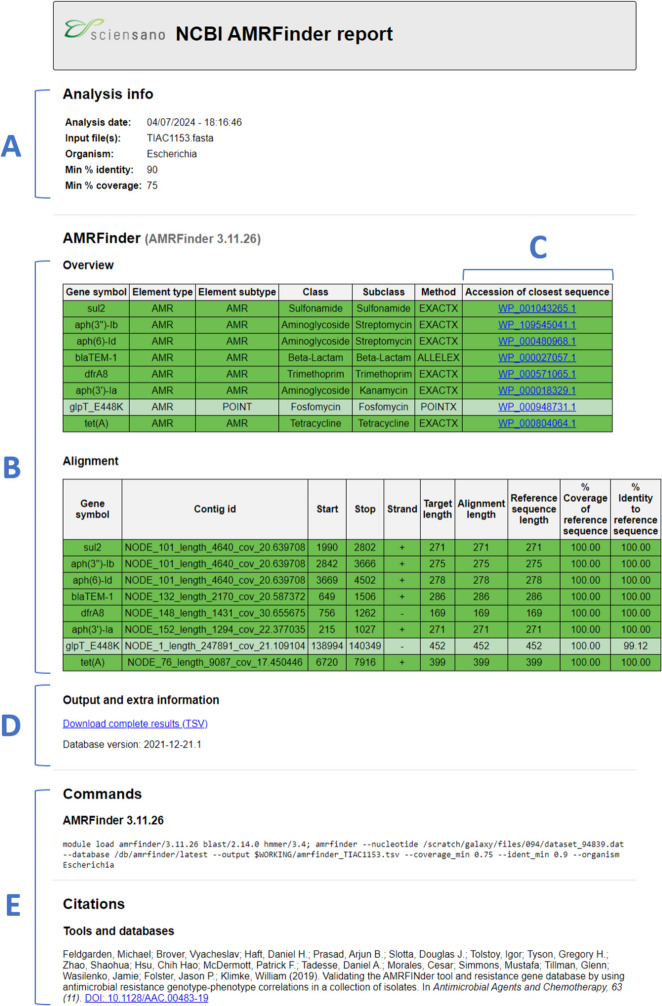
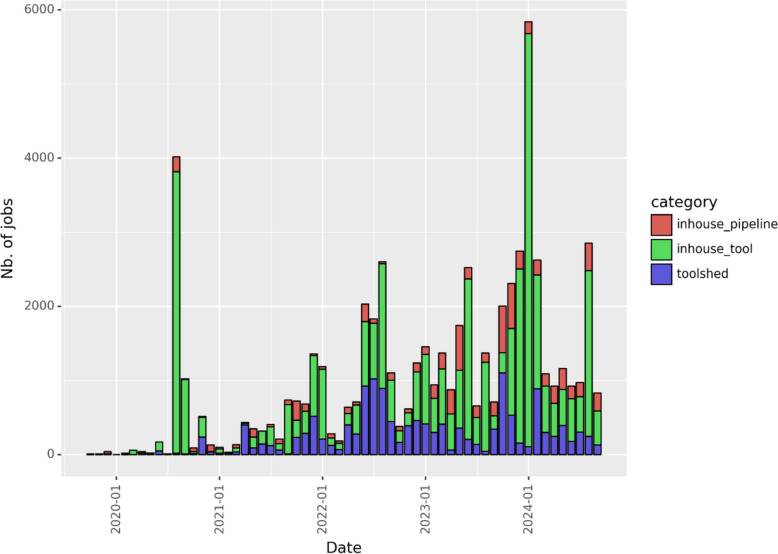
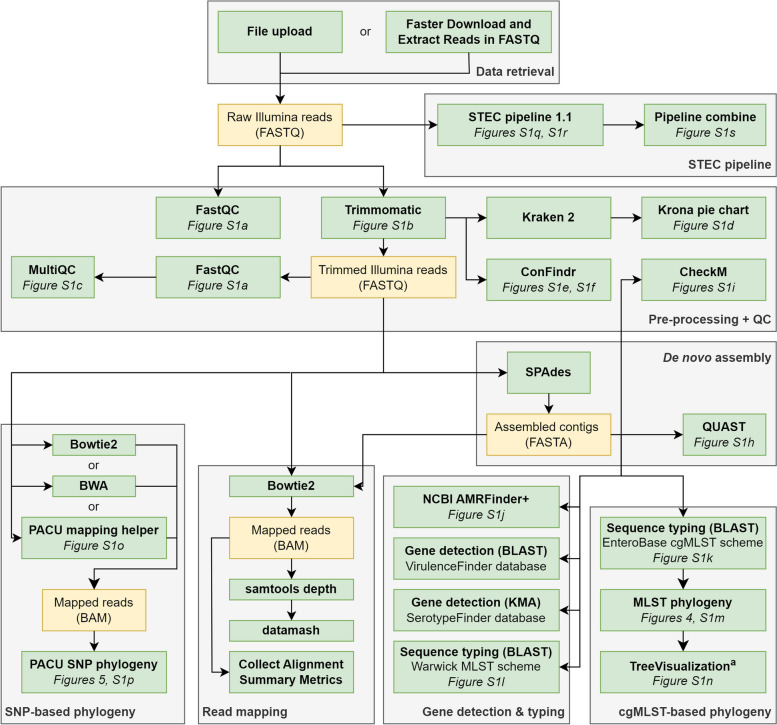
The influx of whole genome sequencing (WGS) data in the public health and clinical diagnostic sectors has created a need for data analysis methods and bioinformatics expertise, which can be a bottleneck for many laboratories. At Sciensano, the Belgian national public health institute, an intuitive and user-friendly bioinformatics tool portal was implemented using Galaxy, an open-source platform for data analysis and workflow creation. The Galaxy @Sciensano instance is available to both internal and external scientists and offers a wide range of tools provided by the community, complemented by over 50 custom tools and pipelines developed in-house. The tool selection is currently focused primarily on the analysis of WGS data generated using Illumina sequencing for microbial pathogen typing, characterization and outbreak detection, but it also addresses specific use cases for other data types. Our Galaxy instance includes several custom-developed 'push-button' pipelines, which are user-friendly and intuitive stand-alone tools that perform complete characterization of bacterial isolates based on WGS data and generate interactive HTML output reports with key findings. These pipelines include quality control, de novo assembly, sequence typing, antimicrobial resistance prediction and several relevant species-specific assays. They are tailored for pathogens with active genomic surveillance programs, and clinical relevance, such as Escherichia coli, Listeria monocytogenes, Salmonella spp. and Mycobacterium tuberculosis. These tools and pipelines utilize internationally recognized databases such as PubMLST, EnteroBase, and the NCBI National Database of Antibiotic Resistant Organisms, which are automatically synchronized on a regular basis to ensure up-to-date results. Many of these pipelines are part of the routine activities of Belgian national reference centers and laboratories, some of which use them under ISO accreditation. This resource is publicly available for noncommercial use at https://galaxy.sciensano.be/ and can help other laboratories establish reliable, traceable and reproducible bioinformatics analyses for pathogens encountered in public health settings.
公共卫生和临床诊断领域全基因组测序(WGS)数据的大量涌入,使得对数据分析方法和生物信息学专业知识的需求大增,而这可能成为许多实验室的瓶颈。在比利时国家公共卫生研究所Sciensano,利用数据分析和工作流程创建的开源平台Galaxy,实施了一个直观且用户友好的生物信息学工具门户。Sciensano的Galaxy实例可供内部和外部科学家使用,并提供了社区提供的广泛工具,还辅以内部开发的50多个定制工具和管道。目前工具选择主要集中于对使用Illumina测序生成的WGS数据进行分析,以用于微生物病原体分型、特征描述和疫情检测,但它也涉及其他数据类型的特定用例。我们的Galaxy实例包括几个定制开发的“一键式”管道,这些都是用户友好且直观的独立工具,可根据WGS数据对细菌分离株进行完整的特征描述,并生成带有关键发现的交互式HTML输出报告。这些管道包括质量控制、从头组装、序列分型、抗菌药物耐药性预测以及一些相关的物种特异性检测。它们是为具有活跃基因组监测计划且具有临床相关性的病原体量身定制的,如大肠杆菌、单核细胞增生李斯特菌、沙门氏菌属和结核分枝杆菌。这些工具和管道利用了国际认可的数据库,如PubMLST、EnteroBase和美国国立医学图书馆(NCBI)的抗生素耐药生物国家数据库,这些数据库会定期自动同步以确保结果的最新性。这些管道中的许多都是比利时国家参考中心和实验室日常活动的一部分,其中一些在ISO认证下使用它们。该资源可在https://galaxy.sciensano.be/上供非商业使用,可帮助其他实验室为公共卫生环境中遇到的病原体建立可靠、可追溯和可重复的生物信息学分析。