Golder Su, Xu Dongfang, O'Connor Karen, Wang Yunwen, Batra Mahak, Hernandez Graciela Gonzalez
Department of Health Sciences, University of York, York, YO10 5DD, UK.
Department of Computational Biomedicine, Cedars-Sinai Medical Center, Los Angeles, CA, USA.
Drug Saf. 2025 Apr;48(4):321-337. doi: 10.1007/s40264-024-01505-6. Epub 2025 Jan 9.
Natural language processing (NLP) and machine learning (ML) techniques may help harness unstructured free-text electronic health record (EHR) data to detect adverse drug events (ADEs) and thus improve pharmacovigilance. However, evidence of their real-world effectiveness remains unclear.
To summarise the evidence on the effectiveness of NLP/ML in detecting ADEs from unstructured EHR data and ultimately improve pharmacovigilance in comparison to other data sources.
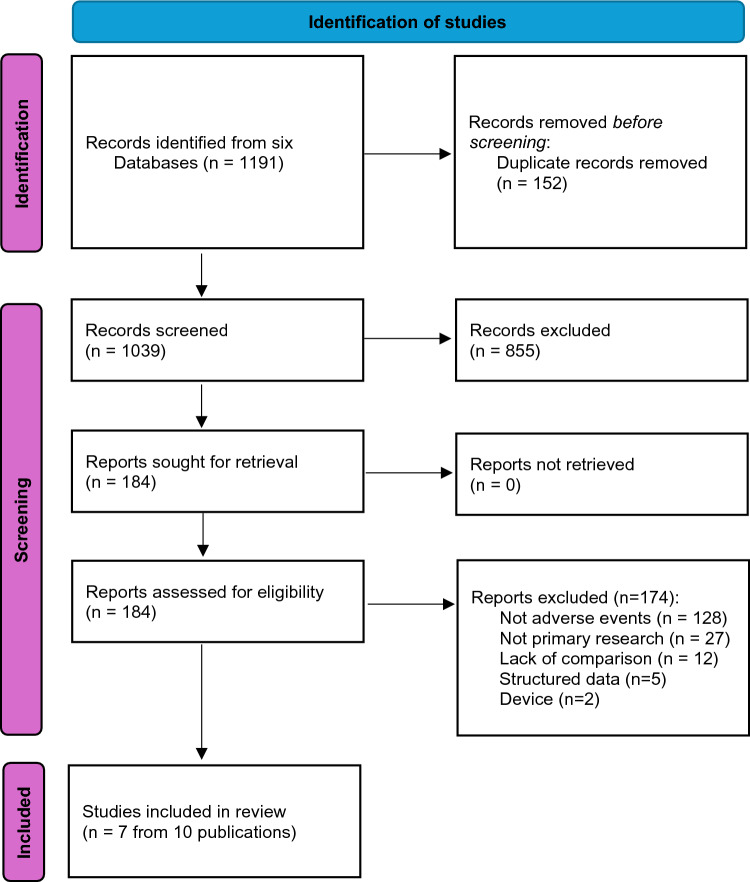
A scoping review was conducted by searching six databases in July 2023. Studies leveraging NLP/ML to identify ADEs from EHR were included. Titles/abstracts were screened by two independent researchers as were full-text articles. Data extraction was conducted by one researcher and checked by another. A narrative synthesis summarises the research techniques, ADEs analysed, model performance and pharmacovigilance impacts.
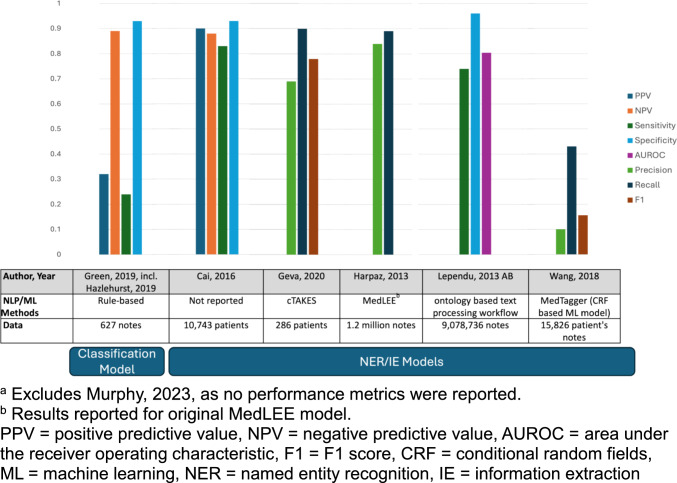
Seven studies met the inclusion criteria covering a wide range of ADEs and medications. The utilisation of rule-based NLP, statistical models, and deep learning approaches was observed. Natural language processing/ML techniques with unstructured data improved the detection of under-reported adverse events and safety signals. However, substantial variability was noted in the techniques and evaluation methods employed across the different studies and limitations exist in integrating the findings into practice.
Natural language processing (NLP) and machine learning (ML) have promising possibilities in extracting valuable insights with regard to pharmacovigilance from unstructured EHR data. These approaches have demonstrated proficiency in identifying specific adverse events and uncovering previously unknown safety signals that would not have been apparent through structured data alone. Nevertheless, challenges such as the absence of standardised methodologies and validation criteria obstruct the widespread adoption of NLP/ML for pharmacovigilance leveraging of unstructured EHR data.
自然语言处理(NLP)和机器学习(ML)技术可能有助于利用非结构化自由文本电子健康记录(EHR)数据来检测药物不良事件(ADE),从而改善药物警戒。然而,其在现实世界中的有效性证据仍不明确。
总结NLP/ML在从非结构化EHR数据中检测ADE的有效性方面的证据,并最终与其他数据来源相比改善药物警戒。
2023年7月通过检索六个数据库进行了一项范围综述。纳入了利用NLP/ML从EHR中识别ADE的研究。标题/摘要由两名独立研究人员筛选,全文文章也同样如此。数据提取由一名研究人员进行,并由另一名研究人员检查。叙述性综合总结了研究技术、分析的ADE、模型性能和药物警戒影响。
七项研究符合纳入标准,涵盖了广泛的ADE和药物。观察到了基于规则的NLP、统计模型和深度学习方法的应用。使用非结构化数据的自然语言处理/ML技术改善了对报告不足的不良事件和安全信号的检测。然而,不同研究中采用的技术和评估方法存在很大差异,并且在将研究结果整合到实践中存在局限性。
自然语言处理(NLP)和机器学习(ML)在从非结构化EHR数据中提取有关药物警戒的有价值见解方面具有广阔前景。这些方法已证明能够熟练识别特定不良事件并发现仅通过结构化数据无法明显看出的先前未知的安全信号。然而,诸如缺乏标准化方法和验证标准等挑战阻碍了NLP/ML在利用非结构化EHR数据进行药物警戒方面的广泛应用。