Hasan Mahade, Yasmin Farhana, Hassan Md Mehedi, Yu Xue, Yeasmin Soniya, Joshi Herat, Islam Sheikh Mohammed Shariful
School of Software, Nanjing University of Information Science and Technology, Nanjing, China.
Department of Computer Science and Technology, Nanjing University of Information Science and Technology, Nanjing, China.
PLoS One. 2025 Jan 9;20(1):e0312914. doi: 10.1371/journal.pone.0312914. eCollection 2025.
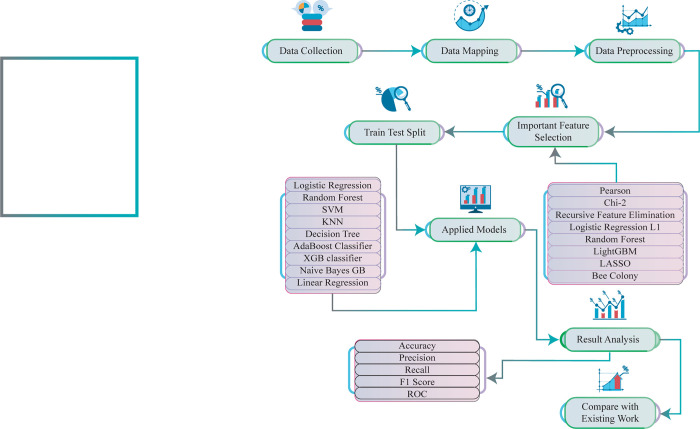
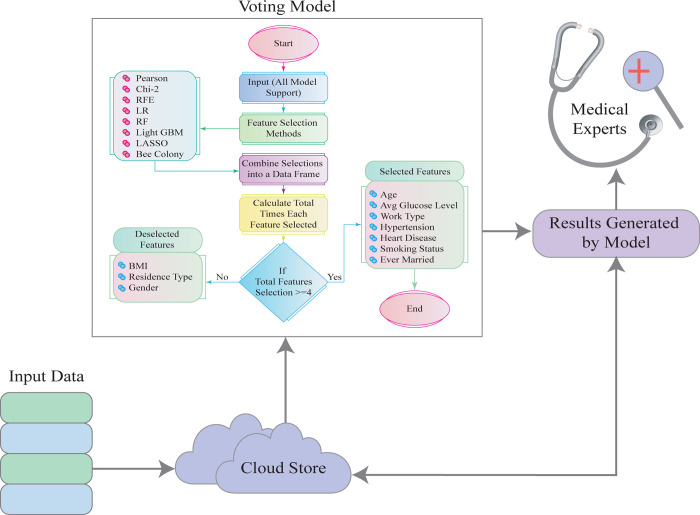
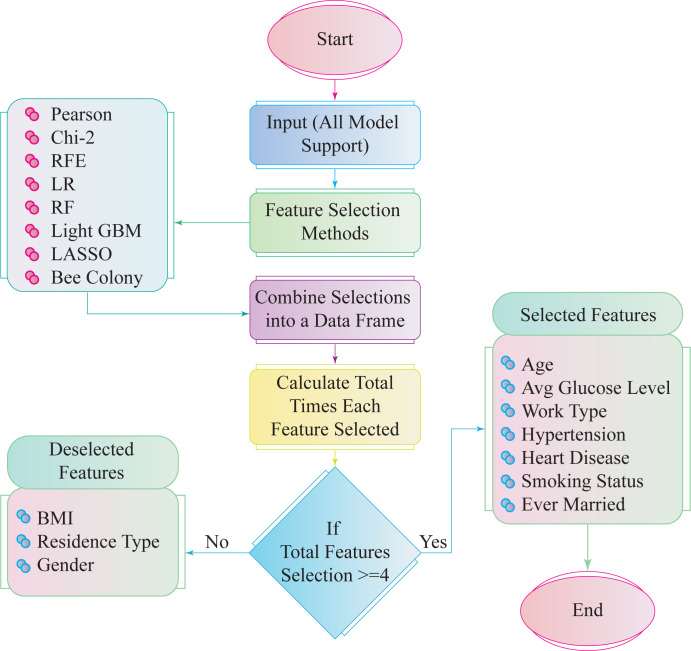
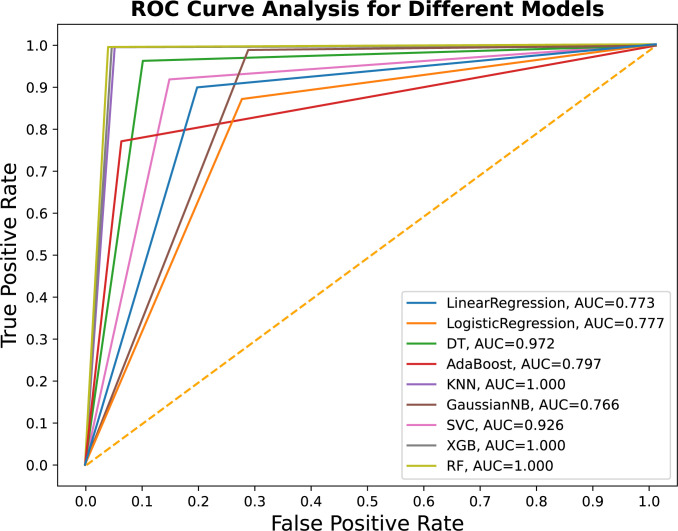
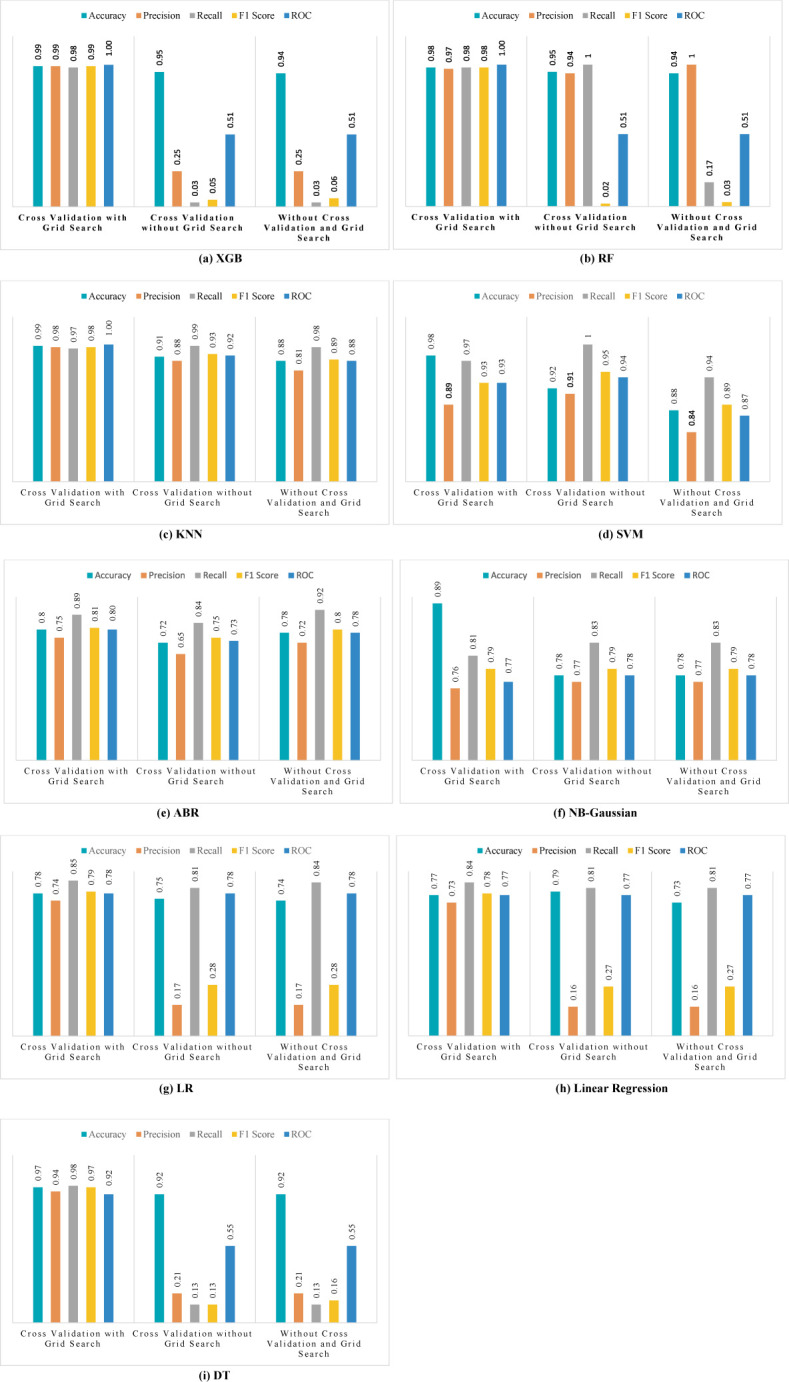
Heart disease remains a leading cause of mortality and morbidity worldwide, necessitating the development of accurate and reliable predictive models to facilitate early detection and intervention. While state of the art work has focused on various machine learning approaches for predicting heart disease, but they could not able to achieve remarkable accuracy. In response to this need, we applied nine machine learning algorithms XGBoost, logistic regression, decision tree, random forest, k-nearest neighbors (KNN), support vector machine (SVM), gaussian naïve bayes (NB gaussian), adaptive boosting, and linear regression to predict heart disease based on a range of physiological indicators. Our approach involved feature selection techniques to identify the most relevant predictors, aimed at refining the models to enhance both performance and interpretability. The models were trained, incorporating processes such as grid search hyperparameter tuning, and cross-validation to minimize overfitting. Additionally, we have developed a novel voting system with feature selection techniques to advance heart disease classification. Furthermore, we have evaluated the models using key performance metrics including accuracy, precision, recall, F1-score, and the area under the receiver operating characteristic curve (ROC AUC). Among the models, XGBoost demonstrated exceptional performance, achieving 99% accuracy, precision, F1-Score, 98% recall, and 100% ROC AUC. This study offers a promising approach to early heart disease diagnosis and preventive healthcare.
心脏病仍然是全球死亡率和发病率的主要原因,因此需要开发准确可靠的预测模型,以促进早期发现和干预。虽然目前的先进工作专注于各种用于预测心脏病的机器学习方法,但它们无法达到显著的准确性。为了满足这一需求,我们应用了九种机器学习算法——XGBoost、逻辑回归、决策树、随机森林、k近邻(KNN)、支持向量机(SVM)、高斯朴素贝叶斯(NB高斯)、自适应提升和线性回归,基于一系列生理指标来预测心脏病。我们的方法涉及特征选择技术,以识别最相关的预测因子,旨在优化模型,提高性能和可解释性。对模型进行了训练,包括网格搜索超参数调整和交叉验证等过程,以尽量减少过拟合。此外,我们开发了一种带有特征选择技术的新型投票系统,以推进心脏病分类。此外,我们使用关键性能指标对模型进行了评估,包括准确率、精确率、召回率、F1分数以及受试者工作特征曲线下面积(ROC AUC)。在这些模型中,XGBoost表现出卓越的性能,准确率达到99%、精确率、F1分数为99%、召回率为98%,ROC AUC为100%。这项研究为早期心脏病诊断和预防性医疗保健提供了一种有前景的方法。