Department of Electrical and Electronics Engineering, GMR Institute of Technology, Rajam, Andhra Pradesh, India.
Department of Computer Science and Engineering, School of Engineering and Technology, CHRIST (Deemed to be University), Bangalore, Karnataka, India.
Comput Math Methods Med. 2022 May 2;2022:6517716. doi: 10.1155/2022/6517716. eCollection 2022.
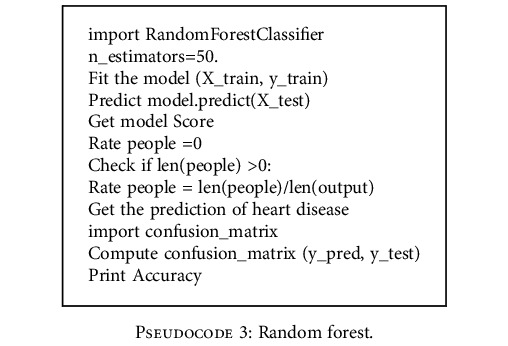
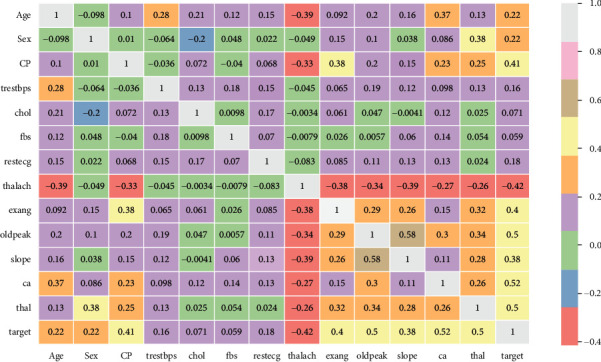
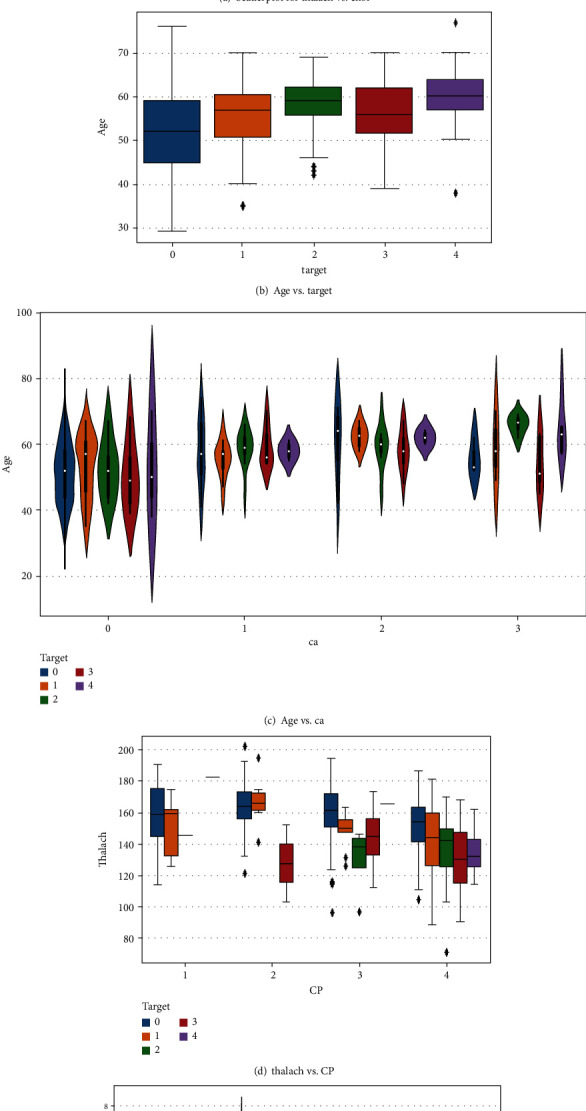
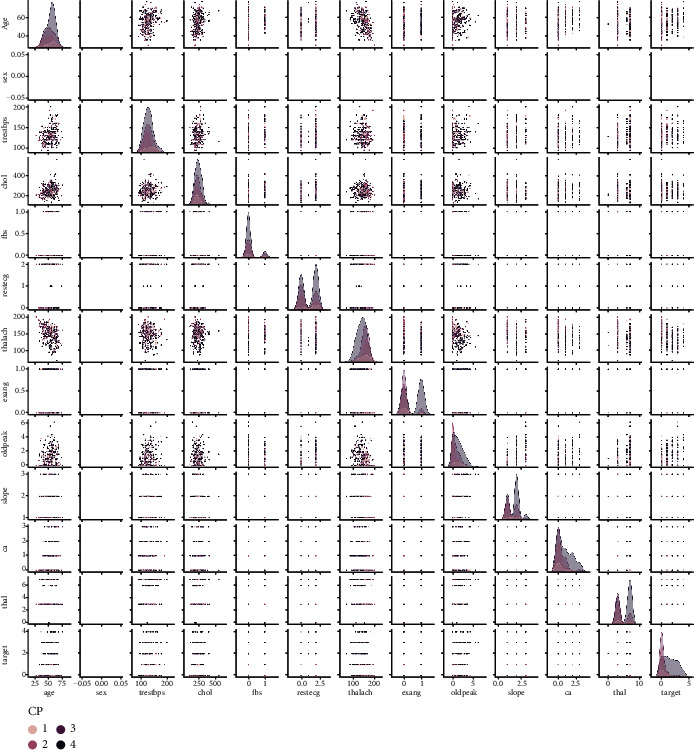
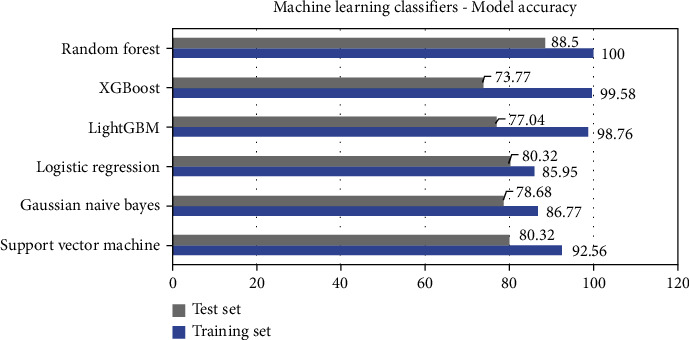
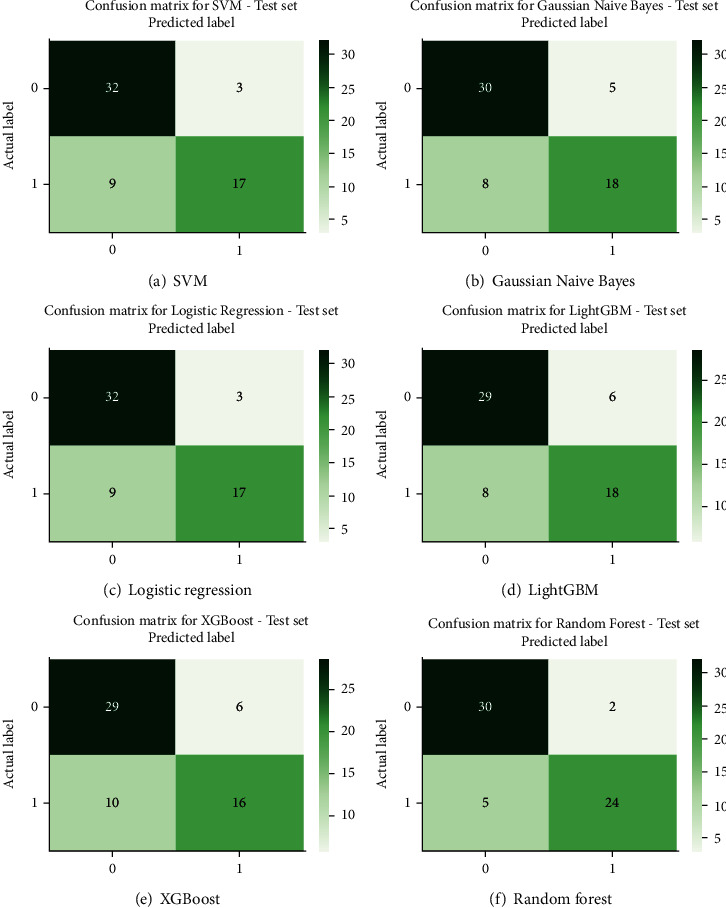
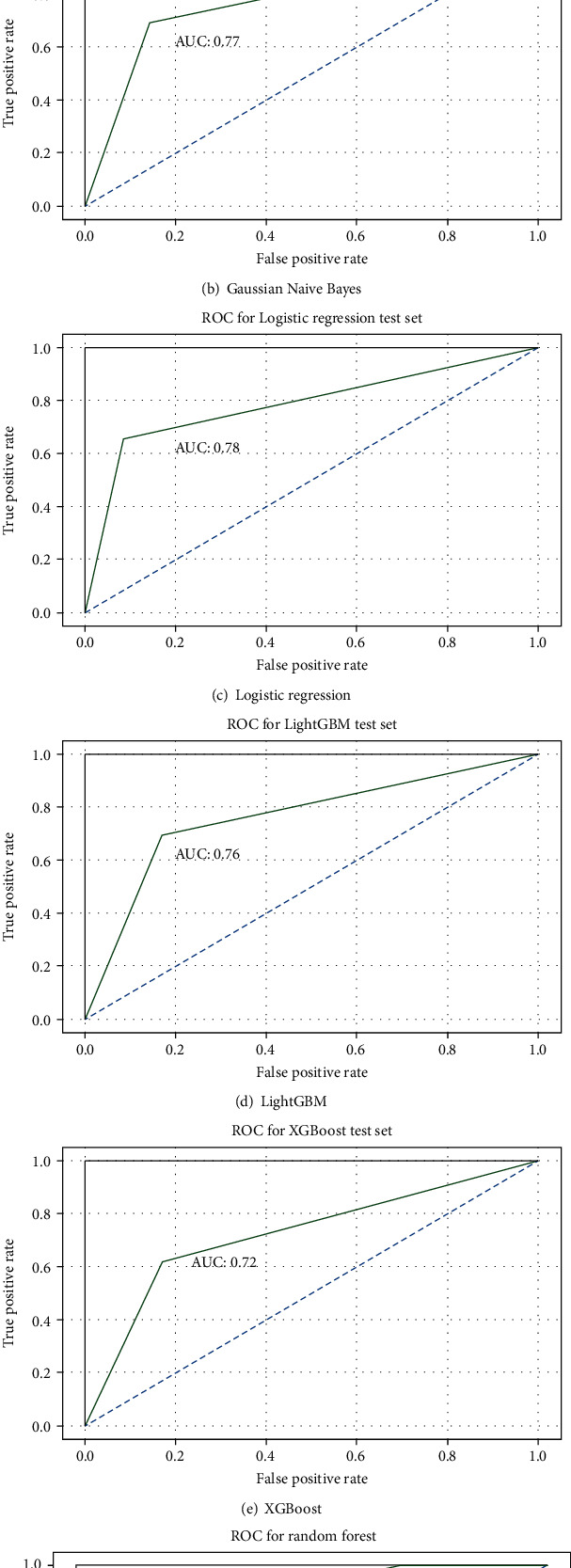
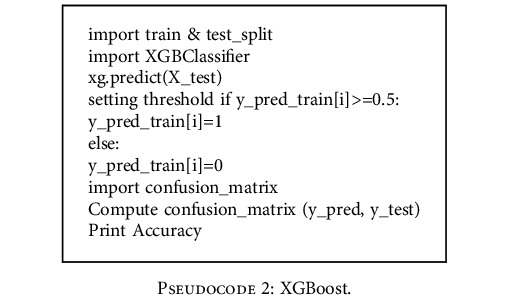
Cardiovascular disease prediction aids practitioners in making more accurate health decisions for their patients. Early detection can aid people in making lifestyle changes and, if necessary, ensuring effective medical care. Machine learning (ML) is a plausible option for reducing and understanding heart symptoms of disease. The chi-square statistical test is performed to select specific attributes from the Cleveland heart disease (HD) dataset. Support vector machine (SVM), Gaussian Naive Bayes, logistic regression, LightGBM, XGBoost, and random forest algorithm have been employed for developing heart disease risk prediction model and obtained the accuracy as 80.32%, 78.68%, 80.32%, 77.04%, 73.77%, and 88.5%, respectively. The data visualization has been generated to illustrate the relationship between the features. According to the findings of the experiments, the random forest algorithm achieves 88.5% accuracy during validation for 303 data instances with 13 selected features of the Cleveland HD dataset.
心血管疾病预测辅助医生为患者做出更准确的健康决策。早期发现可以帮助人们改变生活方式,如有必要,还可以确保有效的医疗护理。机器学习 (ML) 是减少和理解心脏疾病症状的合理选择。卡方统计检验用于从克利夫兰心脏病 (HD) 数据集选择特定属性。支持向量机 (SVM)、高斯朴素贝叶斯、逻辑回归、LightGBM、XGBoost 和随机森林算法已被用于开发心脏病风险预测模型,并分别获得了 80.32%、78.68%、80.32%、77.04%、73.77%和 88.5%的准确率。生成了数据可视化以说明特征之间的关系。根据实验结果,随机森林算法在对克利夫兰 HD 数据集的 13 个选定特征和 303 个数据实例进行验证时达到了 88.5%的准确率。