Kinoshita Iku, Nishijima Haruo, Nakamura Takashi, Kon Tomoya, Shimoyama Shuji, Hikichi Hiroki, Suzuki Chieko, Tomiyama Masahiko
Department of Neurology, Hirosaki University Graduate School of Medicine, Hirosaki, Japan.
Department of Neurology, Hirosaki University Hospital, Hirosaki, Japan.
Neuropsychopharmacol Rep. 2025 Mar;45(1):e12524. doi: 10.1002/npr2.12524.
We aimed to create a rat model of drug-induced parkinsonism and tardive dyskinesia by chronic administration of haloperidol and examine the expression of direct and indirect pathway markers in the striatum of the model rats.
We treated 21 rats, 14 with haloperidol decanoate and 7 with placebo. The number of vacuous chewing movements per 2 min was counted, and haloperidol-treated rats were classified into two groups: mild and severe tardive dyskinesia. Other behavioral analyses were also conducted. After a 6-month treatment period, rat brains were removed, and protein expression was evaluated by Western blotting.
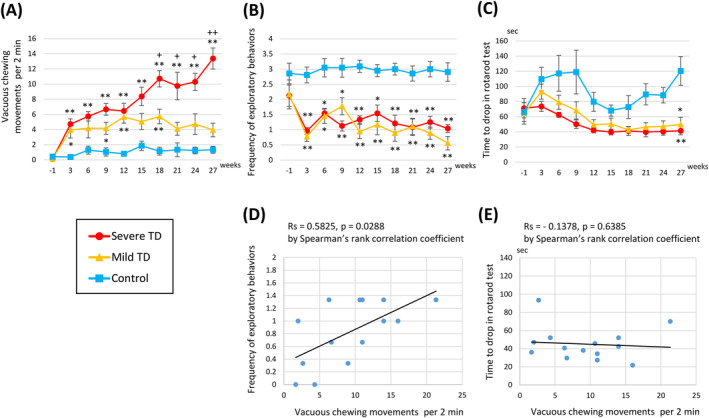
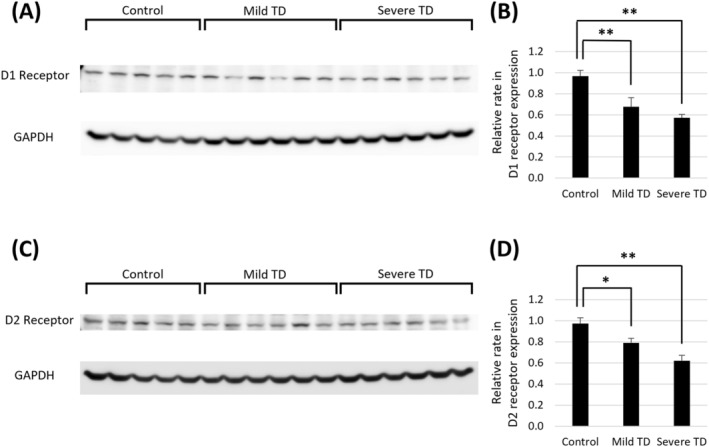
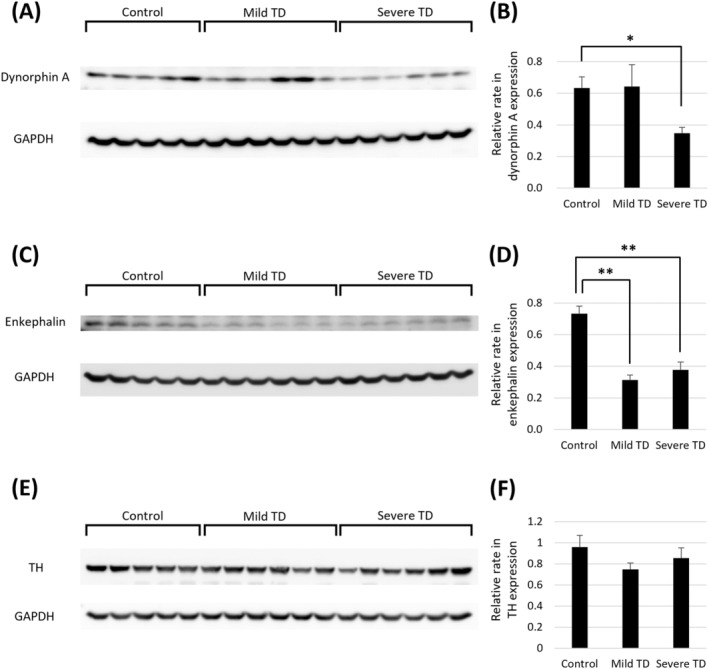
All haloperidol-treated rats exhibited vacuous chewing movements. The frequency of exploratory behavior and rotarod test performance was lower in the mild and severe tardive dyskinesia groups. The number of vacuous chewing movements and frequency of exploratory behavior were positively correlated in haloperidol-treated rats. The expression of dynorphin, a direct pathway marker, decreased in the severe tardive dyskinesia group. The expression of enkephalin, an indirect pathway marker, decreased both in the mild and severe tardive dyskinesia groups. The expression of dopamine D1 and D2 receptors also decreased with haloperidol treatment.
Both direct and indirect pathways are involved in haloperidol-induced movement disorders.
我们旨在通过长期给予氟哌啶醇建立药物性帕金森病和迟发性运动障碍的大鼠模型,并检测模型大鼠纹状体中直接和间接通路标志物的表达。
我们对21只大鼠进行治疗,14只给予癸酸氟哌啶醇,7只给予安慰剂。每2分钟计数空嚼运动的次数,将接受氟哌啶醇治疗的大鼠分为两组:轻度和重度迟发性运动障碍组。还进行了其他行为分析。在6个月的治疗期后,取出大鼠大脑,通过蛋白质印迹法评估蛋白质表达。
所有接受氟哌啶醇治疗的大鼠均出现空嚼运动。轻度和重度迟发性运动障碍组的探究行为频率和转棒试验表现较低。在接受氟哌啶醇治疗的大鼠中,空嚼运动次数与探究行为频率呈正相关。直接通路标志物强啡肽的表达在重度迟发性运动障碍组中降低。间接通路标志物脑啡肽的表达在轻度和重度迟发性运动障碍组中均降低。氟哌啶醇治疗后多巴胺D1和D2受体的表达也降低。
直接和间接通路均参与氟哌啶醇诱导的运动障碍。