
基于硫族化物的钙钛矿太阳能电池的SCAPS-1D数值模拟计算研究。
Computational Study of Chalcogenide-Based Perovskite Solar Cell Using SCAPS-1D Numerical Simulator.
作者信息
Meyer Edson L, Mvokwe Sinikiwe A, Oyedeji Opeoluwa O, Rono Nicholas, Agoro Mojeed A
机构信息
Fort Hare Institute of Technology, University of Fort Hare, Private Bag X1314, Alice 5700, Eastern Cape, South Africa.
Department of Chemistry, University of Fort Hare, Private Bag X1314, Alice 5700, Eastern Cape, South Africa.
出版信息
Materials (Basel). 2025 Jan 4;18(1):186. doi: 10.3390/ma18010186.
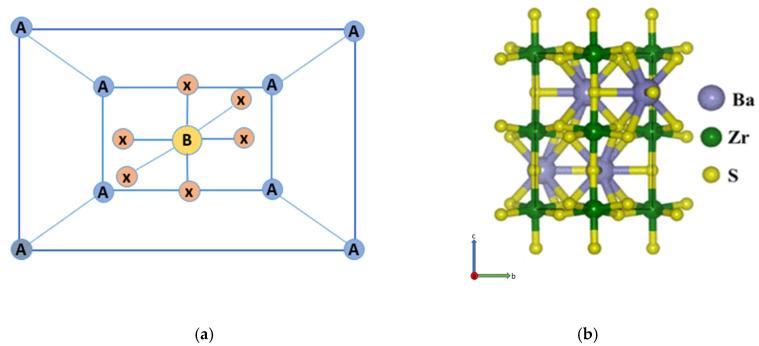
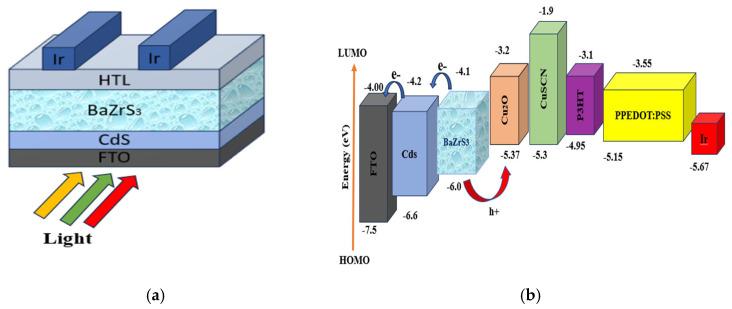
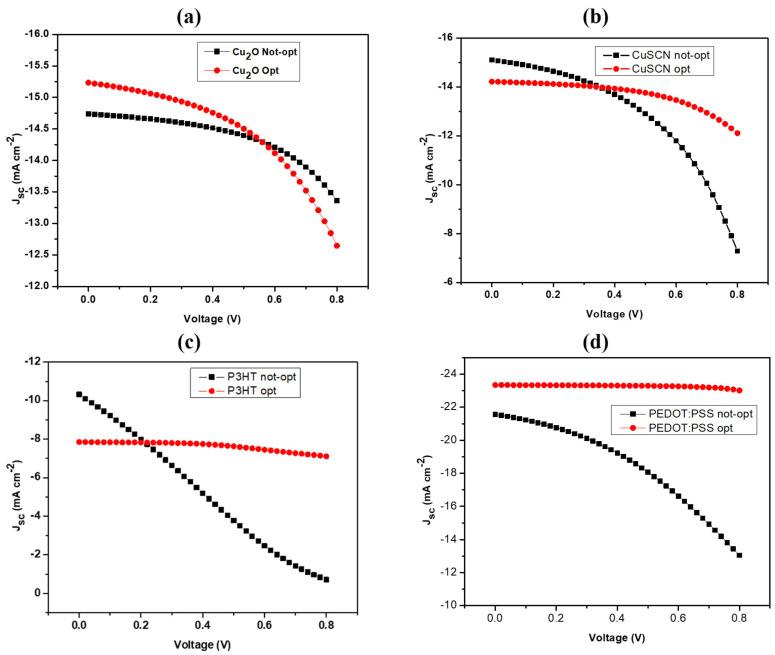
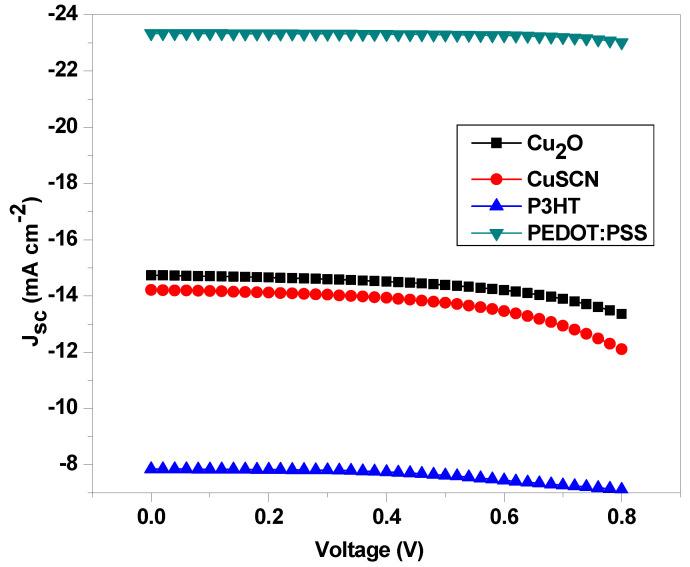
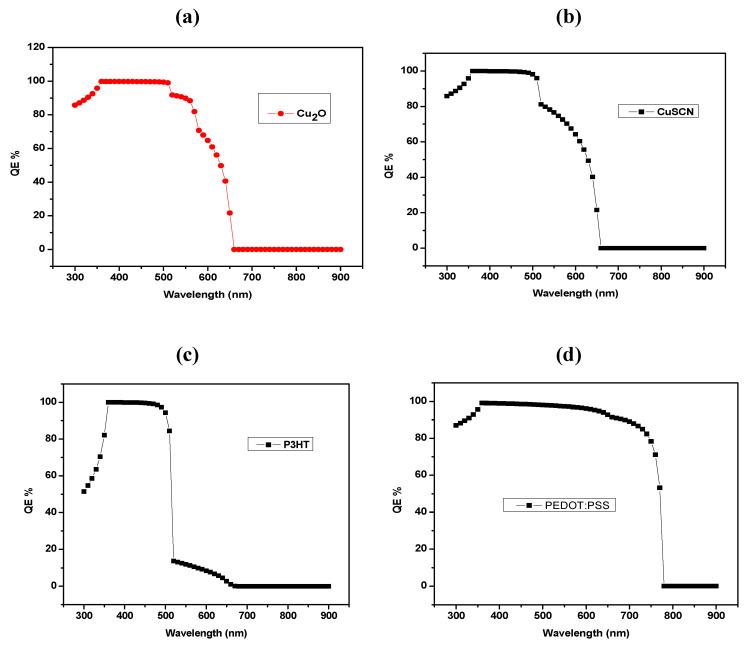
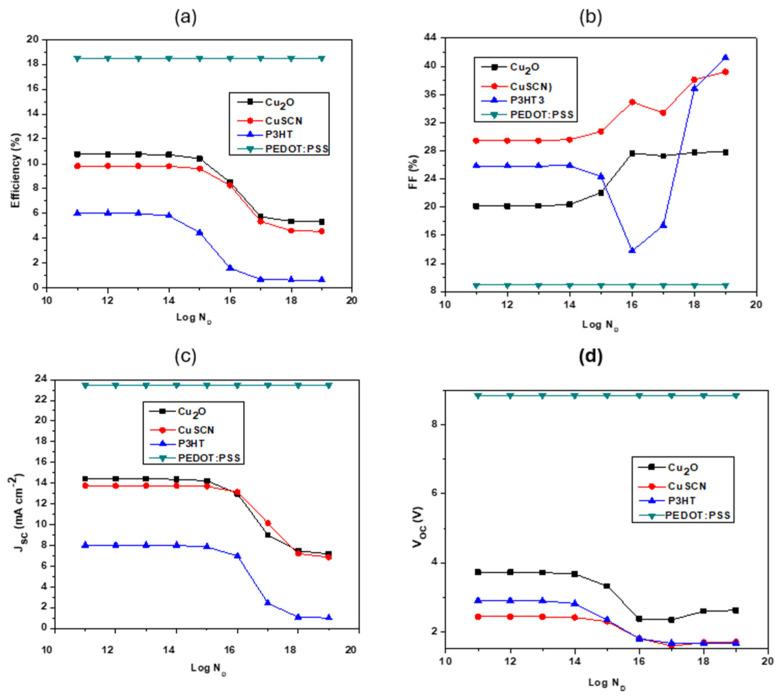
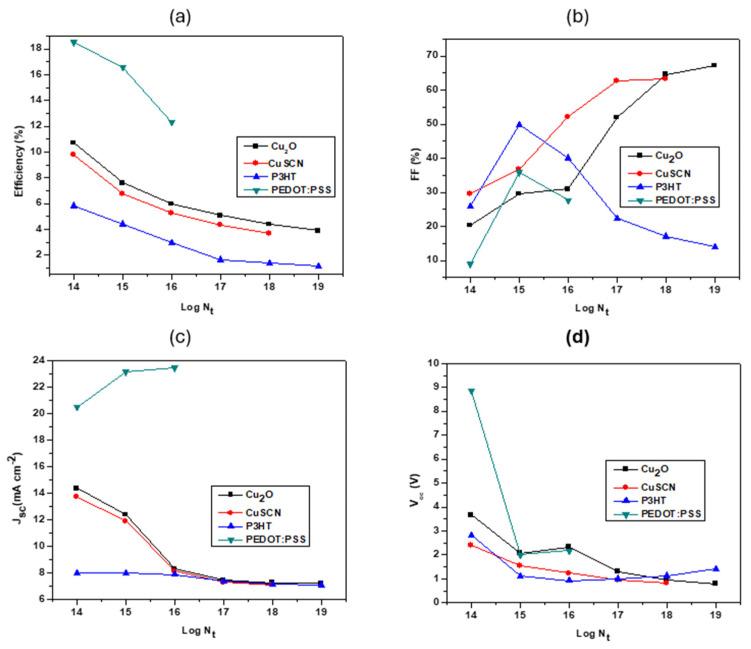
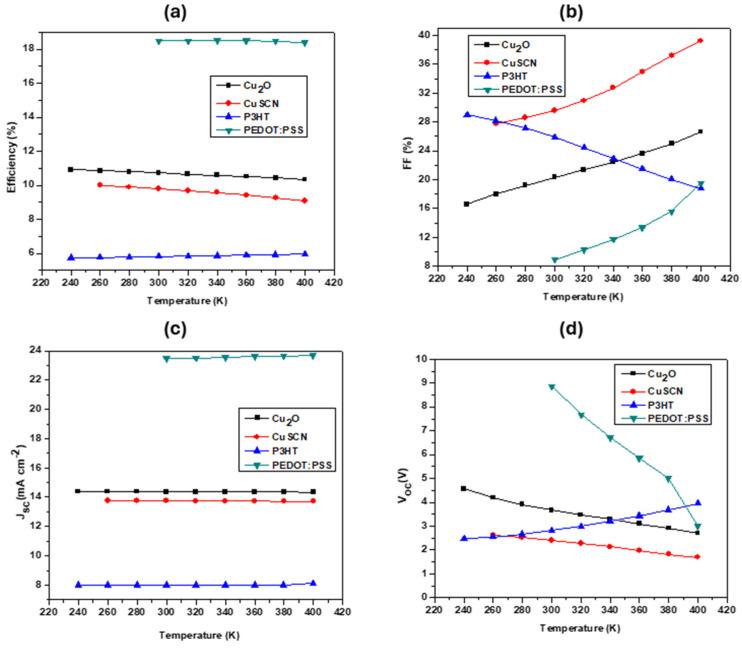
Perovskite solar cells (PSCs) are regarded as extremely efficient and have significant potential for upcoming photovoltaic technologies due to their excellent optoelectronic properties. However, a few obstacles, which include the instability and high costs of production of lead-based PSCs, hinder their commercialization. In this study, the performance of a solar cell with a configuration of FTO/CdS/BaZrS/HTL/Ir was optimized by varying the thickness of the perovskite layer, the hole transport layer, the temperature, the electron transport layer (ETL)'s defect density, the absorber defect density, the energy band, and the work function for back contact. Various hole transport layers (HTLs), including CuO, CuSCN, P3HT, and PEDOT:PSS, were assessed to select the best materials that would achieve high performance and stability in PSC devices. At optimal levels, PEDOT:PSS reached a maximum power conversion efficiency (PCE) of 18.50%, while P3HT, CuSCN, and CuO exhibited a PCE of 5.81, 10.73, and 9.80%, respectively. The high performance exhibited by PEDOT:PSS was attributed to better band alignment between the absorber and the PEDOT:PSS, and, thus, a low recombination of photogenerated charges. The other photovoltaic parameters for the best device were a short-circuit current density (J) of 23.46 mA cm, an open-circuit voltage (V) of 8.86 (V), and a fill factor (FF) of 8.90%. This study highlights the potential of chalcogenide-based PSCs as an efficient and stable alternative to traditional lead-based solar cells, with successful optimization paving the way for future research on eco-friendly materials and scalable production methods.
钙钛矿太阳能电池(PSCs)因其优异的光电性能而被认为具有极高的效率,在未来的光伏技术中具有巨大潜力。然而,一些障碍,包括基于铅的PSCs的不稳定性和高生产成本,阻碍了它们的商业化。在本研究中,通过改变钙钛矿层、空穴传输层的厚度、温度、电子传输层(ETL)的缺陷密度、吸收体缺陷密度、能带以及背接触的功函数,对具有FTO/CdS/BaZrS/HTL/Ir结构的太阳能电池性能进行了优化。评估了包括CuO、CuSCN、P3HT和PEDOT:PSS在内的各种空穴传输层(HTLs),以选择在PSC器件中能够实现高性能和稳定性的最佳材料。在最佳水平下,PEDOT:PSS的最大功率转换效率(PCE)达到18.50%,而P3HT、CuSCN和CuO的PCE分别为5.81%、10.73%和9.80%。PEDOT:PSS表现出的高性能归因于吸收体与PEDOT:PSS之间更好的能带对准,因此光生电荷的复合率较低。最佳器件的其他光伏参数为短路电流密度(J)为23.46 mA/cm²,开路电压(V)为8.86 V,填充因子(FF)为8.90%。本研究突出了基于硫族化物的PSCs作为传统铅基太阳能电池的高效且稳定替代品的潜力,成功的优化为未来关于环保材料和可扩展生产方法的研究铺平了道路。


 Zotero 插件