Hossain M Khalid, Bhattarai Sagar, Arnab A A, Mohammed Mustafa K A, Pandey Rahul, Ali Md Hasan, Rahman Md Ferdous, Islam Md Rasidul, Samajdar D P, Madan Jaya, Bencherif H, Dwivedi D K, Amami Mongi
Institute of Electronics, Atomic Energy Research Establishment, Bangladesh Atomic Energy Commission Dhaka 1349 Bangladesh
Department of Physics, Arunachal University of Studies Namsai 792103 Arunachal Pradesh India.
RSC Adv. 2023 Jul 12;13(30):21044-21062. doi: 10.1039/d3ra02485g. eCollection 2023 Jul 7.
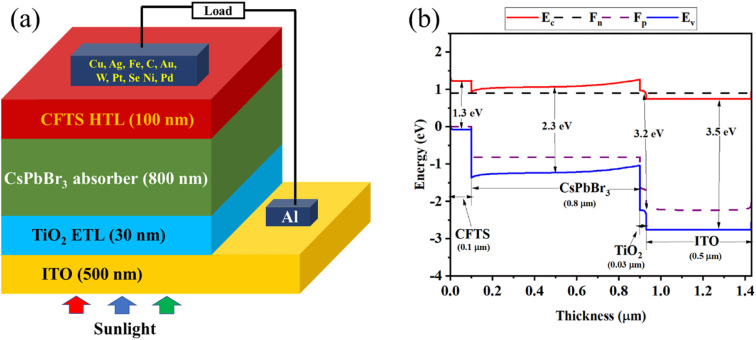
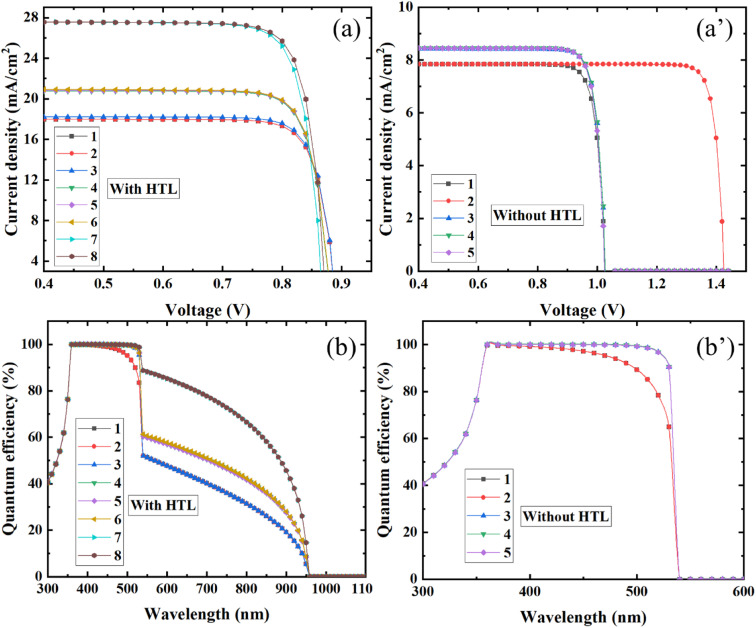
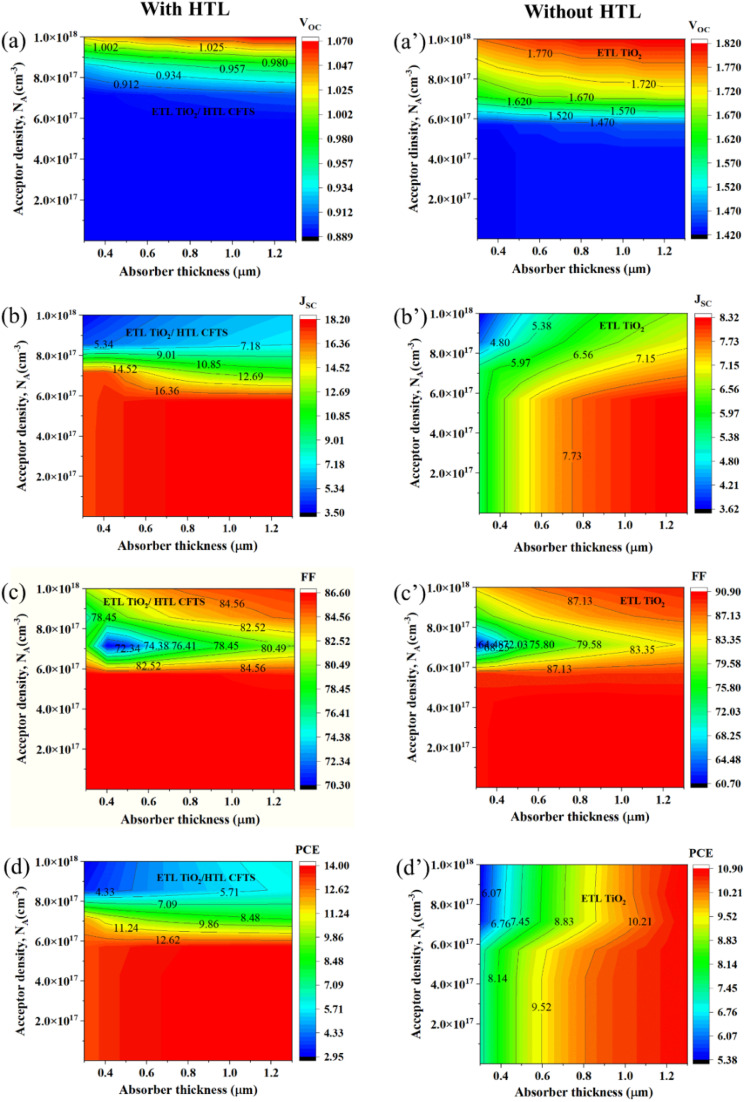
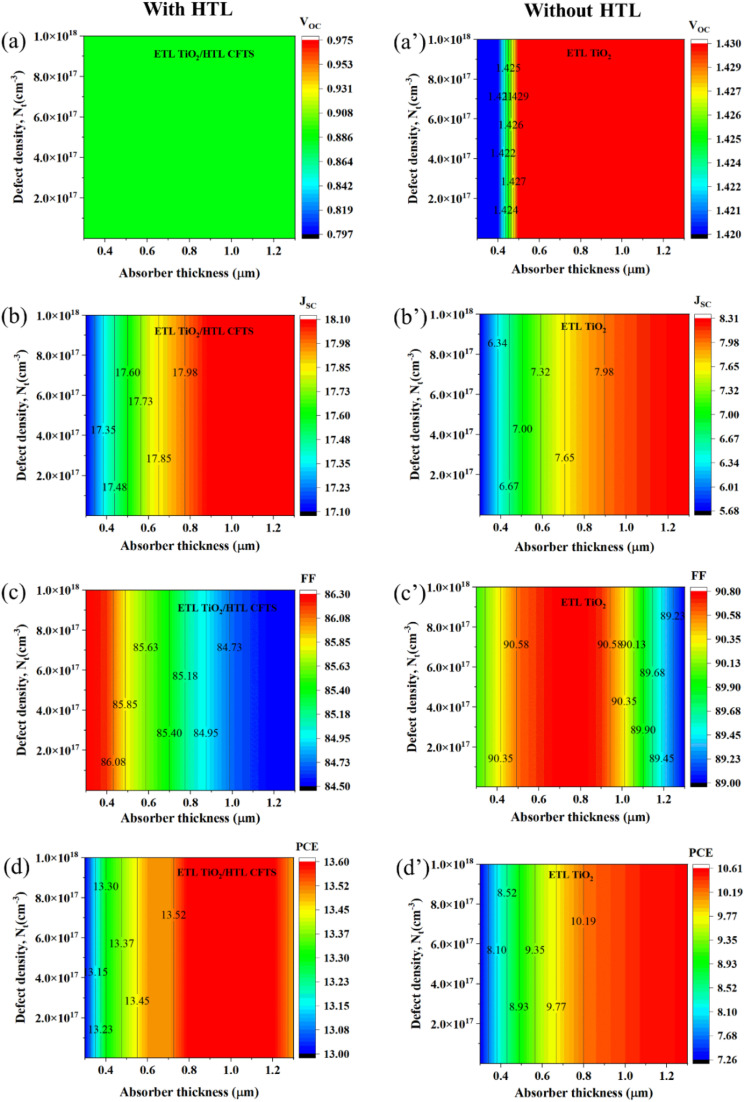
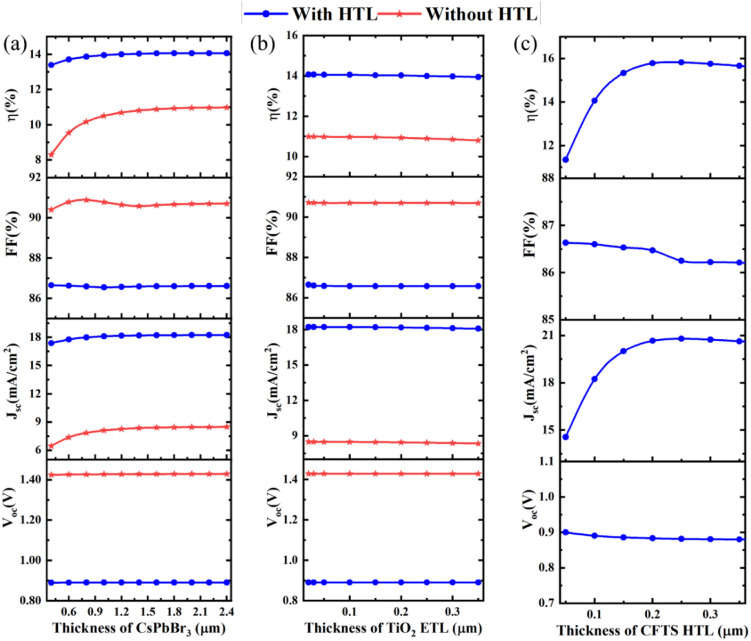
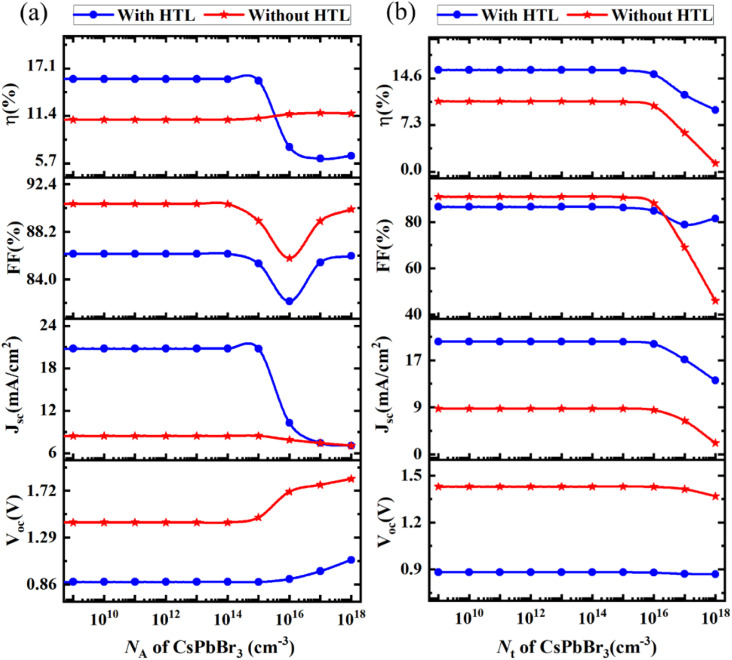
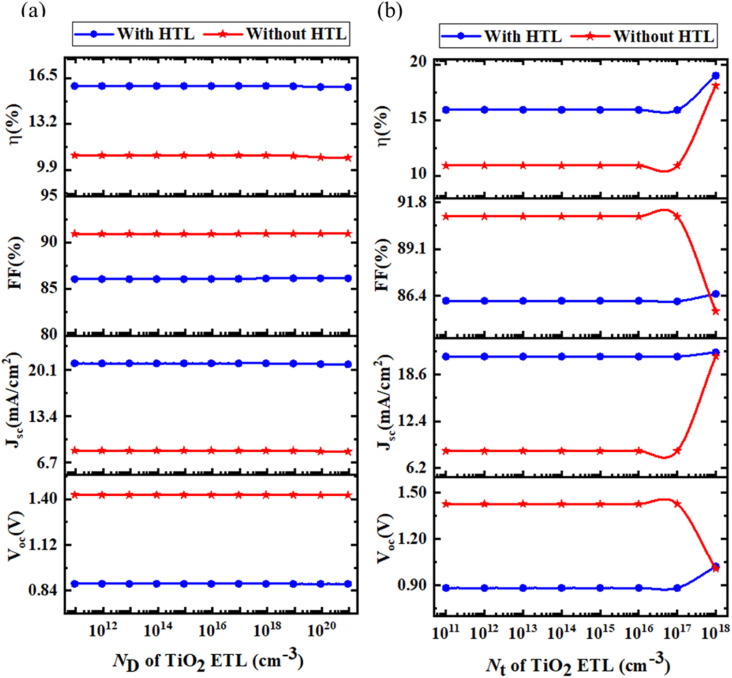
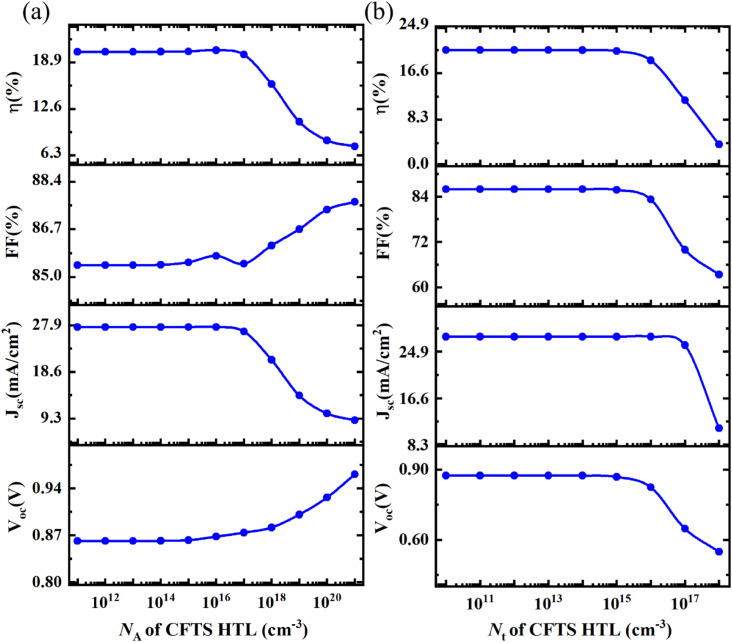
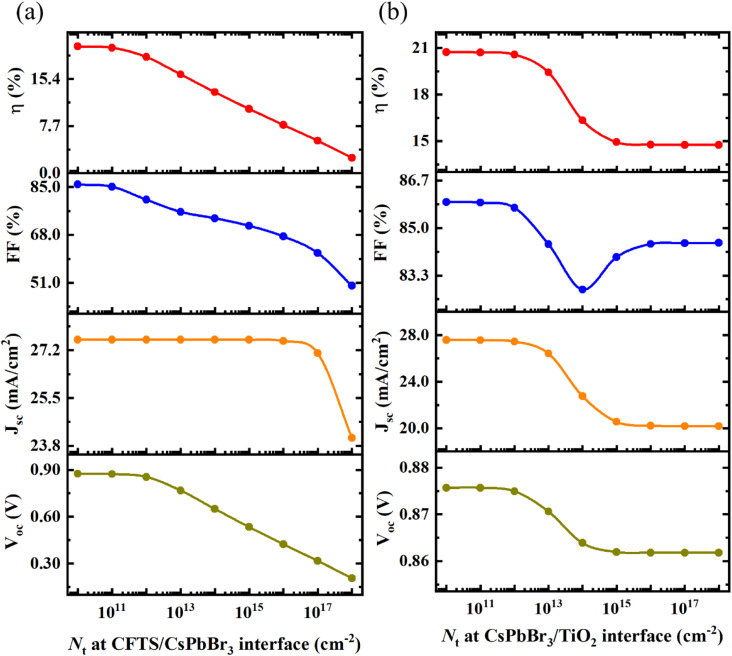
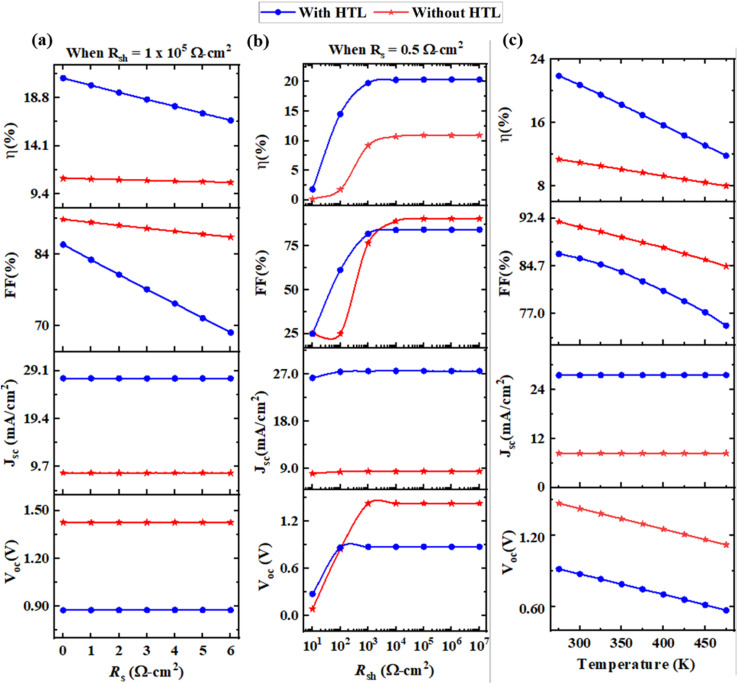
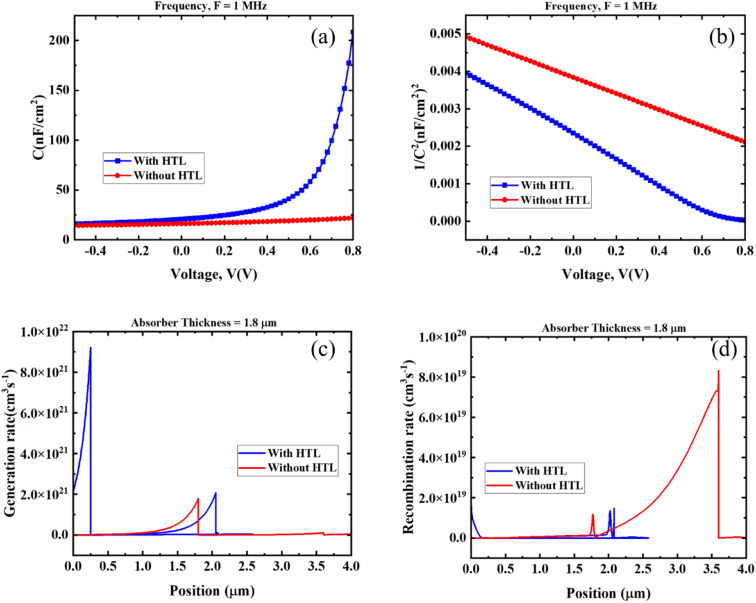
Perovskite solar cells (PSCs) have become a possible alternative to traditional photovoltaic devices for their high performance, low cost, and ease of fabrication. Here in this study, the SCAPS-1D simulator numerically simulates and optimizes CsPbBr-based PSCs under the optimum illumination situation. We explore the impact of different back metal contacts (BMCs), including Cu, Ag, Fe, C, Au, W, Pt, Se, Ni, and Pd combined with the TiO electron transport layer (ETL) and CFTS hole transport layer (HTL), on the performance of the devices. After optimization, the ITO/TiO/CsPbBr/CFTS/Ni structure showed a maximum power conversion efficiency (PCE or ) of 13.86%, with Ni as a more cost-effective alternative to Au. After the optimization of the BMC the rest of the investigation is conducted both with and without HTL mode. We investigate the impact of changing the thickness and the comparison with acceptor and defect densities (with and without HTL) of the CsPbBr perovskite absorber layer on the PSC performance. Finally, we optimized the thickness, charge carrier densities, and defect densities of the absorber, ETL, and HTL, along with the interfacial defect densities at HTL/absorber and absorber/ETL interfaces to improve the PCE of the device; and the effect of variation of these parameters is also investigated both with and without HTL connected. The final optimized configuration achieved a of 0.87 V, of 27.57 mA cm, FF of 85.93%, and PCE of 20.73%. To further investigate the performance of the optimized device, we explore the impact of the temperature, shunt resistance, series resistance, capacitance, generation rate, recombination rate, Mott-Schottky, , and QE features of both with and without HTL connected. The optimized device offers the best thermal stability at a temperature of 300 K. Our study highlights the potential of CsPbBr-based PSCs and provides valuable insights for their optimization and future development.
钙钛矿太阳能电池(PSCs)因其高性能、低成本和易于制造,已成为传统光伏器件的一种可能替代方案。在本研究中,SCAPS-1D模拟器在最佳光照条件下对基于CsPbBr的PSCs进行了数值模拟和优化。我们探究了不同的背金属接触(BMCs),包括Cu、Ag、Fe、C、Au、W、Pt、Se、Ni和Pd与TiO电子传输层(ETL)和CFTS空穴传输层(HTL)相结合时,对器件性能的影响。经过优化,ITO/TiO/CsPbBr/CFTS/Ni结构的最大功率转换效率(PCE或)为13.86%,其中Ni是比Au更具成本效益的替代方案。在对BMC进行优化后,其余研究在有和没有HTL模式的情况下均进行。我们研究了改变CsPbBr钙钛矿吸收层的厚度以及与受体和缺陷密度(有和没有HTL)进行比较对PSC性能的影响。最后,我们优化了吸收层、ETL和HTL的厚度、电荷载流子密度和缺陷密度,以及HTL/吸收层和吸收层/ETL界面处的界面缺陷密度,以提高器件的PCE;并且还研究了在连接和不连接HTL的情况下这些参数变化的影响。最终优化配置实现了0.87 V的开路电压、27.57 mA cm的短路电流密度、85.93%的填充因子和20.73%的PCE。为了进一步研究优化器件的性能,我们探究了在连接和不连接HTL的情况下温度、并联电阻、串联电阻、电容、产生率、复合率、莫特-肖特基、开路电压和量子效率特性的影响。优化后的器件在300 K的温度下具有最佳的热稳定性。我们的研究突出了基于CsPbBr的PSCs的潜力,并为其优化和未来发展提供了有价值的见解。