Hossain M Khalid, Uddin M Shihab, Toki G F Ishraque, Mohammed Mustafa K A, Pandey Rahul, Madan Jaya, Rahman Md Ferdous, Islam Md Rasidul, Bhattarai Sagar, Bencherif H, Samajdar D P, Amami Mongi, Dwivedi D K
Institute of Electronics, Atomic Energy Research Establishment, Bangladesh Atomic Energy Commission Dhaka 1349 Bangladesh
Department of Electrical and Electronic Engineering, Islamic University Kushtia 7000 Bangladesh.
RSC Adv. 2023 Aug 4;13(34):23514-23537. doi: 10.1039/d3ra02910g.
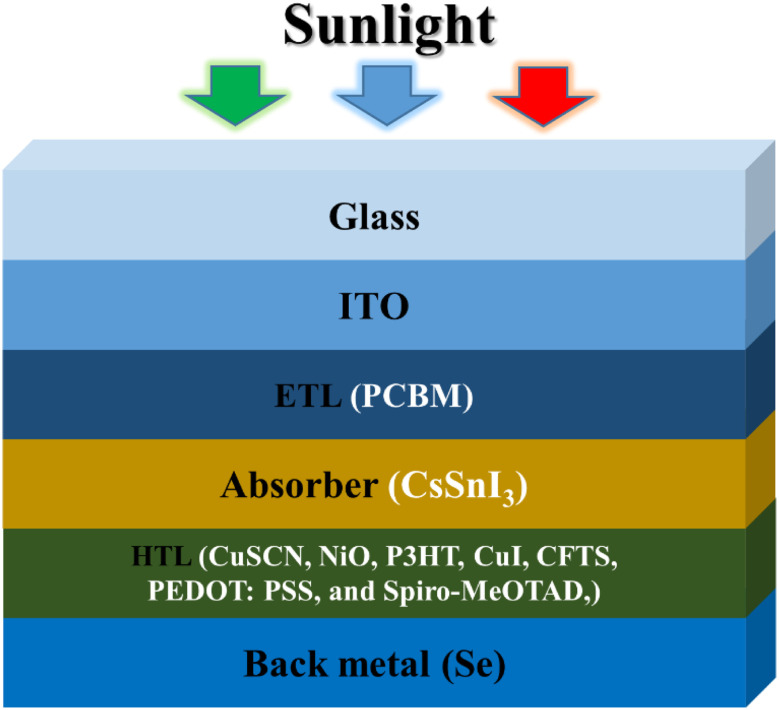
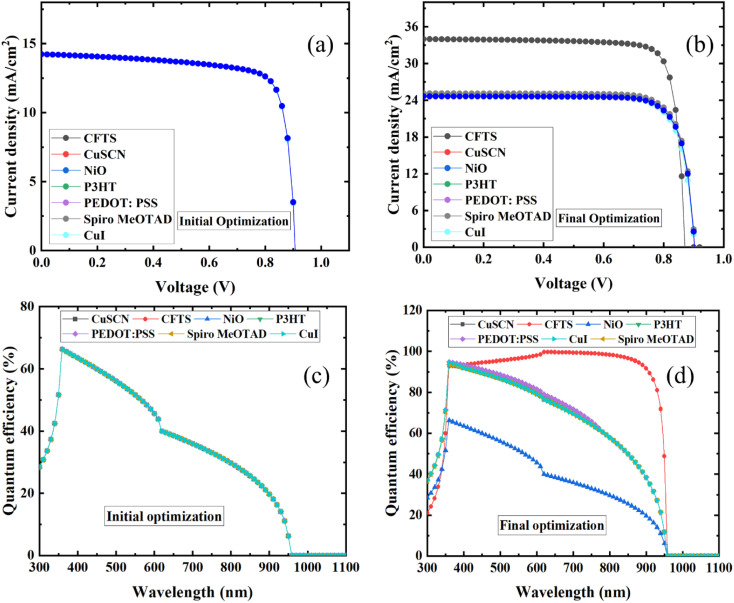
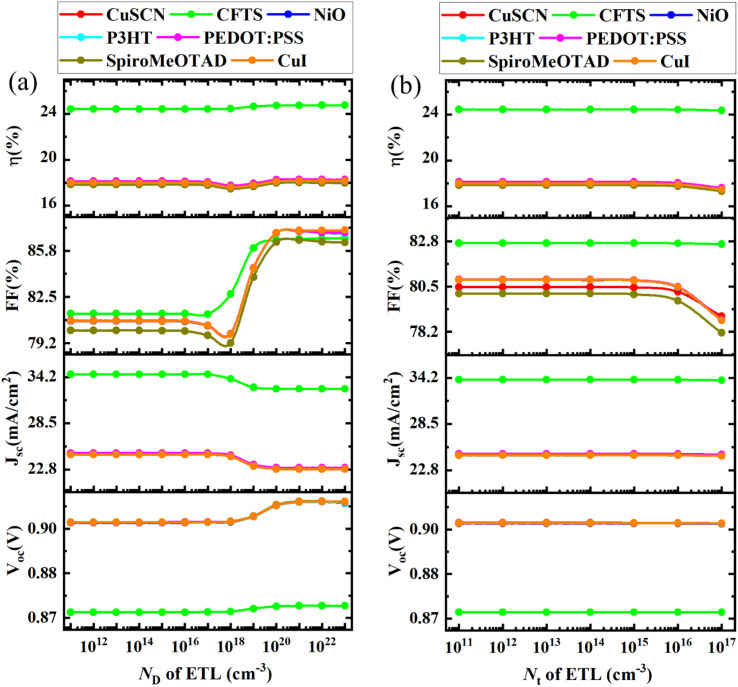
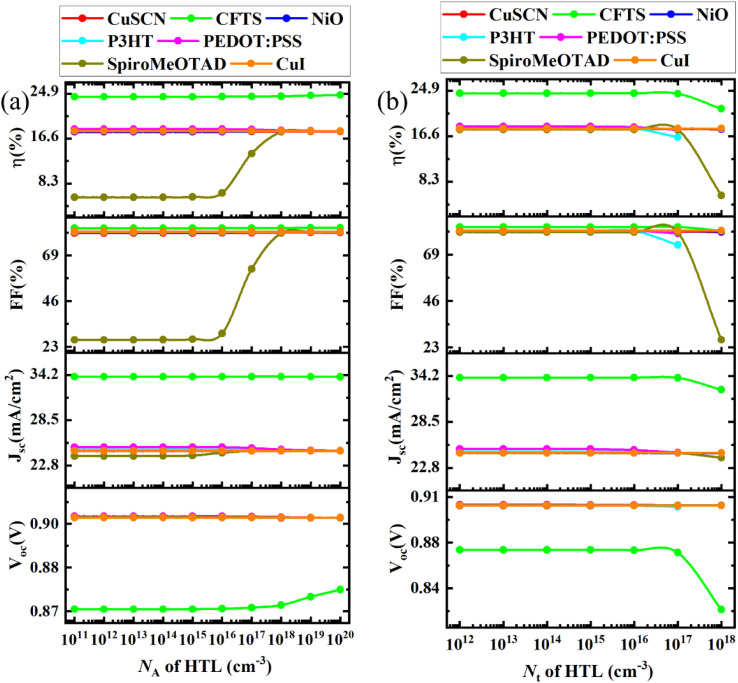
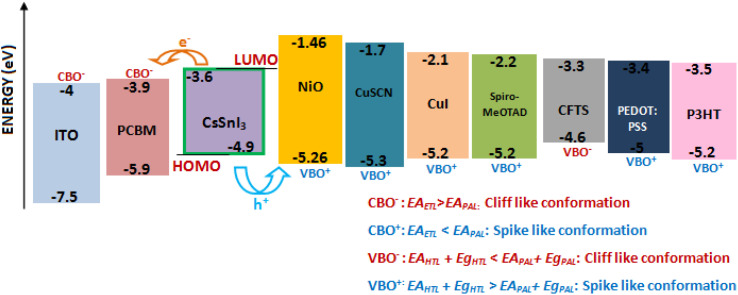
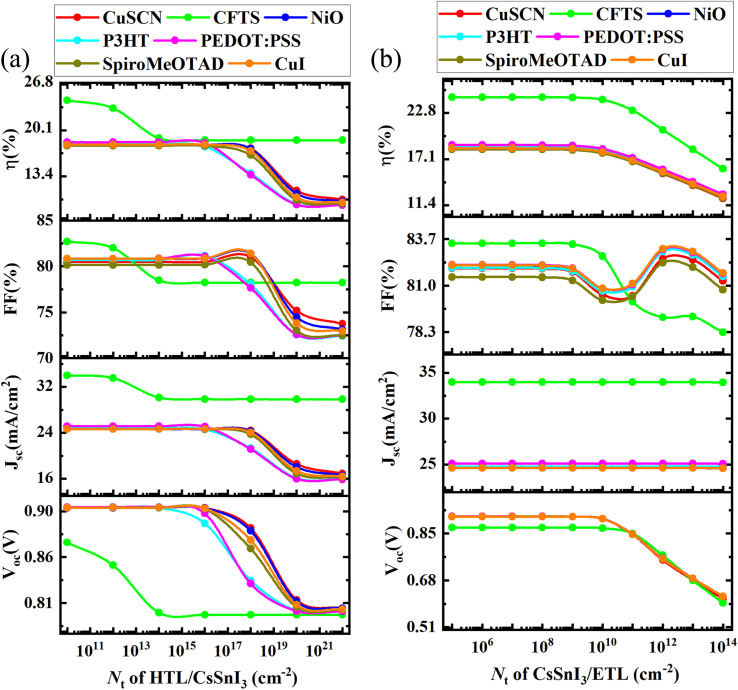
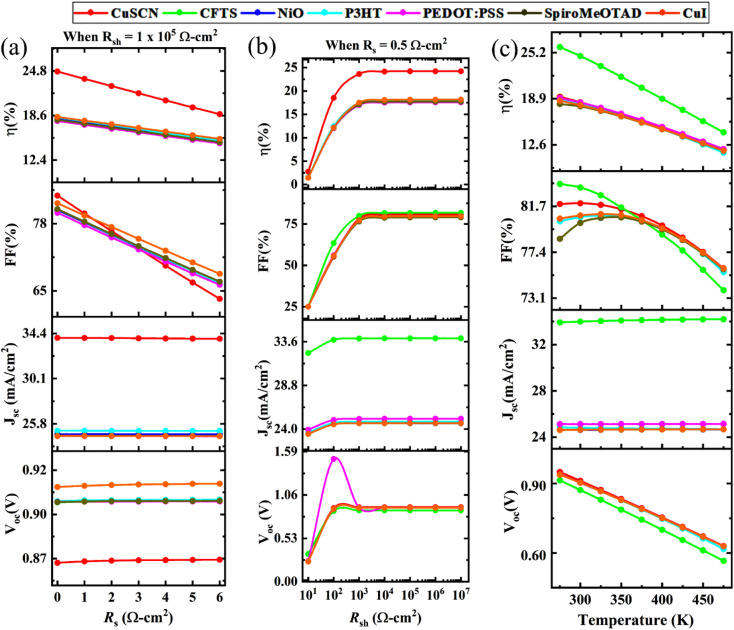
Lead toxicity is a barrier to the widespread commercial manufacture of lead halide perovskites and their use in solar photovoltaic (PV) devices. Eco-friendly lead-free perovskite solar cells (PSCs) have been developed using certain unique non- or low-toxic perovskite materials. In this context, Sn-based perovskites have been identified as promising substitutes for Pb-based perovskites due to their similar characteristics. However, Sn-based perovskites suffer from chemical instability, which affects their performance in PSCs. This study employs theoretical simulations to identify ways to improve the efficiency of Sn-based PSCs. The simulations were conducted using the SCAPS-1D software, and a lead-free, non-toxic, and inorganic perovskite absorber layer (PAL), CsSnI was used in the PSC design. The properties of the hole transport layer (HTL) and electron transport layer (ETL) were tuned to optimize the performance of the device. Apart from this, seven different combinations of HTLs were studied, and the best-performing combination was found to be ITO/PCBM/CsSnI/CFTS/Se, which achieved a power conversion efficiency (PCE) of 24.73%, an open-circuit voltage () of 0.872 V, a short-circuit current density () of 33.99 mA cm and a fill factor (FF) of 83.46%. The second highest PCE of 18.41% was achieved by the ITO/PCBM/CsSnI/CuSCN/Se structure. In addition to optimizing the structure of the PSC, this study also analyzes the current density-voltage (-) along with quantum efficiency (QE), as well as the impact of series resistance, shunt resistance, and working temperature, on PV performance. The results demonstrate the potential of the optimized structure identified in this study to enhance the standard PCE of PSCs. Overall, this study provides important insights into the development of lead-free absorber materials and highlights the potential of using CsSnI as the PAL in PSCs. The optimized structure identified in this study can be used as a base for further research to improve the efficiency of Sn-based PSCs.
铅毒性是阻碍卤化铅钙钛矿广泛商业化生产及其在太阳能光伏(PV)器件中应用的一个障碍。人们利用某些独特的无铅或低毒钙钛矿材料开发出了环保型无铅钙钛矿太阳能电池(PSC)。在这种背景下,基于锡的钙钛矿因其相似的特性被视为基于铅的钙钛矿的有前途的替代品。然而,基于锡的钙钛矿存在化学不稳定性,这会影响它们在PSC中的性能。本研究采用理论模拟来确定提高基于锡的PSC效率的方法。模拟使用SCAPS - 1D软件进行,并且在PSC设计中使用了一种无铅、无毒的无机钙钛矿吸收层(PAL),即CsSnI。对空穴传输层(HTL)和电子传输层(ETL)的特性进行了调整,以优化器件性能。除此之外,还研究了七种不同的HTL组合,发现性能最佳的组合是ITO/PCBM/CsSnI/CFTS/Se,其实现了24.73%的功率转换效率(PCE)、0.872 V的开路电压()、33.99 mA cm的短路电流密度()以及83.46%的填充因子(FF)。ITO/PCBM/CsSnI/CuSCN/Se结构实现了第二高的PCE,为18.41%。除了优化PSC的结构外,本研究还分析了电流密度 - 电压( - )以及量子效率(QE),以及串联电阻、并联电阻和工作温度对光伏性能的影响。结果证明了本研究中确定的优化结构提高PSC标准PCE的潜力。总体而言,本研究为无铅吸收材料的开发提供了重要见解,并突出了在PSC中使用CsSnI作为PAL的潜力。本研究中确定的优化结构可作为进一步研究提高基于锡的PSC效率的基础。