Stanciu Adina Elena, Bolovan Madalina Lucica, Zamfir-Chiru-Anton Adina, Voiosu Catalina, Dabla Pradeep Kumar, Stanciu Marcel Marian, Serdarevic Nafija, Gherghe Mirela
Carcinogenesis and Molecular Biology Department, Institute of Oncology Bucharest, 022328 Bucharest, Romania.
Faculty of Biology, University of Bucharest, 050095 Bucharest, Romania.
Int J Mol Sci. 2024 Dec 24;26(1):37. doi: 10.3390/ijms26010037.
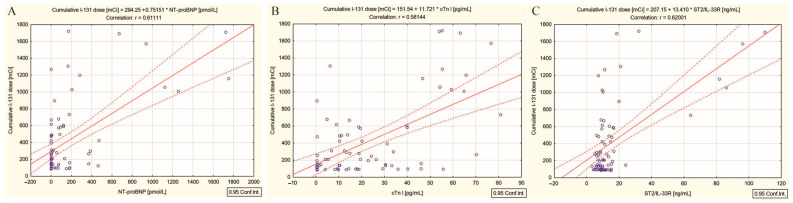
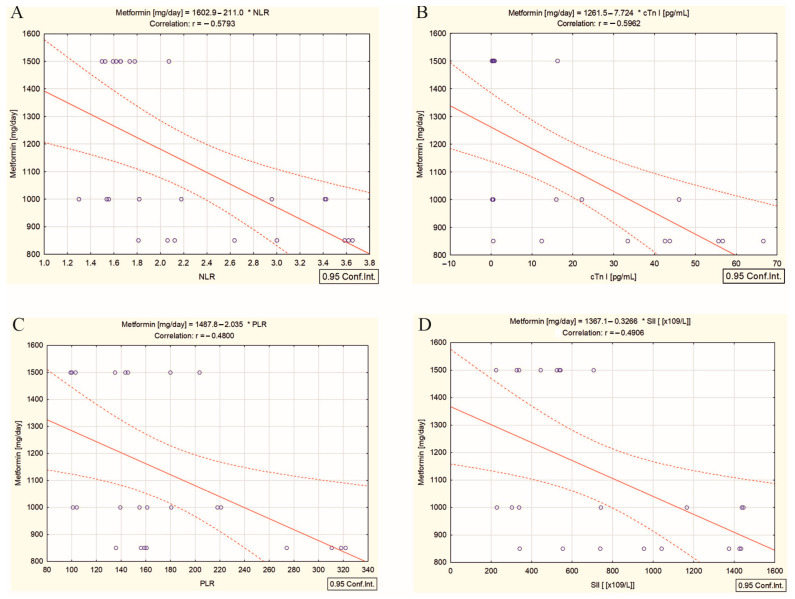
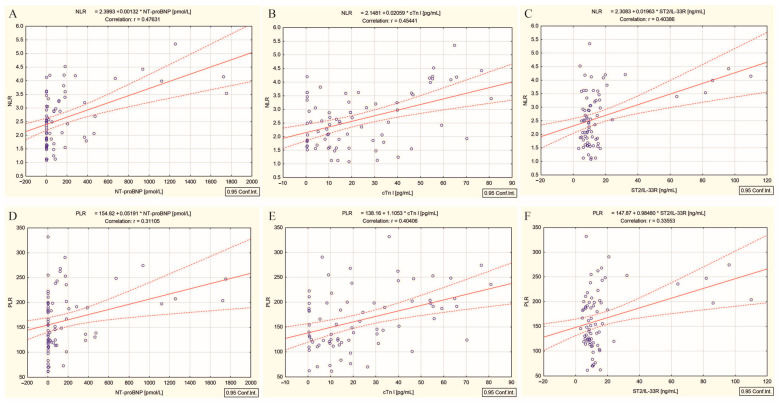
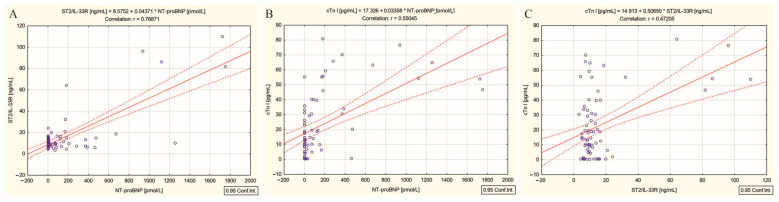
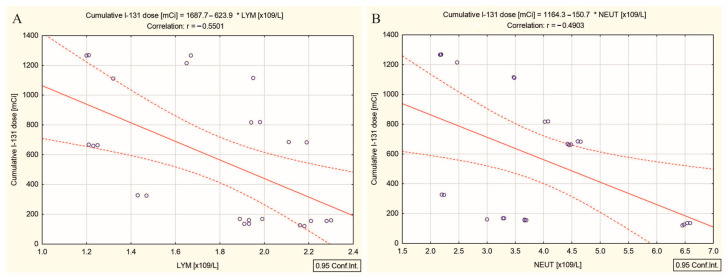
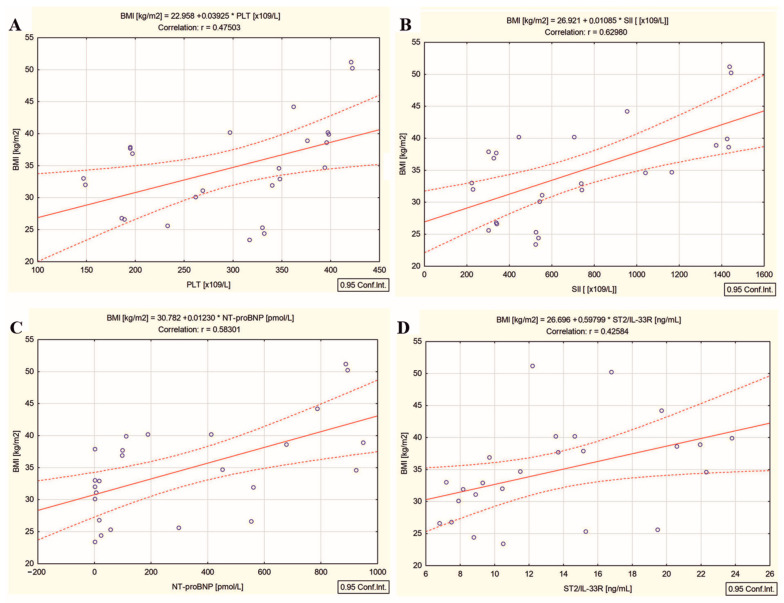
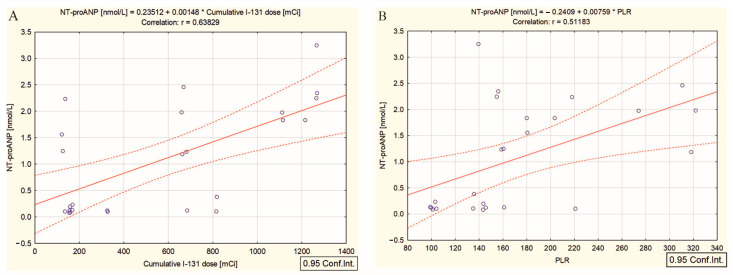
Starting from the metabolic profile of type 2 diabetes mellitus (T2DM), we hypothesized that the mechanisms of ¹³¹I-induced cardiotoxicity differ between patients diagnosed with differentiated thyroid cancer (DTC) with/without T2DM, with metformin potentially acting as a cardioprotective agent by mitigating inflammation in patients with T2DM. To address this hypothesis, we quantified, using ELISA, the serum concentration of several key biomarkers that reflect cardiac injury (NT-proBNP, NT-proANP, ST2/IL-33R, and cTn I) in 74 female patients with DTC/-T2DM and 25 with DTC/+T2DM treated with metformin. All patients received a cumulative oral dose of I exceeding 150 mCi (5.55 GBq) over approximately 53 months. Our results showed the following: (i) In DTC/-T2DM patients, high-cumulative I doses promote a pro-inflammatory state that accelerates the development of cardiotoxicity. Monitoring NT-proBNP, ST2/IL-33R, and cTn I in these patients may help identify those at risk of developing cardiac complications. (ii) In patients with DTC/+T2DM, high-cumulative I doses lead to the release of NT-proANP (r = 0.63), which signals that the atria are under significant stress. (iii) In patients with DTC/+T2DM, metformin suppresses inflammation, leading to a dose-dependent reduction in cTn I (r = -0.59). Monitoring cTn I and NT-proANP, and considering the use of metformin as part of the therapeutic strategy, could help manage cardiotoxicity in T2DM patients undergoing I therapy.
从2型糖尿病(T2DM)的代谢特征出发,我们推测,¹³¹I诱导的心脏毒性机制在患有或未患有T2DM的分化型甲状腺癌(DTC)患者中存在差异,二甲双胍可能通过减轻T2DM患者的炎症而起到心脏保护作用。为了验证这一假设,我们使用酶联免疫吸附测定(ELISA)对74例接受二甲双胍治疗的DTC/-T2DM女性患者和25例DTC/+T2DM女性患者血清中几种反映心脏损伤的关键生物标志物(N末端B型利钠肽原、N末端A型利钠肽原、ST2/白细胞介素-33受体和心肌肌钙蛋白I)的浓度进行了定量分析。所有患者在约53个月内累计口服¹³¹I剂量超过150毫居里(5.55吉贝可)。我们的结果如下:(i)在DTC/-T2DM患者中,高累积¹³¹I剂量会促进促炎状态,加速心脏毒性的发展。监测这些患者的N末端B型利钠肽原、ST2/白细胞介素-33受体和心肌肌钙蛋白I可能有助于识别有发生心脏并发症风险的患者。(ii)在DTC/+T2DM患者中,高累积¹³¹I剂量会导致N末端A型利钠肽原的释放(r = 0.63),这表明心房承受着巨大压力。(iii)在DTC/+T2DM患者中,二甲双胍可抑制炎症,导致心肌肌钙蛋白I呈剂量依赖性降低(r = -0.59)。监测心肌肌钙蛋白I和N末端A型利钠肽原,并考虑将二甲双胍作为治疗策略的一部分,可能有助于管理接受¹³¹I治疗的T2DM患者的心脏毒性。