
利用SINE鉴定用于靶向免疫治疗的强新抗原MHC-I/II结合候选物。
Identifying Strong Neoantigen MHC-I/II Binding Candidates for Targeted Immunotherapy with SINE.
作者信息
Bendik Joseph, Castro Andrea, Califano Joseph, Carter Hannah, Guo Theresa
机构信息
Moores Cancer Center, University of California San Diego, San Diego, CA 92037, USA.
Division of Medical Genetics, Department of Medicine, University of California San Diego, San Diego, CA 92093, USA.
出版信息
Int J Mol Sci. 2024 Dec 29;26(1):205. doi: 10.3390/ijms26010205.
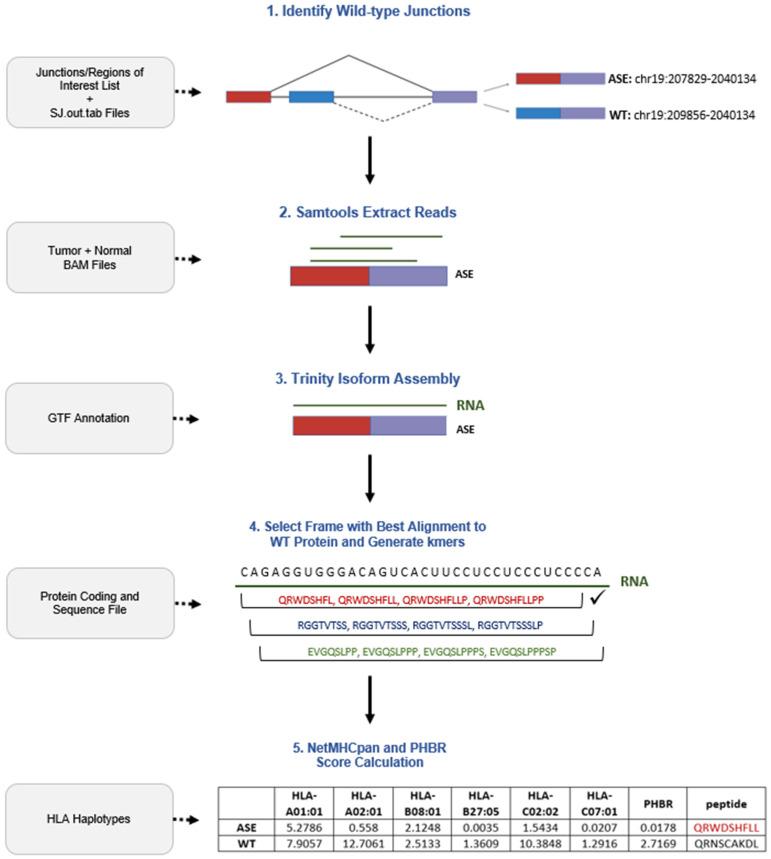
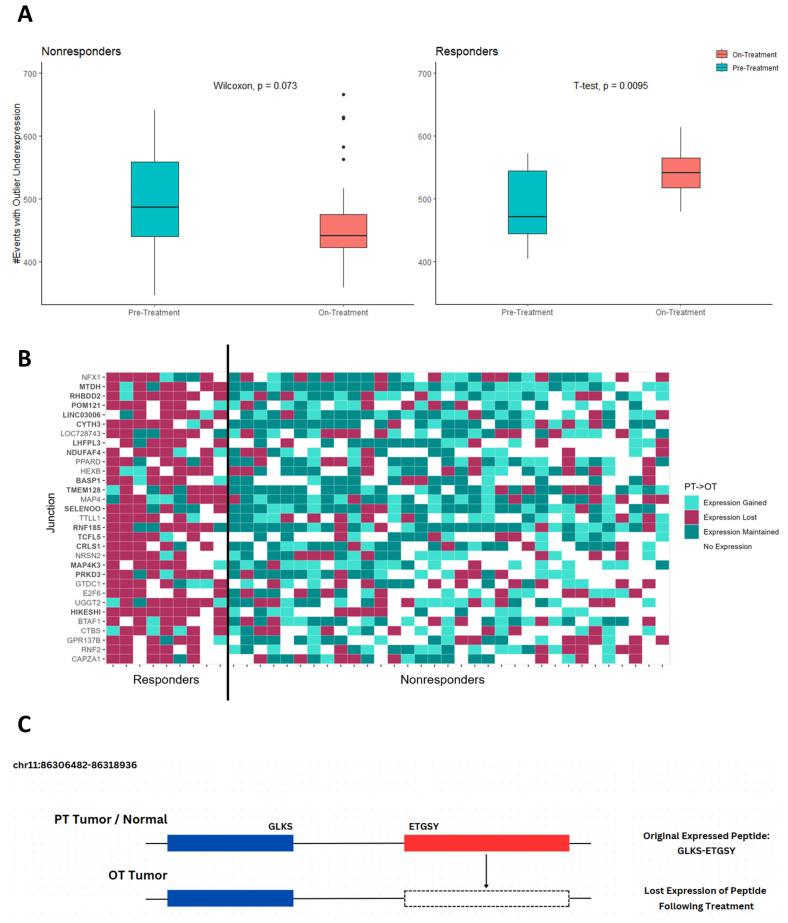
The discovery of tumor-derived neoantigens which elicit an immune response through major histocompatibility complex (MHC-I/II) binding has led to significant advancements in immunotherapy. While many neoantigens have been discovered through the identification of non-synonymous mutations, the rate of these is low in some cancers, including head and neck squamous cell carcinoma. Therefore, the identification of neoantigens through additional means, such as aberrant splicing, is necessary. To achieve this, we developed the splice isoform neoantigen evaluator (SINE) pipeline. Our tool documents peptides present on spliced or inserted genomic regions of interest using Patient Harmonic-mean Best Rank scores, calculating the MHC-I/II binding affinity across the complete human leukocyte antigen landscape. Here, we found 125 potentially immunogenic events and 9 principal binders in a cohort of head and neck cancer patients where the corresponding wild-type peptides display no MHC-I/II affinity. Further, in a melanoma cohort of patients treated with anti-PD1 therapy, the expression of immunogenic splicing events identified by SINE predicted response, potentially indicating the existence of immune editing in these tumors. Overall, we demonstrate SINE's ability to identify clinically relevant immunogenic neojunctions, thus acting as a useful tool for researchers seeking to understand the neoantigen landscape from aberrant splicing in cancer.
通过主要组织相容性复合体(MHC-I/II)结合引发免疫反应的肿瘤衍生新抗原的发现,推动了免疫疗法的重大进展。虽然通过识别非同义突变已发现了许多新抗原,但在包括头颈部鳞状细胞癌在内的某些癌症中,这些新抗原的发现率较低。因此,有必要通过其他手段,如异常剪接来识别新抗原。为实现这一目标,我们开发了剪接异构体新抗原评估器(SINE)流程。我们的工具使用患者调和平均最佳排名分数记录存在于感兴趣的剪接或插入基因组区域上的肽段,计算整个人类白细胞抗原范围内的MHC-I/II结合亲和力。在此,我们在一组头颈部癌症患者中发现了125个潜在的免疫原性事件和9个主要结合物,其中相应的野生型肽段不显示MHC-I/II亲和力。此外,在接受抗PD1治疗的黑色素瘤患者队列中,SINE识别出的免疫原性剪接事件的表达预测了反应,这可能表明这些肿瘤中存在免疫编辑。总体而言,我们证明了SINE识别临床相关免疫原性新连接的能力,从而成为寻求从癌症异常剪接中了解新抗原情况的研究人员的有用工具。
 Zotero 插件