Zhang Jiawei, Lou Yake, Chen Hong, Huang Xiaofeng
Department of Stomatology, Beijing Friendship Hospital, Capital Medical University, Beijing, 100050, China.
Department of Cardiology, The Second Affiliated Hospital of Chongqing Medical University, Chongqing, 400010, China.
BMC Oral Health. 2025 Jan 11;25(1):52. doi: 10.1186/s12903-024-05407-y.
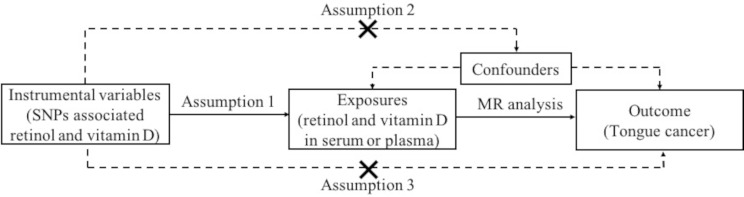
Previous studies have indicated that retinol and vitamin D may be associated with the oncogenesis of tongue cancer. Therefore, we aimed to assess the causal relationships of retinol and vitamin D with the risk of tongue cancer using the two-sample Mendelian randomization (MR) method.
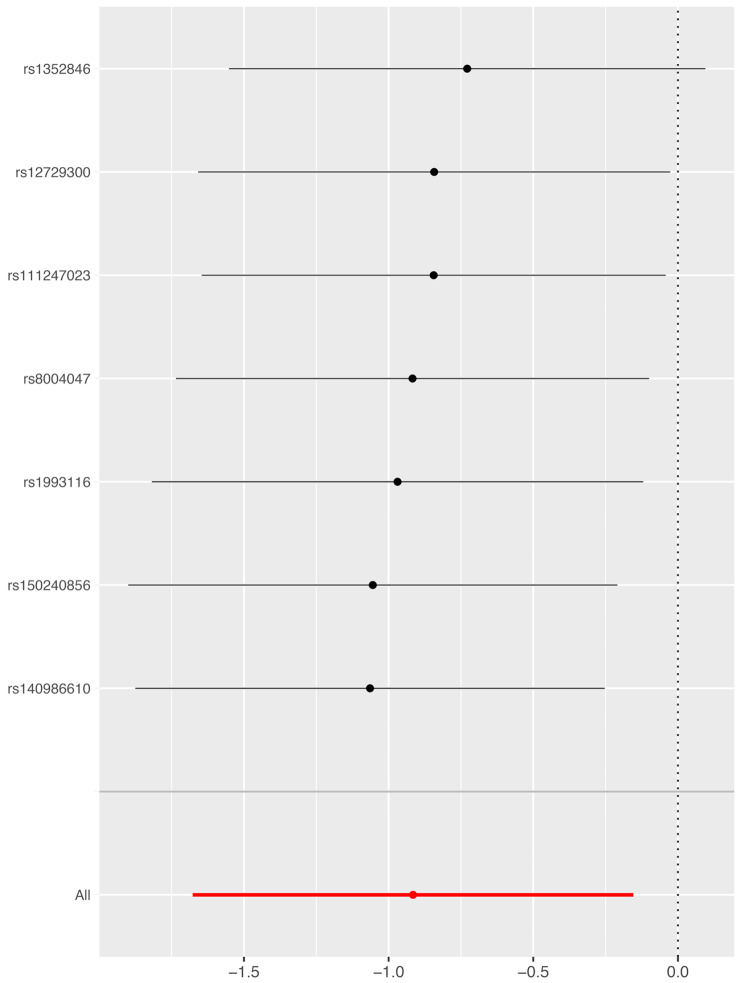
Single nucleotide polymorphisms (SNPs) related to retinol, vitamin D and tongue cancer were obtained from the up-to-date genome-wide association study (GWAS) catalogue, which was screened for instrumental variables (IVs). We performed two-sample MR analyses and used inverse-variance weighted (IVW) as the primary method. Additionally, we used the MR-pleiotropy residual sum and outlier (MR-PRESSO) method, MR-Egger intercept analysis, Cochran's Q test and leave-one-out analysis to evaluate the sensitivity of MR.
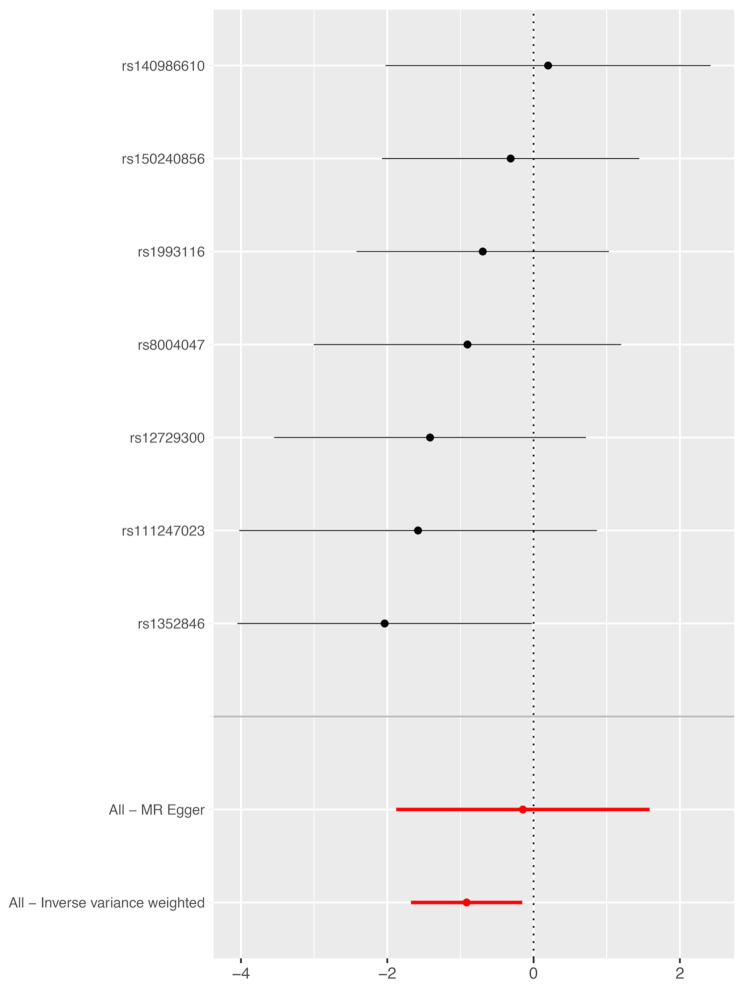
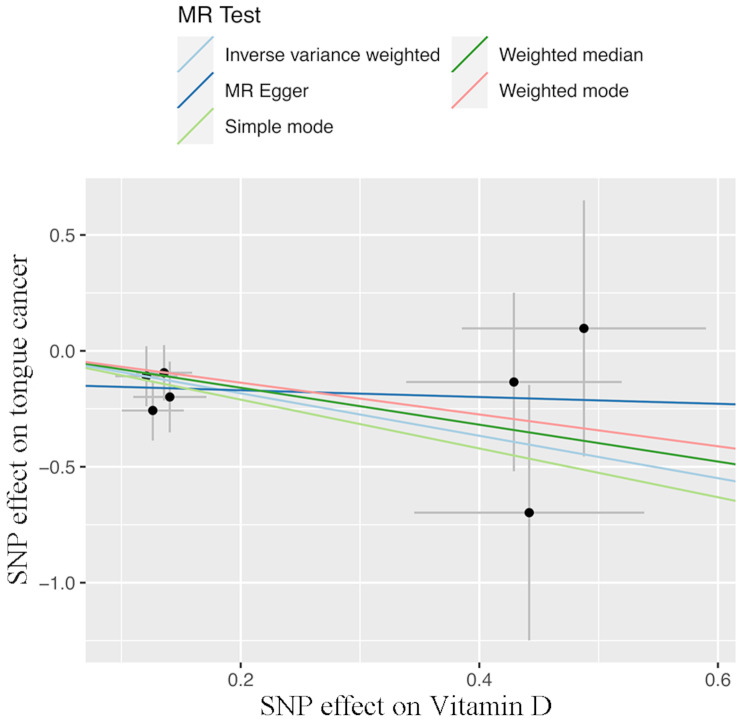
The IVW method revealed that retinol was not significantly correlated with the risk of tongue cancer (OR = 0.8602; 95% CI = 0.4453-1.6617; P = 0.654). However, the causal relationship between vitamin D and the risk of tongue cancer was significant according to IVW (OR = 0.4003; 95% CI = 0.1868-0.8577; P = 0.019). The sensitivity analysis did not detect any significant horizontal pleiotropy or heterogeneity.
Given the limitations of this study, our MR study suggests that retinol is unlikely to influence the risk of tongue cancer, but vitamin D may decrease the risk of tongue cancer.
先前的研究表明,视黄醇和维生素D可能与舌癌的发生有关。因此,我们旨在使用两样本孟德尔随机化(MR)方法评估视黄醇和维生素D与舌癌风险之间的因果关系。
从最新的全基因组关联研究(GWAS)目录中获取与视黄醇、维生素D和舌癌相关的单核苷酸多态性(SNP),并对其进行工具变量(IV)筛选。我们进行了两样本MR分析,并将逆方差加权(IVW)作为主要方法。此外,我们还使用了MR多效性残差和离群值(MR-PRESSO)方法、MR-Egger截距分析、 Cochr an's Q检验和留一法分析来评估MR的敏感性。
IVW方法显示,视黄醇与舌癌风险无显著相关性(OR = 0.8602;95% CI = 0.4453 - 1.6617;P = 0.654)。然而,根据IVW,维生素D与舌癌风险之间的因果关系显著(OR = 0.4003;95% CI = 0.1868 - 0.8577;P = 0.019)。敏感性分析未发现任何显著的水平多效性或异质性。
鉴于本研究的局限性,我们的MR研究表明,视黄醇不太可能影响舌癌风险,但维生素D可能会降低舌癌风险。