Zhu Wenqing, Gu Shuneng, Li Jian, Lin Jin, Hu Chanling, Liu Rui
Department of Ophthalmology, Eye and ENT Hospital of Fudan University, No.83 Fenyang Road, Xuhui District, Shanghai, 200031, China, 86 021-64377134.
Key Laboratory of Myopia and Related Eye Diseases, Chinese Academy of Medical Sciences, Fudan University, Shanghai, China.
JMIR Serious Games. 2025 Jan 16;13:e63384. doi: 10.2196/63384.
Amblyopia is a common cause of visual impairment in children. Compliance with traditional treatments for amblyopia is challenging due to negative psychosocial impacts. Recent shifts in amblyopia treatment have moved from suppressing the dominant eye to enhancing binocular visual function. Binocular digital therapy has become a promising approach.
The aim of this study was to evaluate the effects of binocular gamified digital therapy on visual acuity and stereoacuity (SA) in children with unilateral amblyopia.
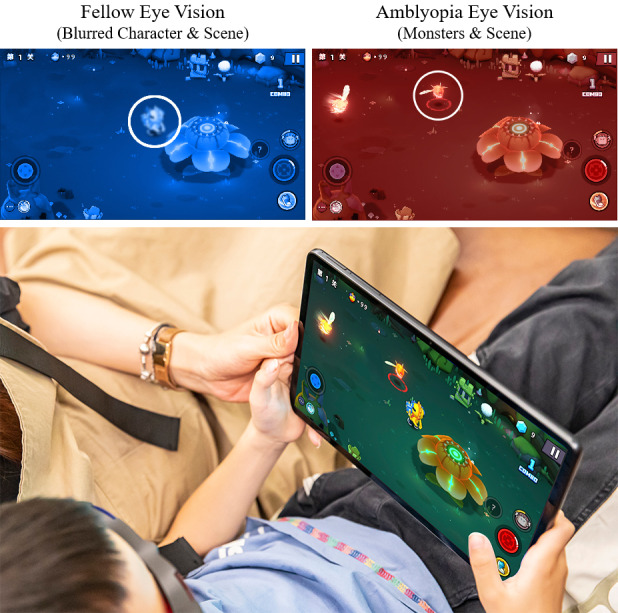
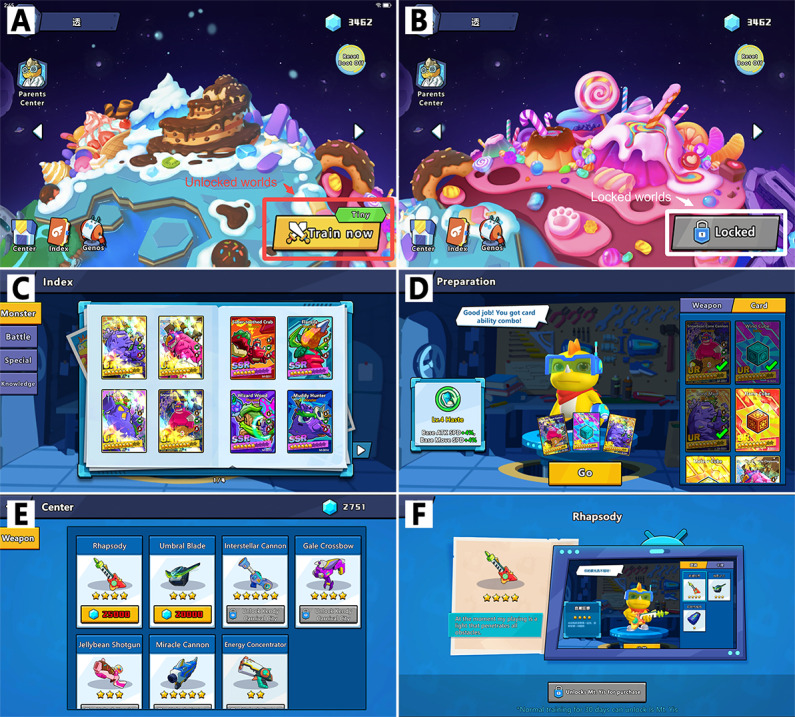
This pilot prospective study enrolled 11 children aged 4-6 years with unilateral amblyopia. Following at least 8 weeks of refractive correction, participants underwent binocular gamified digital therapy for 60 minutes per day, 5 days a week. The therapy used a roguelike shooting game delivered under binocular conditions through two independent channels with a real-time artificial intelligence visual engine. Assessments of distance visual acuity (DVA), near visual acuity (NVA), and SA were conducted at baseline and again at 4, 8, and 12 weeks.
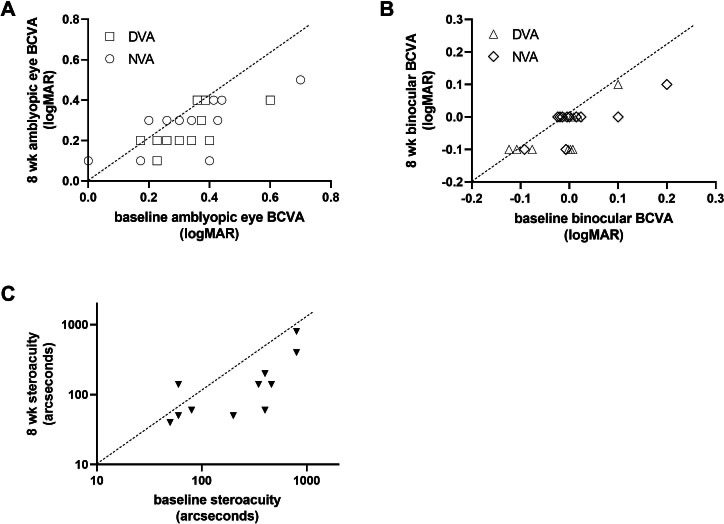
At 12 weeks, the following significant improvements were noted: amblyopic eye DVA improved by 1.0 line (P=.01; d=0.77), binocular DVA improved by 0.7 lines (P=.006; d=1.00), and SA improved by 0.3 logarithm (log) arcseconds (P=.01; d=0.97). At 8 weeks, improvements included amblyopic eye DVA by 0.9 lines (P=.046; d=1.00) and SA by 0.28 log arcseconds (P=.02; d=0.90). No significant adverse events were observed, although one participant developed progressive esotropia.
Binocular gamified digital therapy is effective and safe for improving visual outcomes in children aged 4-6 years with unilateral amblyopia.
弱视是儿童视力损害的常见原因。由于负面的心理社会影响,对弱视传统治疗方法的依从性具有挑战性。最近弱视治疗的转变已从抑制优势眼转向增强双眼视觉功能。双眼数字疗法已成为一种有前景的方法。
本研究的目的是评估双眼游戏化数字疗法对单侧弱视儿童视力和立体视锐度(SA)的影响。
这项前瞻性试点研究纳入了11名4至6岁的单侧弱视儿童。在进行至少8周的屈光矫正后,参与者每周5天,每天接受60分钟的双眼游戏化数字疗法。该疗法使用一款类肉鸽射击游戏,通过两个独立通道在双眼条件下借助实时人工智能视觉引擎进行。在基线以及第4、8和12周时对远距离视力(DVA)、近距离视力(NVA)和SA进行评估。
在第12周时,观察到以下显著改善:弱视眼DVA提高了1.0行(P = 0.01;d = 0.77),双眼DVA提高了0.7行(P = 0.006;d = 1.00),SA提高了0.3对数(log)角秒(P = 0.01;d = 0.97)。在第8周时,改善包括弱视眼DVA提高了0.9行(P = 0.046;d = 1.00)和SA提高了0.28 log角秒(P = 0.02;d = 0.90)。未观察到明显不良事件,尽管有一名参与者出现了进行性内斜视。
双眼游戏化数字疗法对于改善4至6岁单侧弱视儿童的视力结果是有效且安全的。