Zhao Jing, Yasunaga Akitomo, Kaczynski Andrew T, Park Hyuntae, Luo Yufeng, Li Jiuling, Shibata Ai, Ishii Kaori, Yano Shohei, Oka Koichiro, Koohsari Mohammad Javad
School of Architecture and Urban Planning, Guangzhou University, Guangzhou, China.
Faculty of Health Sciences, Aomori University of Health and Welfare, Aomori, Japan.
JMIR Res Protoc. 2025 Jan 20;14:e64560. doi: 10.2196/64560.
The worldwide rise in the prevalence of noncommunicable diseases has increased the recognition of the need to identify modifiable risk factors for preventing and managing these diseases. The office worker, as a representative group of physically inactive workers, is exposed to risk factors for metabolic syndrome, which is a primary driver of noncommunicable diseases. The use of virtual reality (VR) exergames may offer a potential solution to the problem of increasing noncommunicable disease prevalence, as it can help individuals increase their physical activity levels while providing a more immersive experience.
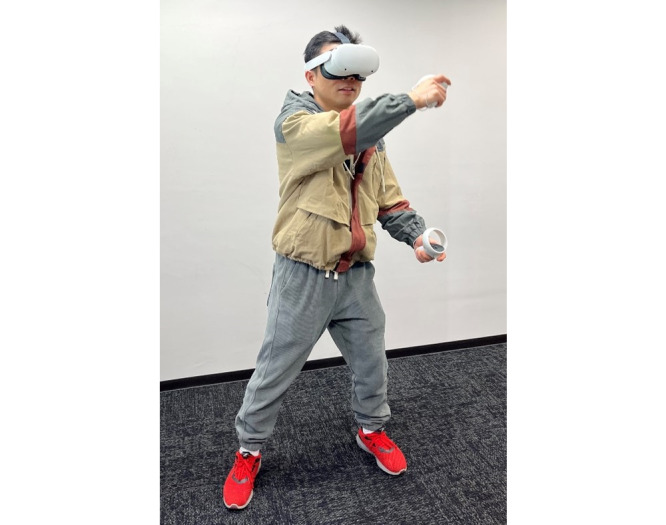
This exploratory study aims to examine the interventional efficacy of at-home immersive VR exergames on metabolic syndrome biomarkers among office workers. Additionally, it seeks to investigate the impacts of at-home immersive VR exergames on the active and sedentary behaviors of office workers.
A 3-arm, single-blinded pilot randomized controlled trial will be conducted to examine the therapeutic effects of at-home immersive VR exergames. A total of 120 Chinese office workers, engaging in less than 150 minutes per week of moderate to vigorous intensity physical activity, will be recruited via a convenience sampling method. The participants, who will be tested over a 12-week period, will be randomly assigned to one of three groups: (1) the VR exergame intervention group, (2) the regular physical activity control group, and (3) the nonexercise control group. Throughout the 12-week trial, three categories of variables will be collected across the three groups: clinical risk factors associated with metabolic syndrome, active and sedentary behaviors, and demographics. To analyze variance among the groups, a mixed linear model will be applied to assess the efficacy of each group. Differences in metabolic syndrome clinical risk factors among all groups will be used to evaluate the effects of at-home immersive VR exergames. Changes in active and sedentary behaviors will also be used to determine the impacts of VR exergames on metabolic syndrome.
The ethics committee of Guangzhou University, China, approved this study on September 25, 2024. Participant recruitment will begin in early 2025 and continue for approximately 3 months. Data will be analyzed after the 12-week trial is completed, with full results expected to be presented in early 2026.
This study explores an emerging topic by applying an at-home immersive VR exergame intervention, potentially contributing to understanding the effects of an exergame program on metabolic syndrome risk among office workers.
ClinicalTrials.gov NCT06556784; https://clinicaltrials.gov/study/NCT06556784.
INTERNATIONAL REGISTERED REPORT IDENTIFIER (IRRID): PRR1-10.2196/64560.
全球范围内非传染性疾病患病率的上升,使人们越发认识到需要确定可改变的风险因素来预防和管理这些疾病。办公室职员作为缺乏身体活动的劳动者的代表群体,面临代谢综合征的风险因素,而代谢综合征是非传染性疾病的主要驱动因素。使用虚拟现实(VR)健身游戏可能为非传染性疾病患病率上升的问题提供一个潜在解决方案,因为它可以帮助个人提高身体活动水平,同时提供更身临其境的体验。
本探索性研究旨在探讨居家沉浸式VR健身游戏对办公室职员代谢综合征生物标志物的干预效果。此外,还旨在研究居家沉浸式VR健身游戏对办公室职员的主动和久坐行为的影响。
将进行一项三臂、单盲的试点随机对照试验,以检验居家沉浸式VR健身游戏的治疗效果。通过便利抽样方法招募120名每周进行中度至剧烈强度身体活动少于150分钟的中国办公室职员。参与者将在12周内接受测试,并随机分为三组之一:(1)VR健身游戏干预组,(2)常规体育活动对照组,(3)非运动对照组。在为期12周的试验中,将在三组中收集三类变量:与代谢综合征相关的临床风险因素、主动和久坐行为以及人口统计学信息。为了分析组间差异,将应用混合线性模型来评估每组的疗效。所有组之间代谢综合征临床风险因素的差异将用于评估居家沉浸式VR健身游戏的效果。主动和久坐行为的变化也将用于确定VR健身游戏对代谢综合征的影响。
中国广州大学伦理委员会于2024年9月25日批准了本研究。参与者招募将于2025年初开始,并持续约3个月。在12周试验完成后将进行数据分析,预计完整结果将于2026年初公布。
本研究通过应用居家沉浸式VR健身游戏干预探索了一个新兴话题,可能有助于了解健身游戏计划对办公室职员代谢综合征风险的影响。
ClinicalTrials.gov NCT06556784;https://clinicaltrials.gov/study/NCT06556784。
国际注册报告识别码(IRRID):PRR1-10.2196/64560。