Universidad de Castilla-La Mancha, Health and Social Research Center, Cuenca, Spain.
Universidad Politécnica y Artística del Paraguay, Asunción, Paraguay.
J Med Internet Res. 2020 Aug 31;22(8):e17790. doi: 10.2196/17790.
Physical activity and lifestyle interventions, such as a healthy diet, have been proven to be effective approaches to manage metabolic syndrome. However, these interventions require great commitment from patients and clinicians owing to their economic costs, time consumption, and lack of immediate results.
The aim of this systematic review and meta-analysis was to analyze the effect of mobile-based health interventions for reducing cardiometabolic risk through the promotion of physical activity and healthy lifestyle behaviors.
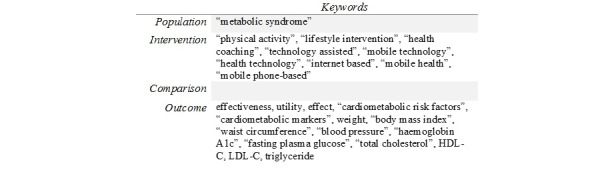
PubMed, Scopus, Web of Science, Cochrane Central Register of Controlled Trials, and SPORTdiscus databases were searched for experimental studies evaluating cardiometabolic risk indicators among individuals with metabolic syndrome who were included in technology-assisted physical activity and lifestyle interventions. Effect sizes, pooled mean changes, and their respective 95% CIs were calculated using the DerSimonian and Laird method. Outcomes included the following clinical and biochemical parameters: body composition (waist circumference [WC] and BMI), blood pressure (systolic blood pressure [SBP] and diastolic blood pressure [DBP]), glucose tolerance (fasting plasma glucose [FPG] and glycated hemoglobin A1c [HbA]), and lipid profile (total cholesterol, low-density lipoprotein cholesterol, high-density lipoprotein cholesterol [HDL-C], and triglycerides).
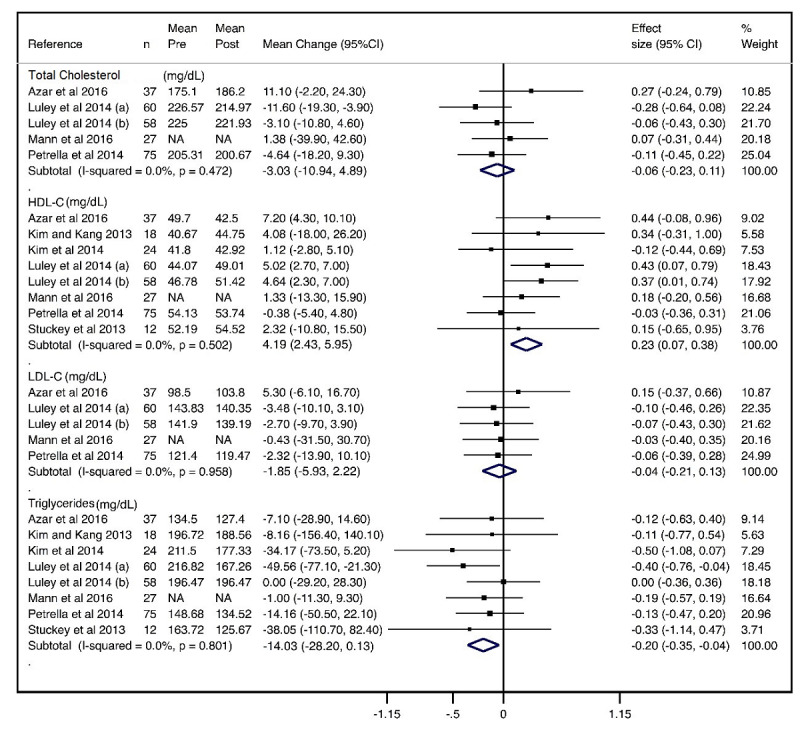
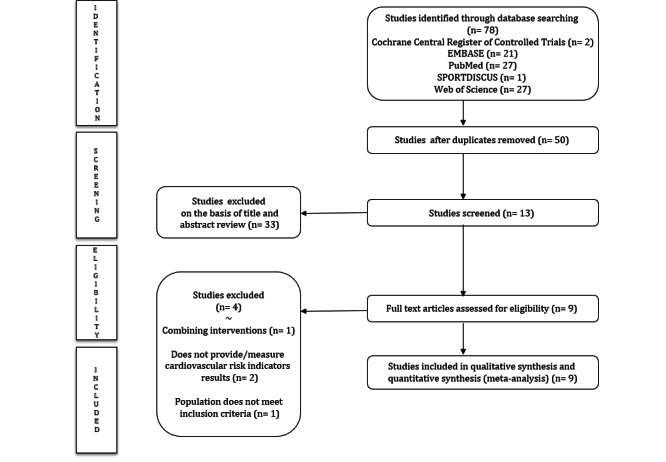
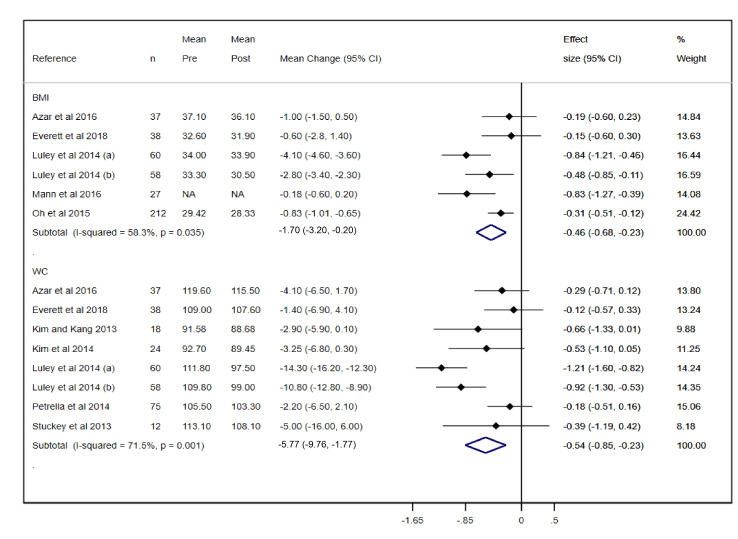
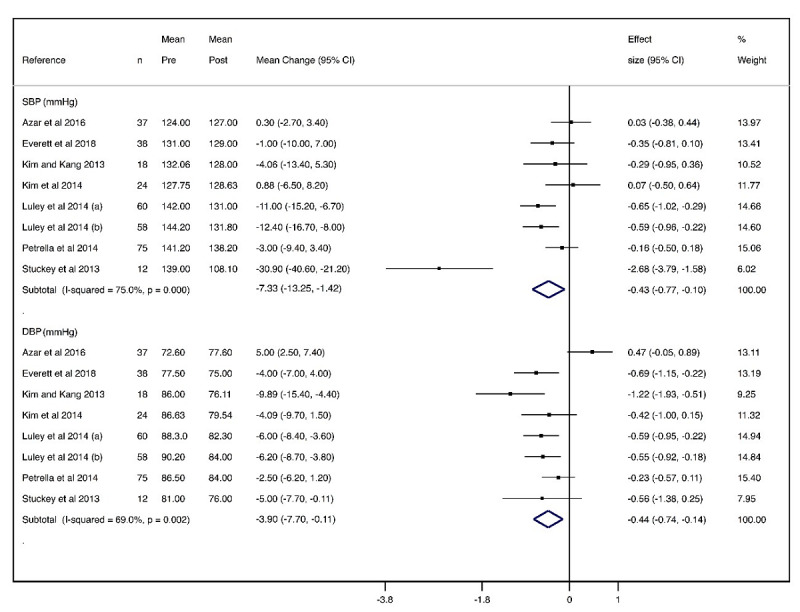
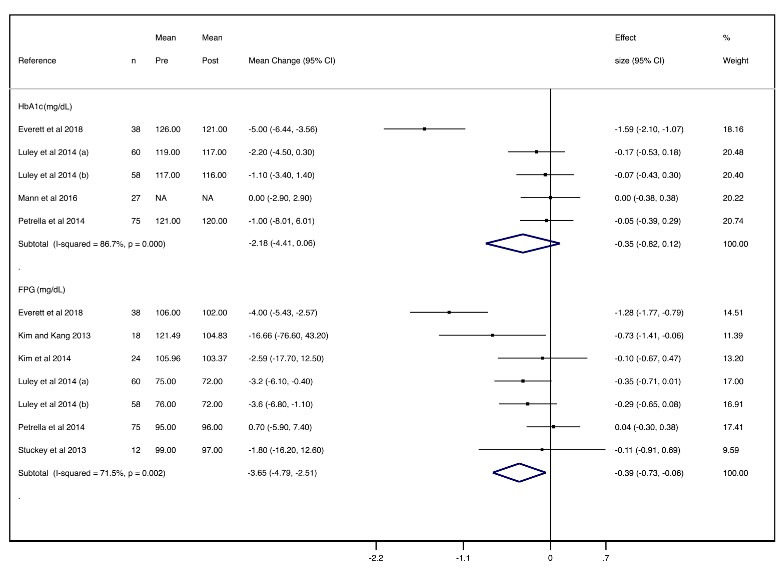
A total of nine studies were included in the meta-analysis. Owing to the scarcity of studies, only pooled mean pre-post changes in the intervention groups were estimated. Significant mean changes were observed for BMI (-1.70 kg/m2, 95% CI -3.20 to -0.20; effect size: -0.46; P=.03), WC (-5.77 cm, 95% CI -9.76 to -1.77; effect size: -0.54; P=.005), SBP (-7.33 mmHg, 95% CI -13.25 to -1.42; effect size: -0.43; P=.02), DBP (-3.90 mmHg, 95% CI -7.70 to -0.11; effect size: -0.44; P=.04), FPG (-3.65 mg/dL, 95% CI -4.79 to -2.51; effect size: -0.39; P<.001), and HDL-C (4.19 mg/dL, 95% CI 2.43-5.95; effect size: 0.23; P<.001).
Overall, mobile-based health interventions aimed at promoting physical activity and healthy lifestyle changes had a strong positive effect on cardiometabolic risk indicators among individuals with metabolic syndrome. Nevertheless, further research is required to compare this approach with usual care in order to support the incorporation of these technologies in health systems.
PROSPERO CRD42019125461; https://tinyurl.com/y3t4wog4.
体育活动和生活方式干预措施,如健康饮食,已被证明是管理代谢综合征的有效方法。然而,由于这些干预措施的经济成本、时间消耗以及缺乏即时效果,患者和临床医生需要付出巨大的努力。
本系统评价和荟萃分析旨在分析基于移动的健康干预措施通过促进体育活动和健康生活方式行为来降低心血管代谢风险的效果。
检索 PubMed、Scopus、Web of Science、Cochrane 中央对照试验注册库和 SPORTdiscus 数据库,以评估代谢综合征患者中纳入技术辅助体育活动和生活方式干预的人群的心血管代谢风险指标的实验研究。使用 DerSimonian 和 Laird 方法计算效应大小、汇总平均变化及其各自的 95%置信区间。结果包括以下临床和生化参数:身体成分(腰围[WC]和 BMI)、血压(收缩压[SBP]和舒张压[DBP])、葡萄糖耐量(空腹血糖[FPG]和糖化血红蛋白 A1c[HbA])和血脂谱(总胆固醇、低密度脂蛋白胆固醇、高密度脂蛋白胆固醇[HDL-C]和甘油三酯)。
共有 9 项研究纳入荟萃分析。由于研究数量稀少,仅估计了干预组的平均预后变化。观察到 BMI(-1.70 kg/m2,95%CI -3.20 至 -0.20;效应大小:-0.46;P=.03)、WC(-5.77 cm,95%CI -9.76 至 -1.77;效应大小:-0.54;P=.005)、SBP(-7.33 mmHg,95%CI -13.25 至 -1.42;效应大小:-0.43;P=.02)、DBP(-3.90 mmHg,95%CI -7.70 至 -0.11;效应大小:-0.44;P=.04)、FPG(-3.65 mg/dL,95%CI -4.79 至 -2.51;效应大小:-0.39;P<.001)和 HDL-C(4.19 mg/dL,95%CI 2.43-5.95;效应大小:0.23;P<.001)的平均变化有统计学意义。
总体而言,旨在促进体育活动和健康生活方式改变的基于移动的健康干预措施对代谢综合征患者的心血管代谢风险指标有很强的积极影响。然而,需要进一步的研究来比较这种方法与常规护理,以支持将这些技术纳入卫生系统。
PROSPERO CRD42019125461;https://tinyurl.com/y3t4wog4。