Fu Guolu, Xu Lili, Chen Huaqing, Lin Jinping
Nursing Department, The Second Affiliated Hospital of Zhejiang University School of Medicine, Hangzhou, 310009, China.
Nursing Department, Hangzhou Third People's Hospital, Hangzhou, 310009, China.
BMC Surg. 2025 Jan 20;25(1):32. doi: 10.1186/s12893-025-02763-6.
This review explores recent advancements in anesthesia care, focusing on the integration of innovative practices to enhance patient outcomes across the perioperative period.
Following the framework of Whitmore and Knafl, we systematically searched six databases (PubMed, Google Scholar, EMBASE, CINAHL, OVID, and Cochrane Library) for studies published from January 2020 to January 2024, relating to advancements in anesthesia care, best practice implementation, and patient outcomes. After independent screening and data extraction by two reviewers, the review focuses on innovations in anesthetic drugs, monitoring technologies, anesthesia techniques, and evidence-based practices in anesthesia and clinical guidelines.
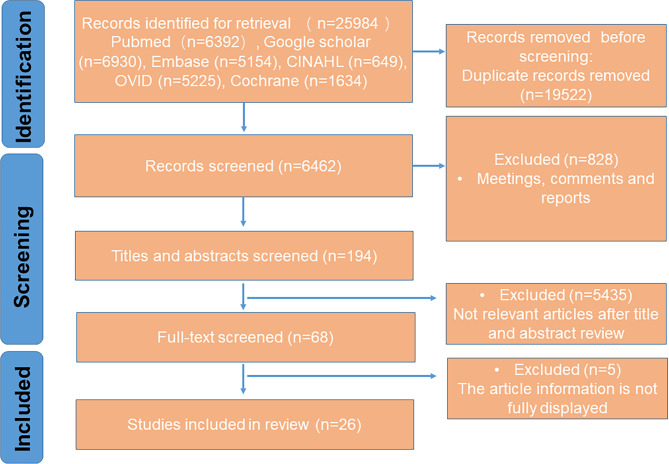
Of the 25,984 studies retrieved, 26 met inclusion criteria. Recent developments in anesthetic drugs have improved safety and efficacy, reducing complications. Advanced monitoring devices, such as multiparameter and brain function monitors, have enhanced patient safety through real-time assessments. Innovations in regional anesthesia and ultrasound-guided nerve blocks have led to better pain management, reduced recovery time, and minimized morbidity. Additionally, evidence-based practices like comprehensive preoperative assessment, patient education, and multidisciplinary teamwork significantly improved patient outcomes.
Integrating the latest innovations and best practices in anesthesia care is essential for optimizing patient outcomes. Ongoing research and adoption of advanced technologies are crucial to addressing current challenges and enhancing anesthesia quality. This review emphasizes the importance of a holistic approach from preoperative preparation to postoperative recovery to achieve optimal patient outcomes.
本综述探讨麻醉护理的最新进展,重点关注创新实践的整合,以改善围手术期患者的预后。
按照惠特莫尔和克纳夫的框架,我们系统检索了六个数据库(PubMed、谷歌学术、EMBASE、CINAHL、OVID和考科蓝图书馆),查找2020年1月至2024年1月发表的与麻醉护理进展、最佳实践实施和患者预后相关的研究。在两名评审员独立筛选和数据提取后,本综述聚焦于麻醉药物、监测技术、麻醉技术以及麻醉和临床指南中的循证实践方面的创新。
在检索到的25984项研究中,26项符合纳入标准。麻醉药物的最新进展提高了安全性和有效性,减少了并发症。先进的监测设备,如多参数和脑功能监测仪,通过实时评估提高了患者安全性。区域麻醉和超声引导神经阻滞的创新带来了更好的疼痛管理、缩短了恢复时间并将发病率降至最低。此外,全面的术前评估、患者教育和多学科团队合作等循证实践显著改善了患者预后。
整合麻醉护理中的最新创新和最佳实践对于优化患者预后至关重要。持续的研究和采用先进技术对于应对当前挑战和提高麻醉质量至关重要。本综述强调了从术前准备到术后恢复采取整体方法以实现最佳患者预后的重要性。