Shin Dongkwan, Gong Jeong-Ryeol, Jeong Seoyoon D, Cho Youngwon, Kim Hwang-Phill, Kim Tae-You, Cho Kwang-Hyun
Department of Bio and Brain Engineering, Korea Advanced Institute of Science and Technology (KAIST), Daejeon, 34141, Republic of Korea.
Research Institute, National Cancer Center, Goyang, 10408, Republic of Korea.
Adv Sci (Weinh). 2025 Feb;12(8):e2412503. doi: 10.1002/advs.202412503. Epub 2025 Jan 22.
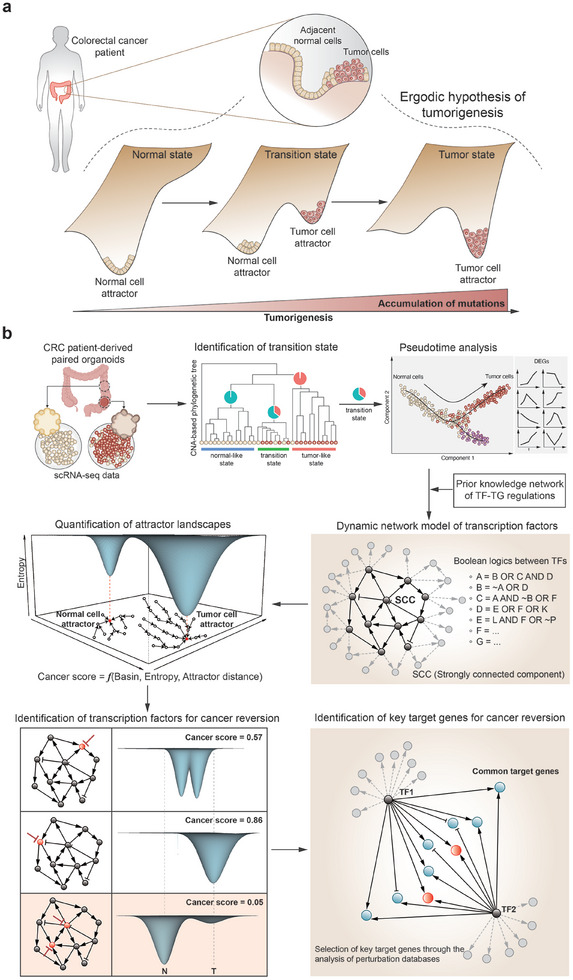
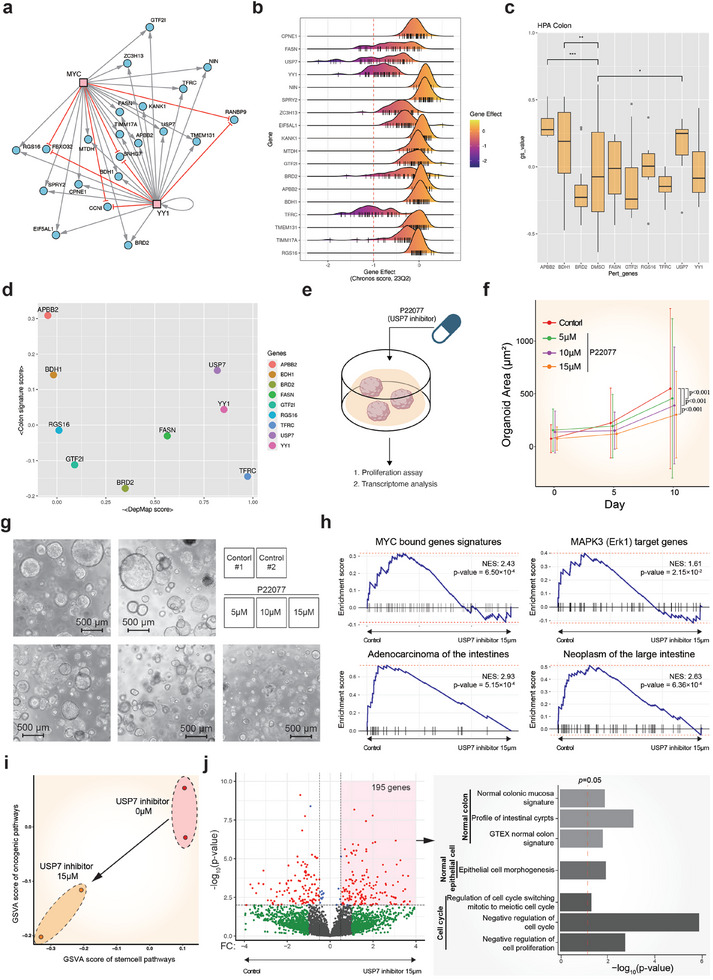
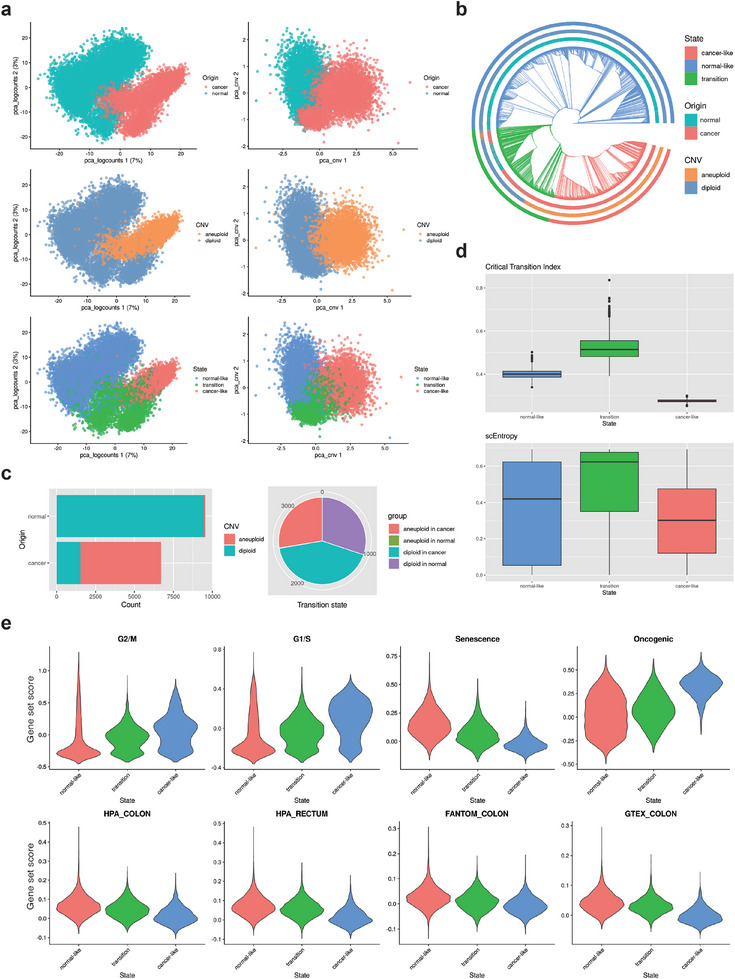
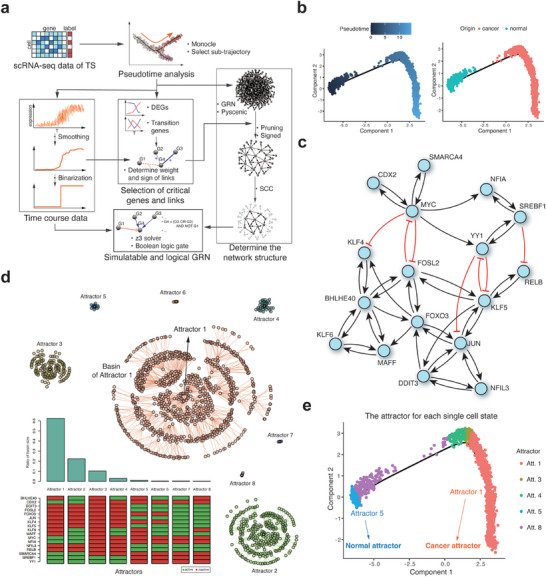
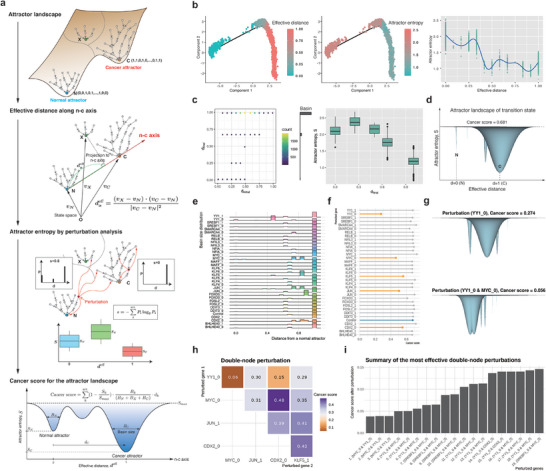
A cell fate change such as tumorigenesis incurs critical transition. It remains a longstanding challenge whether the underlying mechanism can be unraveled and a molecular switch that can reverse such transition is found. Here a systems framework, REVERT, is presented with which can reconstruct the core molecular regulatory network model and a reversion switch based on single-cell transcriptome data over the transition process is identified. The usefulness of REVERT is demonstrated by applying it to single-cell transcriptome of patient-derived matched organoids of colon cancer and normal colon. REVERT is a generic framework that can be applied to investigate various cell fate transition phenomena.
诸如肿瘤发生这样的细胞命运改变会引发关键转变。潜在机制能否被揭示以及能否找到可逆转这种转变的分子开关,仍然是一个长期存在的挑战。在此,我们提出了一个系统框架REVERT,它可以重建核心分子调控网络模型,并基于过渡过程中的单细胞转录组数据识别出一个逆转开关。通过将REVERT应用于结肠癌和正常结肠的患者来源匹配类器官的单细胞转录组,证明了其有效性。REVERT是一个通用框架,可用于研究各种细胞命运转变现象。