Cho Sung-Hwan, Park Sang-Min, Lee Ho-Sung, Lee Hwang-Yeol, Cho Kwang-Hyun
Laboratory for Systems Biology and Bio-Inspired Engineering, Department of Bio and Brain Engineering, Korea Advanced Institute of Science and Technology (KAIST), Daejeon, 34141, Republic of Korea.
Graduate School of Medical Science and Engineering, Korea Advanced Institute of Science and Technology (KAIST), Daejeon, 34141, Republic of Korea.
BMC Syst Biol. 2016 Oct 20;10(1):96. doi: 10.1186/s12918-016-0341-9.
Colorectal cancer arises from the accumulation of genetic mutations that induce dysfunction of intracellular signaling. However, the underlying mechanism of colorectal tumorigenesis driven by genetic mutations remains yet to be elucidated.
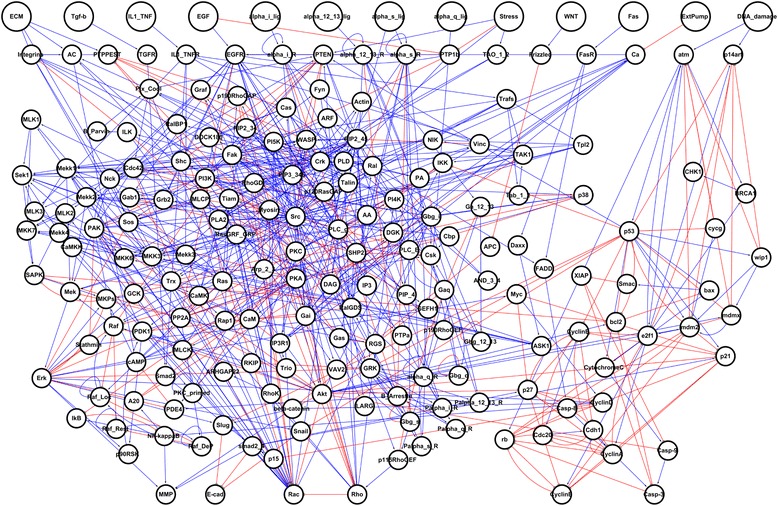
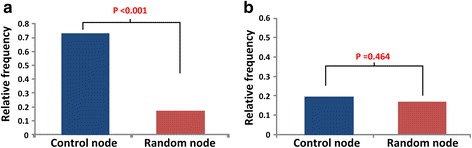
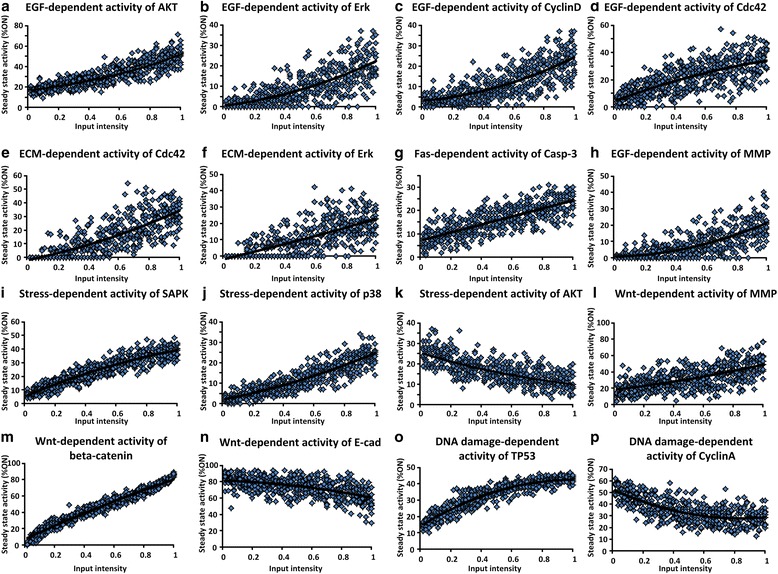
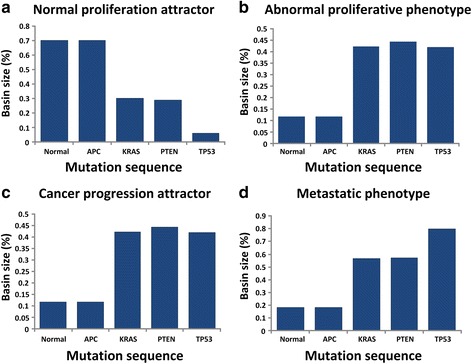
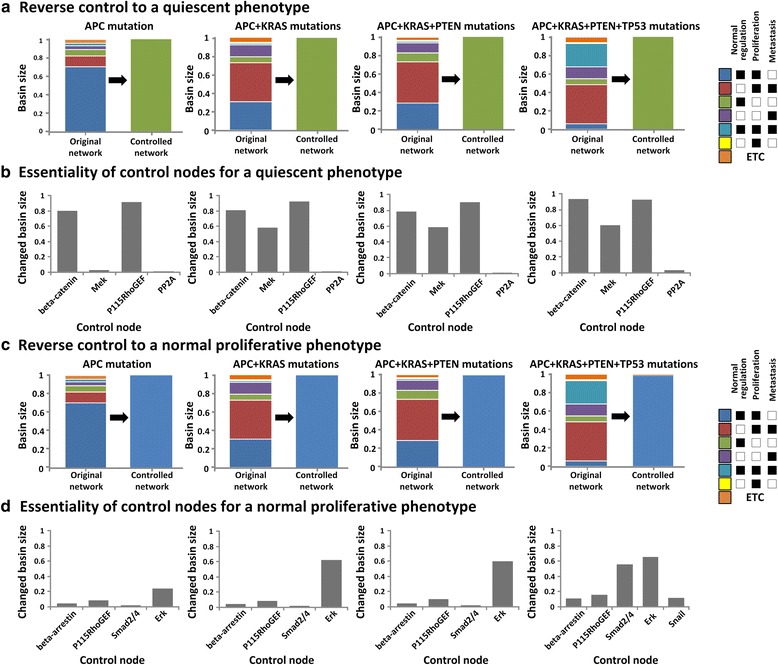
To investigate colorectal tumorigenesis at a system-level, we have reconstructed a large-scale Boolean network model of the human signaling network by integrating previous experimental results on canonical signaling pathways related to proliferation, metastasis, and apoptosis. Throughout an extensive simulation analysis of the attractor landscape of the signaling network model, we found that the attractor landscape changes its shape by expanding the basin of attractors for abnormal proliferation and metastasis along with the accumulation of driver mutations. A further hypothetical study shows that restoration of a normal phenotype might be possible by reversely controlling the attractor landscape. Interestingly, the targets of approved anti-cancer drugs were highly enriched in the identified molecular targets for the reverse control.
Our results show that the dynamical analysis of a signaling network based on attractor landscape is useful in acquiring a system-level understanding of tumorigenesis and developing a new therapeutic strategy.
结直肠癌源于诱导细胞内信号传导功能障碍的基因突变积累。然而,由基因突变驱动的结直肠癌发生的潜在机制仍有待阐明。
为了在系统层面研究结直肠癌发生,我们通过整合先前关于与增殖、转移和凋亡相关的经典信号通路的实验结果,重建了人类信号网络的大规模布尔网络模型。通过对信号网络模型的吸引子景观进行广泛的模拟分析,我们发现随着驱动突变的积累,吸引子景观通过扩大异常增殖和转移的吸引子盆地来改变其形状。进一步的假设研究表明,通过反向控制吸引子景观可能恢复正常表型。有趣的是,已批准抗癌药物的靶点在反向控制所确定的分子靶点中高度富集。
我们的结果表明,基于吸引子景观的信号网络动态分析有助于从系统层面理解肿瘤发生并制定新的治疗策略。