Obi Ogugua Ndili, Polite Paula Yette, Fish Kenneth M, DeLuca Robert, Feustel Paul J, Mandis Alexandra E, Coleman Annetta M, Judson Marc A
Division of Pulmonary, Critical Care, and Sleep Medicine, The Brody School of Medicine, East Carolina University, 600 Moye Blvd, Greenville, NC, 27834, USA.
Sarcoidosis Research Institute, Memphis, TN, 38111, USA.
Lung. 2025 Jan 22;203(1):31. doi: 10.1007/s00408-024-00761-8.
The priorities and concerns of sarcoidosis patients in the United States (US) have not been well-described.
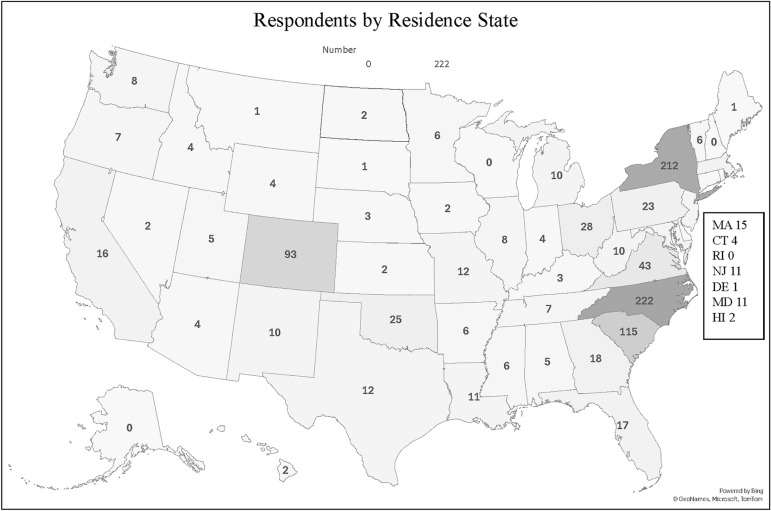
A survey constructed by sarcoidosis patients and doctors was administered to US sarcoidosis patients. The survey queried patients concerning their demographics, disease state, disease impact on health and well-being, health care priorities and impressions of sarcoidosis care. Respondents were solicited via social media and networking with sarcoidosis clinicians.
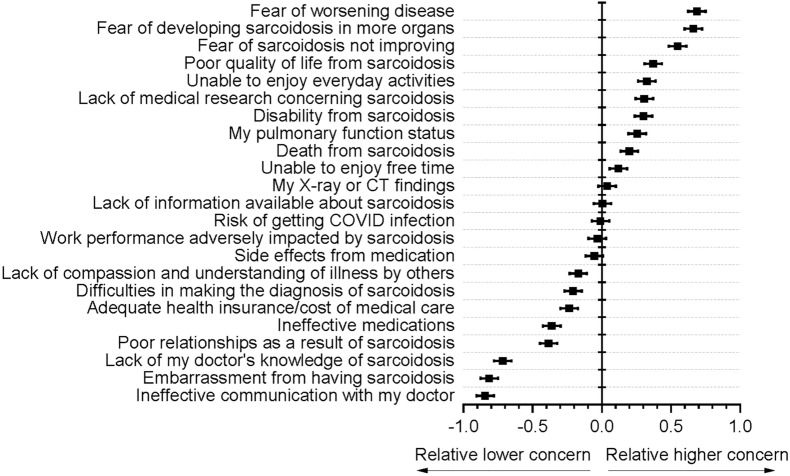
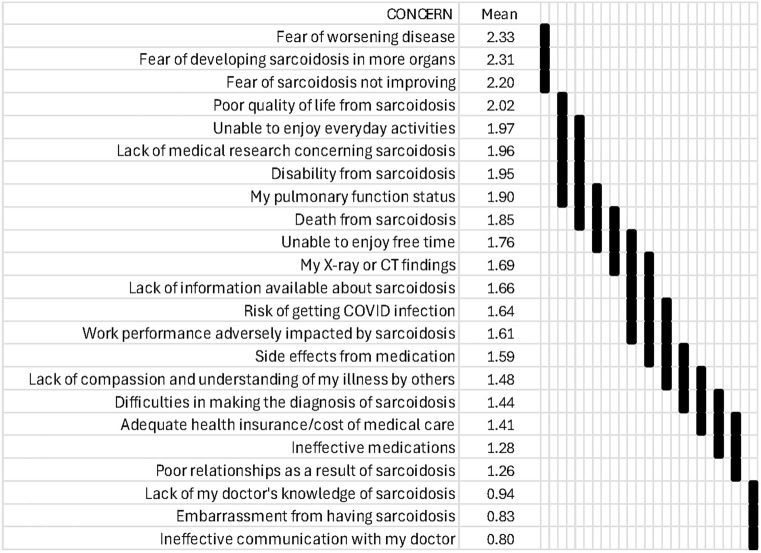
1018 US sarcoidosis patients completed this survey. 65% were female, 63% White, 34% Black, and 87% > 45 years old. The most common organs involved were the lungs 87%, skin 30%, heart 25%, and eyes 25%. Household income was < $50 K in 31% and > $150 K in 14% of patients. There was a fairly even split between those living in urban (29%), suburban (42%), and rural (29%) environments. The patients'greatest concerns were fear of worsening disease, fear of sarcoidosis developing in more organs, and fear of sarcoidosis not improving. These were closely followed by concerns about poor health-related quality of life (HRQoL), inability to enjoy everyday activities, lack of medical research, disability from sarcoidosis, and pulmonary function status. Lack of physician knowledge and poor physician communication were ranked of lowest concern. Concerns about ineffective medications and cost of medical care were also ranked relatively low. Patients overwhelmingly considered information from their doctor as very useful.
In this survey of over 1000 US sarcoidosis patients, their greatest concerns were fear of poor clinical outcomes. The patients were relatively less concerned about their doctors' knowledge about sarcoidosis and poor physician communication. Although patients expressed significant concerns about poor HRQoL, not all domains of HRQoL were equally affected. US sarcoidosis patients rank concerns about disease progression higher than disease impact on HRQoL.
美国结节病患者的优先事项和担忧尚未得到充分描述。
由结节病患者和医生共同构建的一项调查问卷被发放给美国的结节病患者。该问卷询问了患者的人口统计学信息、疾病状态、疾病对健康和幸福的影响、医疗保健优先事项以及对结节病护理的印象。通过社交媒体以及与结节病临床医生建立联系来征集受访者。
1018名美国结节病患者完成了此项调查。65%为女性,63%为白人,34%为黑人,87%年龄大于45岁。最常受累的器官是肺(87%)、皮肤(30%)、心脏(25%)和眼睛(25%)。31%的患者家庭收入低于5万美元,14%的患者家庭收入高于15万美元。居住在城市(29%)、郊区(42%)和农村(29%)环境中的患者比例相当。患者最主要的担忧是害怕疾病恶化、害怕结节病累及更多器官以及害怕结节病没有改善。紧随其后的是对健康相关生活质量差、无法享受日常活动、缺乏医学研究、结节病导致的残疾以及肺功能状态的担忧。对医生知识缺乏和医生沟通不良的担忧程度最低。对药物无效和医疗费用的担忧程度也相对较低。患者压倒性地认为来自医生的信息非常有用。
在这项对1000多名美国结节病患者的调查中,他们最主要的担忧是害怕临床结局不佳。患者相对不太担心医生对结节病的了解以及医生沟通不良。尽管患者对健康相关生活质量差表达了重大担忧,但并非健康相关生活质量的所有领域都受到同等影响。美国结节病患者对疾病进展的担忧高于疾病对健康相关生活质量的影响。