Alawi Marwa, Smyth Cian, Drissner David, Zimmerer Anna, Leupold Denise, Müller Daria, Do Thi Thuy, Velasco-Torrijos Trinidad, Walsh Fiona
Department of Biology, Maynooth University, Maynooth, County Kildare, Ireland.
Kathleen Lonsdale Institute for Human Health Research, Maynooth University, Maynooth, County Kildare, Ireland.
NPJ Antimicrob Resist. 2024 Mar 18;2(1):7. doi: 10.1038/s44259-024-00024-9.
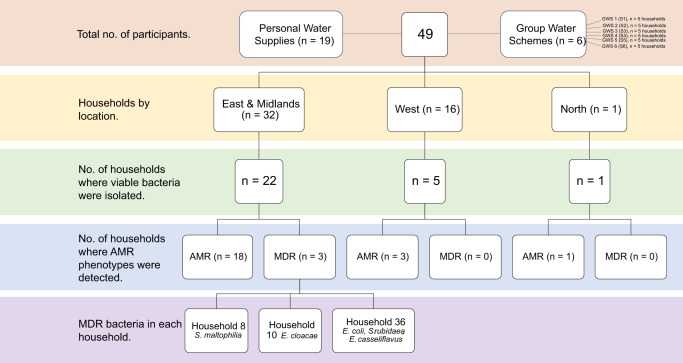
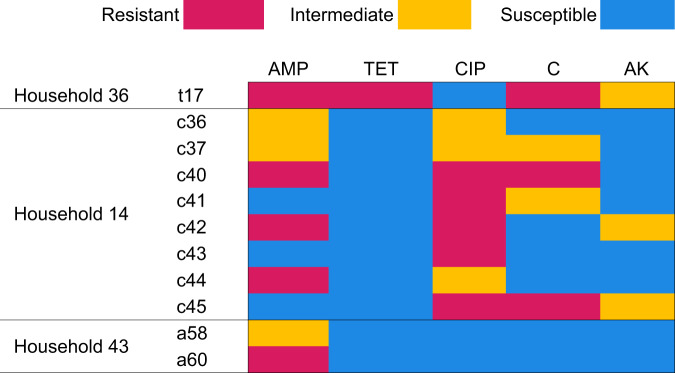
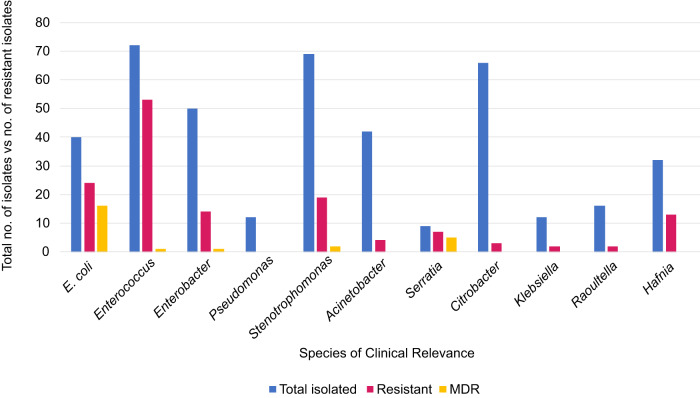
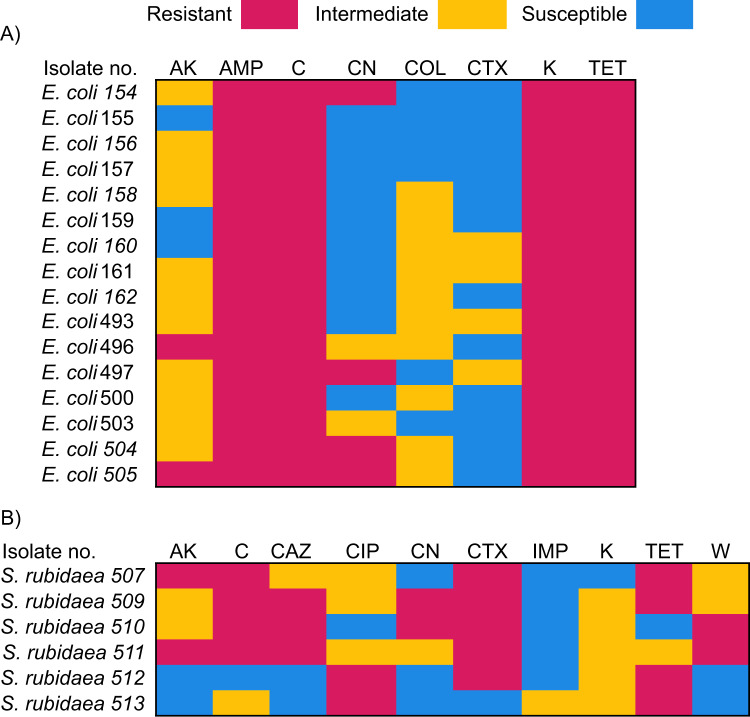
Water quality testing does not recognise antimicrobial resistance (AMR) and is often limited to indicators of faecal contamination Escherichia coli and Enterococcus species. In Europe, data on AMR in drinking water is scarce. In Ireland, as in many countries, household drinking water is supplied via mains or via private wells or water schemes. Using citizen science, we identified Irish private drinking water supplies as reservoirs of antimicrobial resistant bacteria (ARB). Gram-negative (n = 464) and Gram-positive (n = 72) bacteria were isolated. We identified instances of potentially opportunistic ARB such as Enterobacter cloacae, Acinetobacter baumannii and Enterococcus species. We report reservoirs of multidrug resistance in Enterococcus casseliflavus, E. cloacae, E. coli, Stenotrophomonas maltophilia, and Serratia rubidaea. We also identified linezolid-resistant Enterococcus in Irish drinking water. Linezolid is a last-resort antibiotic used to treat vancomycin-resistant Enterococcus sp. Additionally, we identified mobile AMR in three water samples, two of which were carried on IncF group, one on IncQ and five on Col-like plasmids. Our work suggests that private drinking water is a potential sink and source of AMR pathogens. This highlights a value of drinking water surveillance in a One Health framework as the surveillance would provide information regarding the movement and persistence of ARB and ARGs that are able to survive in drinking water and subsequently have the opportunity to be mobilised through humans; linking the environment to the human and potentially threatening human health.
水质检测无法识别抗菌药物耐药性(AMR),并且通常仅限于粪便污染指标——大肠杆菌和肠球菌属。在欧洲,关于饮用水中AMR的数据很少。在爱尔兰,与许多国家一样,家庭饮用水通过市政供水、私人水井或供水系统供应。通过公民科学,我们确定爱尔兰的私人饮用水供应是抗菌药物耐药菌(ARB)的储存库。分离出革兰氏阴性菌(n = 464)和革兰氏阳性菌(n = 72)。我们发现了潜在的机会性ARB实例,如阴沟肠杆菌、鲍曼不动杆菌和肠球菌属。我们报告了在格氏肠球菌、阴沟肠杆菌、大肠杆菌、嗜麦芽窄食单胞菌和深红沙雷氏菌中存在多重耐药性储存库。我们还在爱尔兰饮用水中发现了耐利奈唑胺的肠球菌。利奈唑胺是一种用于治疗耐万古霉素肠球菌的最后手段抗生素。此外,我们在三个水样中发现了可移动的AMR,其中两个携带在IncF组质粒上,一个携带在IncQ质粒上,五个携带在Col样质粒上。我们的研究表明,私人饮用水是AMR病原体的潜在汇聚地和来源。这凸显了在“同一健康”框架下进行饮用水监测的价值。因为这种监测将提供有关能够在饮用水中存活并随后有机会通过人类传播的ARB和ARG的移动和持久性的信息,将环境与人类联系起来,并可能威胁人类健康。