Jiang Liu-Shan, Zhou Qing-Xiang
College of Chemical Engineering and Environment, China University of Petroleum-Beijing, Beijing 102249, China.
Se Pu. 2025 Feb;43(2):107-119. doi: 10.3724/SP.J.1123.2024.07020.
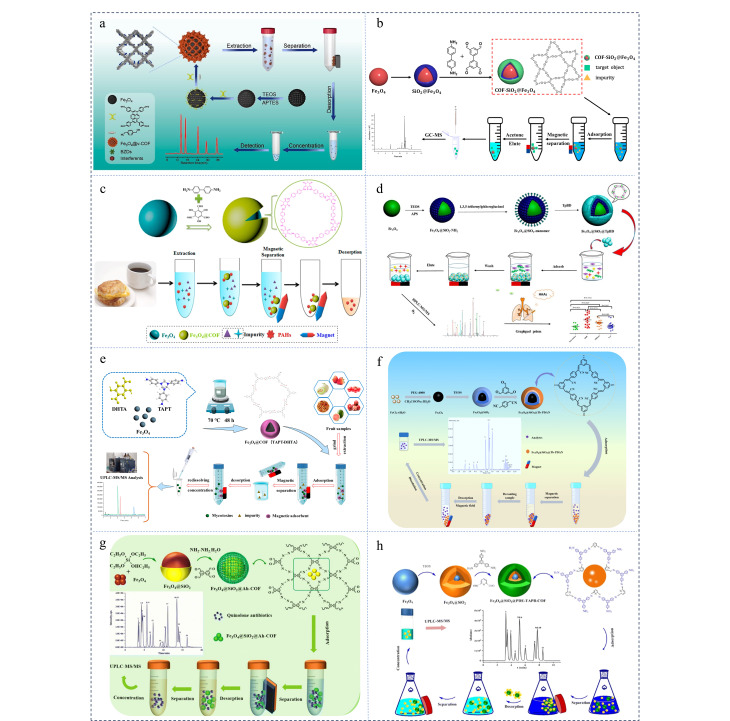
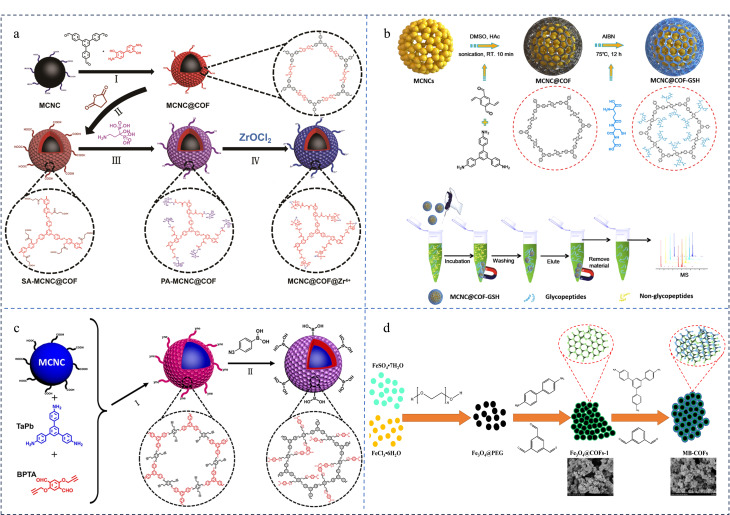
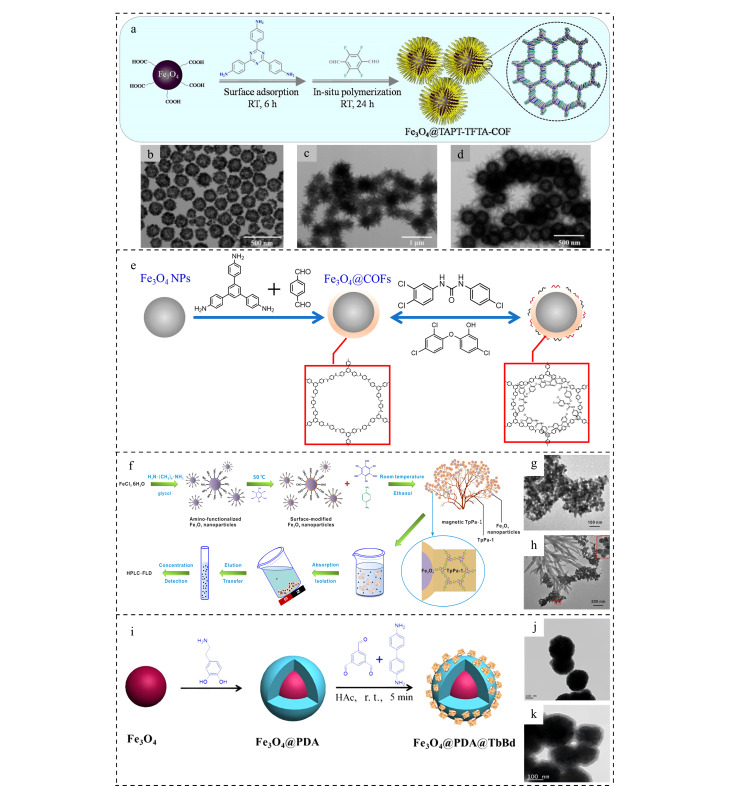
Trace contaminants are toxic and their widespread presence in the environment potentially threatens human health. The levels of these pollutants are often difficult to determine directly using instruments owing to the complexities of environment matrices. Hence, pretreatment steps, such as sample purification and concentration, are key along with various processes that enhance the accuracy and sensitivity of the detection method. To date, researchers have successfully developed a variety of efficient and reliable sample-pretreatment techniques that are based on different principles. Among these, magnetic solid-phase extraction (MSPE) is a rapid and efficient sample-pretreatment technology that is based on the similar solid-phase-extraction (SPE) principle, which mainly enriches target analytes by exploiting their interactions with functional groups on the surfaces of magnetic materials, thereby achieving rapid separation when an external magnetic field is applied. MSPE has been a focus of attention in the environmental-sample-pretreatment, food-analysis, and other fields owing to advantages that include ease of operation, low cost, and high enrichment efficiency. The selection of the magnetic material is key to MSPE process because traditional magnetic materials exhibit certain functionality limitations. Accordingly, designing and synthesizing green and efficient functionalized magnetic materials have become a research focus in this field, with researchers having extensively explored multiple ways of preparing functionalized modified magnetic materials through the introduction of a variety of emerging materials, including metal-organic frameworks (MOFs), covalent organic frameworks (COFs), carbon nanotubes (CNTs), graphene oxide (GO), and other specific functional groups to modify magnetic materials and effectively expanded the applications scope of MSPE. Among these, COFs are porous crystalline materials consisting of light elements (C, N, H, O and B, etc.) linked through covalent bonds. COFs are mainly classified as imine COFs, boronic-acid COFs, triazine COFs, and ketenimine COFs according to bonding type. Moreover, it is worth mentioning that COFs can be synthesized from a number of monomers, and the functional groups exposed on the COF surface can also be used for further modification purposes. COFs are versatile and modifiable; consequently, they have attracted significant research attention, with a series of COF-functionalized magnetic materials having been designed and synthesized. The magnetic COFs (MCOFs) combine the advantages of COFs and magnetic materials. MCOFs are not only endowed with the large specific surface areas, high porosities, and good stabilities that are characteristic of COFs, but also exhibit the rapid separation and reusability characteristics of magnetic material, thereby quickly and efficiently enriching targets through hydrogen bonding, hydrophobicity, stacking, and van der Waals forces, making them ideal sample-pretreatment materials. MCOFs have also been converted into more-versatile functional materials using post-modification strategies. Combining MCOFs with advanced analytical techniques, such as high performance liquid chromatography (HPLC) and gas chromatography-mass spectrometry (GC-MS) has effectively improved the limits of detection (LODs) for various analytes as well as method accuracy; these techniques have been widely used to enrich and detect trace pollutants. However, some material design and synthesis challenges remain and need to be overcome, despite the promising potential of MCOFs. Future research needs to focus on exploring novel synthetic strategies that reduce experimental costs and improve the functionalities of MCOFs while expanding their applicabilities to broader sample matrices. In this review, we first introduce and discuss the construction and functionalized designs of various MCOF composites, and then summarize their use in applications that include the enrichment and detection of pesticides, endocrine disruptors (EDCs), pharmaceuticals, and personal care products (PPCPs), and finally provide an outlook on future developmental prospects.
痕量污染物具有毒性,它们在环境中的广泛存在可能威胁人类健康。由于环境基质的复杂性,使用仪器直接测定这些污染物的含量往往很困难。因此,诸如样品净化和浓缩等预处理步骤至关重要,同时还需要各种提高检测方法准确性和灵敏度的过程。迄今为止,研究人员已成功开发出多种基于不同原理的高效可靠的样品预处理技术。其中,磁性固相萃取(MSPE)是一种基于类似固相萃取(SPE)原理的快速高效的样品预处理技术,它主要通过利用目标分析物与磁性材料表面官能团的相互作用来富集目标分析物,从而在施加外部磁场时实现快速分离。由于操作简便、成本低和富集效率高等优点,MSPE一直是环境样品预处理、食品分析等领域关注的焦点。磁性材料的选择是MSPE过程的关键,因为传统磁性材料存在一定的功能局限性。因此,设计和合成绿色高效的功能化磁性材料已成为该领域的研究热点,研究人员通过引入多种新兴材料,包括金属有机框架(MOF)、共价有机框架(COF)、碳纳米管(CNT)、氧化石墨烯(GO)等特定官能团来修饰磁性材料,广泛探索了多种制备功能化改性磁性材料的方法,有效扩大了MSPE的应用范围。其中,COF是由轻元素(C、N、H、O和B等)通过共价键连接而成的多孔晶体材料。根据键合类型,COF主要分为亚胺COF、硼酸COF、三嗪COF和烯酮亚胺COF。此外,值得一提的是,COF可以由多种单体合成,COF表面暴露的官能团也可用于进一步修饰。COF具有多功能性且可改性,因此吸引了大量研究关注,一系列COF功能化磁性材料已被设计和合成。磁性COF(MCOF)结合了COF和磁性材料的优点。MCOF不仅具有COF特有的大比表面积、高孔隙率和良好稳定性,还表现出磁性材料的快速分离和可重复使用特性,从而通过氢键、疏水性、堆积和范德华力快速有效地富集目标,使其成为理想的样品预处理材料。通过后修饰策略,MCOF还被转化为更具多功能性的功能材料。将MCOF与高效液相色谱(HPLC)和气相色谱 - 质谱联用(GC - MS)等先进分析技术相结合,有效提高了各种分析物的检测限(LOD)以及方法准确性;这些技术已广泛用于富集和检测痕量污染物。然而,尽管MCOF具有广阔的应用前景,但仍存在一些材料设计和合成方面的挑战需要克服。未来的研究需要专注于探索新的合成策略,以降低实验成本,提高MCOF的功能,同时将其应用扩展到更广泛的样品基质。在本综述中,我们首先介绍和讨论各种MCOF复合材料的构建和功能化设计,然后总结它们在农药、内分泌干扰物(EDC)、药物和个人护理产品(PPCP)的富集和检测等应用中的使用情况,最后展望未来的发展前景。