Jackson Luke R, Erickson Anna, Camphausen Kevin, Krauze Andra V
Radiation Oncology Branch, Center for Cancer Research, National Cancer Institute, National Institute of Health, 9000 Rockville Pike, Building 10, CRC, Bethesda, MD 20892, USA.
Curr Oncol. 2024 Dec 28;32(1):16. doi: 10.3390/curroncol32010016.
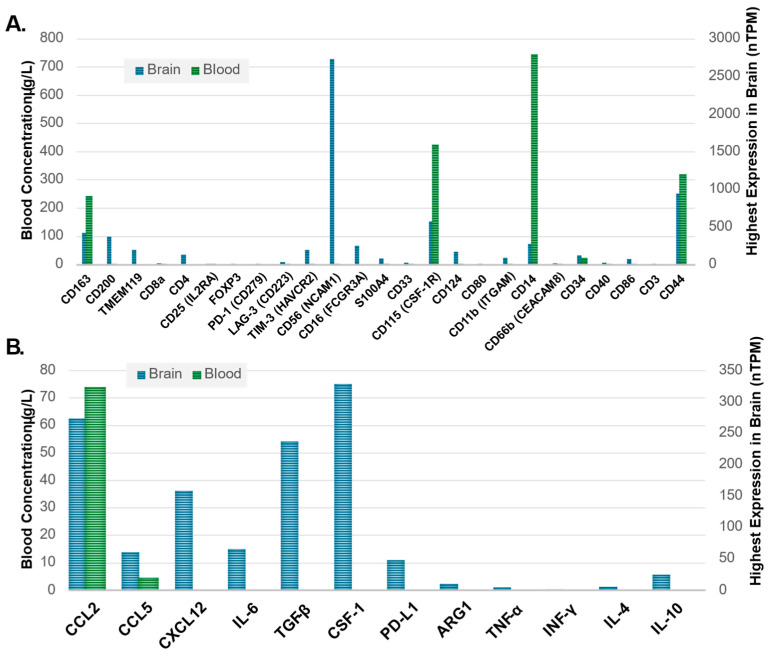
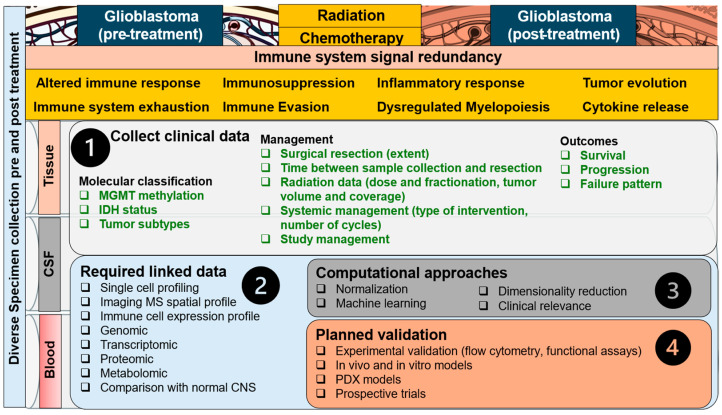
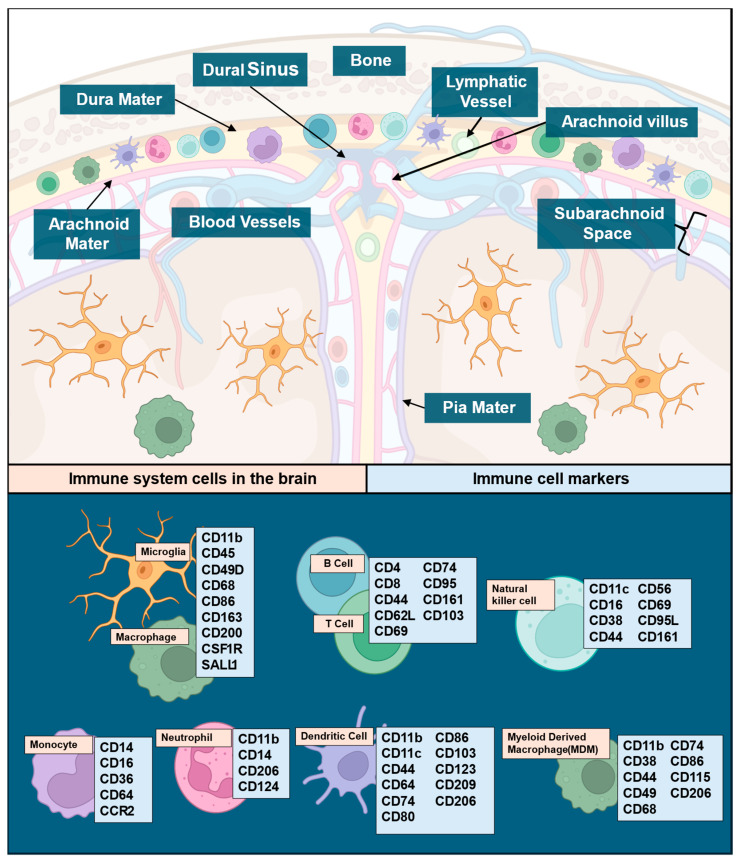
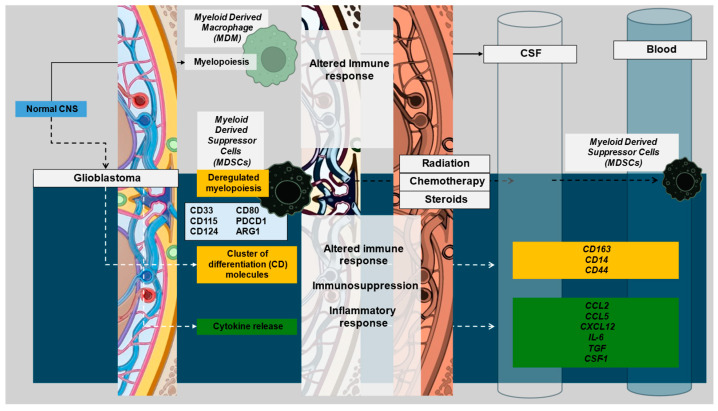
Glioblastoma (GBM) is a primary central nervous system malignancy with a median survival of 15-20 months. The presence of both intra- and intertumoral heterogeneity limits understanding of biological mechanisms leading to tumor resistance, including immune escape. An attractive field of research to examine treatment resistance are immune signatures composed of cluster of differentiation (CD) markers and cytokines. CD markers are surface markers expressed on various cells throughout the body, often associated with immune cells. Cytokines are the effector molecules of the immune system. Together, CD markers and cytokines can serve as useful biomarkers to reflect immune status in patients with GBM. However, there are gaps in the understanding of the intricate interactions between GBM and the peripheral immune system and how these interactions change with standard and immune-modulating treatments. The key to understanding the true nature of these interactions is through multi-omic analysis of tumor progression and treatment response. This review aims to identify potential non-invasive blood-based biomarkers that can contribute to an immune signature through multi-omic approaches, leading to a better understanding of immune involvement in GBM.
胶质母细胞瘤(GBM)是一种原发性中枢神经系统恶性肿瘤,中位生存期为15至20个月。肿瘤内和肿瘤间异质性的存在限制了对导致肿瘤耐药(包括免疫逃逸)的生物学机制的理解。一个有吸引力的研究领域是由分化簇(CD)标志物和细胞因子组成的免疫特征,用于研究治疗耐药性。CD标志物是全身各种细胞上表达的表面标志物,通常与免疫细胞相关。细胞因子是免疫系统的效应分子。CD标志物和细胞因子共同可作为有用的生物标志物,以反映GBM患者的免疫状态。然而,对于GBM与外周免疫系统之间复杂的相互作用以及这些相互作用如何随标准治疗和免疫调节治疗而变化,我们的了解还存在空白。理解这些相互作用的真正本质的关键在于对肿瘤进展和治疗反应进行多组学分析。本综述旨在确定潜在的基于血液的非侵入性生物标志物,这些标志物可通过多组学方法有助于形成免疫特征,从而更好地理解免疫在GBM中的作用。