Dericioglu Dilara, Methven Lisa, Clegg Miriam E
Hugh Sinclair Unit of Human Nutrition, Department of Food and Nutritional Sciences, University of Reading, Whiteknights, Reading, RG6 6DZ, UK.
Institute of Food, Nutrition and Health, University of Reading, Whiteknights, Reading, RG6 6EU, UK.
Eur J Nutr. 2025 Jan 24;64(2):71. doi: 10.1007/s00394-024-03571-z.
With ageing, older adults (≥ 65 years) may experience decreased appetite, contributing to declines in body weight and muscle mass, potentially affecting physical capabilities. Physical activity (PA) has been suggested as a potential strategy to enhance appetite in older adults, but evidence supporting this is insufficient. This study aimed to investigate the relationship between PA levels, total energy expenditure (TEE), body composition, energy intake (EI) and appetite in older adults.
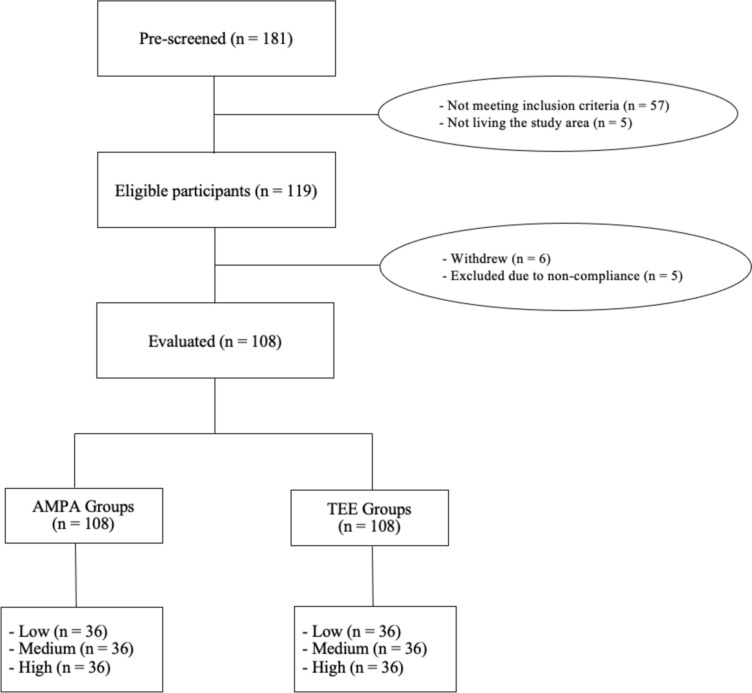
One hundred and eight healthy older adults (age 70 ± 4 years; BMI 24.3 ± 2.6 kg/m) were categorised into three groups (low, medium, high) based on accelerometer-measured PA level (AMPA) and TEE from 7-day PA diaries. Body composition was measured using bioelectrical impedance. Energy and nutrient intakes were assessed using 3-day weighed food diaries. Appetite was assessed using the visual analogue scales at 30-min intervals throughout 1 day.
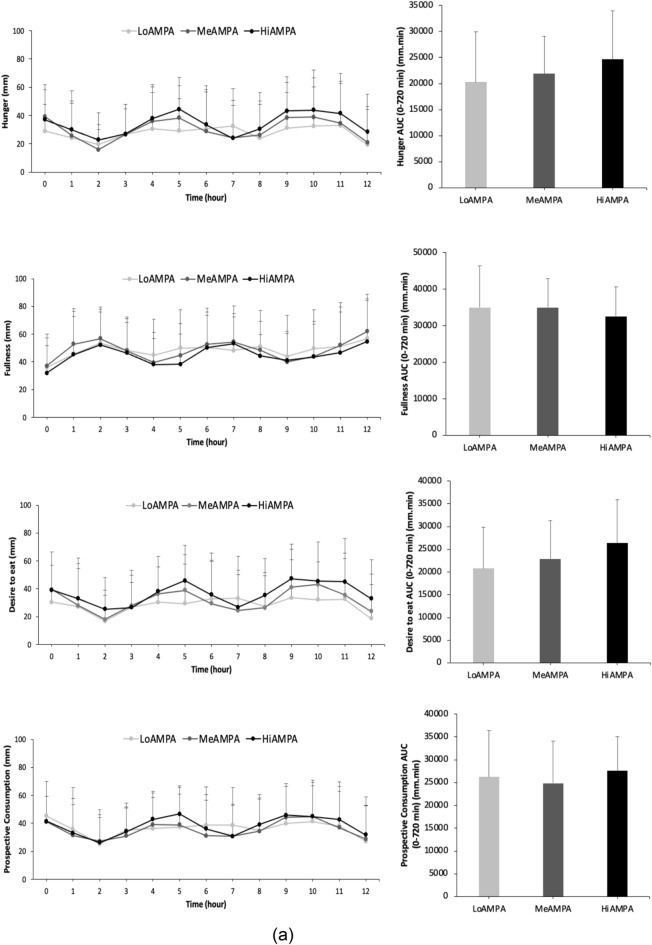
TEE was positively correlated with EI and % muscle mass (p < 0.05), with higher % muscle mass and TEE associated with higher EI. Energy and protein intake were significantly higher in the high TEE group than the low group (p = 0.03, p = 0.01; respectively). No significant differences in energy and macronutrient intake were observed across AMPA groups, and appetite components (hunger, fullness, desire to eat, prospective consumption) did not differ significantly in either the AMPA or TEE groups.
Higher TEE is associated with higher energy and protein intake, with body composition playing a crucial role. These findings highlight the importance of considering PA, TEE, and body composition in interventions aimed at improving EI in older adults.
clinicaltrials.gov as NCT05067036. Registered 2 October 2021, https://classic.
gov/ct2/show/NCT05067036.
随着年龄增长,老年人(≥65岁)可能会出现食欲下降,导致体重和肌肉量减少,这可能会影响身体机能。体育活动(PA)被认为是增强老年人食欲的一种潜在策略,但支持这一观点的证据并不充分。本研究旨在调查老年人的PA水平、总能量消耗(TEE)、身体成分、能量摄入(EI)和食欲之间的关系。
108名健康老年人(年龄70±4岁;体重指数24.3±2.6kg/m²)根据加速度计测量的PA水平(AMPA)和7天PA日记中的TEE分为三组(低、中、高)。使用生物电阻抗测量身体成分。使用3天称重食物日记评估能量和营养摄入。在一天中每隔30分钟使用视觉模拟量表评估食欲。
TEE与EI和肌肉量百分比呈正相关(p<0.05),肌肉量百分比和TEE越高,EI越高。高TEE组的能量和蛋白质摄入量显著高于低TEE组(分别为p=0.03,p=0.01)。在AMPA组中,能量和常量营养素摄入量没有显著差异,并且在AMPA组或TEE组中,食欲成分(饥饿感、饱腹感、进食欲望、预期摄入量)也没有显著差异。
较高的TEE与较高的能量和蛋白质摄入量相关,身体成分起着关键作用。这些发现强调了在旨在改善老年人EI的干预措施中考虑PA、TEE和身体成分的重要性。
clinicaltrials.gov,编号NCT05067036。于2021年10月2日注册,https://classic.clinicaltrials.gov/ct2/show/NCT05067036 。