Nakayama Masanori, Kiyota Yasuhiro, Nakamura Soichiro, Yagi Mitsuru
Department of Orthopaedic Surgery, School of Medicine, International University of Health and Welfare (IUHW), Narita Hospital, 852 Hatakeda, Narita 286-8520, Japan.
Department of Orthopaedic Surgery, Keio University School of Medicine, Tokyo 160-8582, Japan.
J Clin Med. 2025 Jan 7;14(2):319. doi: 10.3390/jcm14020319.
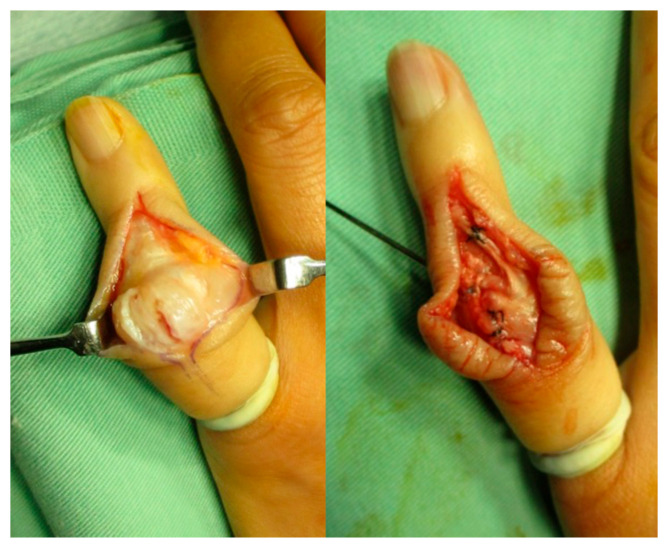
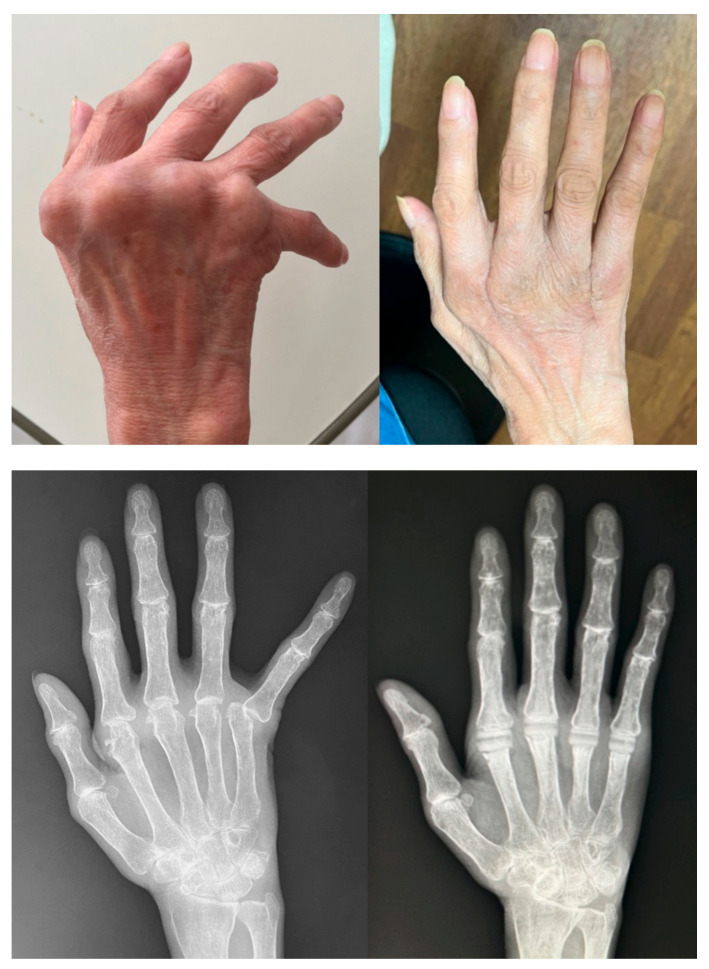
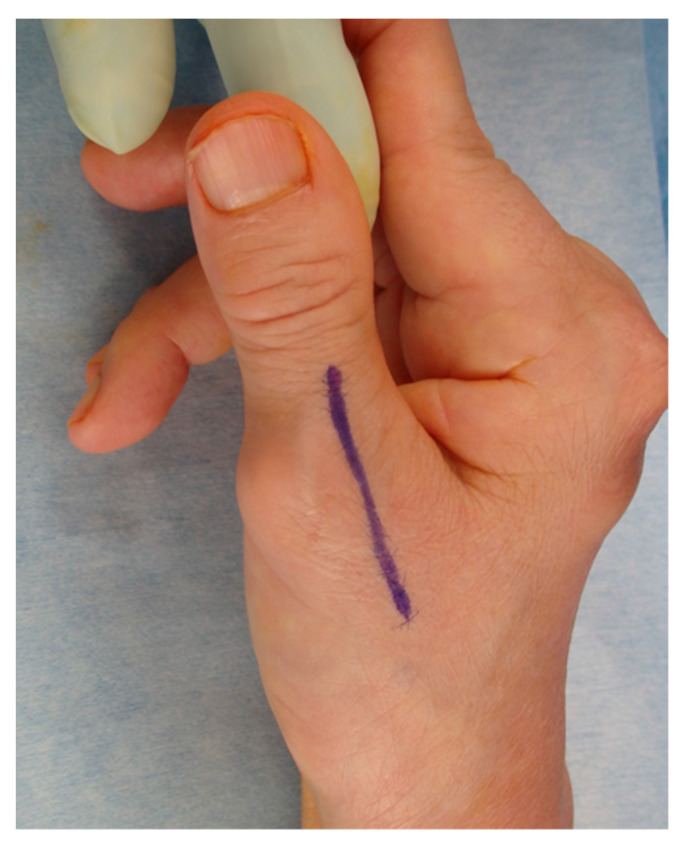
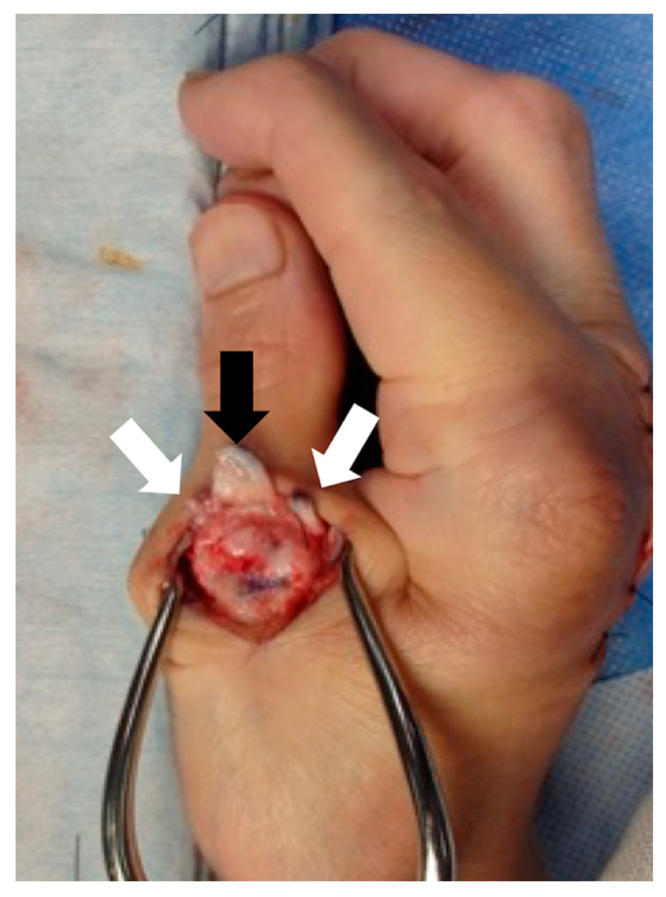
Rheumatoid arthritis (RA) causes persistent synovitis and arthritis, resulting in joint deformity and destruction throughout the body. As RA medications have evolved over the past 30 years, the surgical indications and techniques for RA joint deformities have changed. The aim of this review article is to summarize the recent trend of surgery for rheumatoid hand/finger deformities in previous reports and to present our recent surgical methods and outcomes for these deformities. A typical hand and finger deformity caused by RA is ulnar deviation, which is mainly caused by joint laxity and dislocation of the metacarpophalangeal joints, in addition to extensor tendon dislocation and/or wrist joint deformity. Although the incidence of hand/finger deformity and ulnar deviation caused by RA is decreasing due to advances in RA medications, patients with long-term RA or those with difficult-to-treat RA may still develop hand/finger deformity and ulnar deviation. If the hand/finger deformity is mild, it can be reduced manually, and conservative treatment with orthoses or splints may be required. If joint pain is severe despite good medical control of RA, or if the patient hopes to improve the appearance of the hand or fingers, surgical intervention is required. If there is only subluxation of the joints, which preserves their structure, reconstruction with only soft tissue surgery may be required. For example, for swan-neck deformity and boutonniére deformity, two of the most typical finger deformities due to RA, when the joint structures are almost intact and can be corrected manually, we opt for a surgical procedure that involves only soft tissue manipulation without the use of prosthetic implants. For ulnar deviation without joint destruction, we usually use a soft tissue-only surgical procedure. Our results have shown that the soft tissue-only surgery for ulnar deviation is as effective as joint replacement with implants. If the destruction of the joint has occurred and its dislocation/subluxation cannot be reduced manually, implant arthroplasty becomes necessary. If the joint destruction is severe, only intra-articular arthrodesis is required. In the era when RA can be controlled by medication, the hand surgeon should not overlook the change in the stage of the rheumatoid hand and should perform surgical intervention via the appropriate surgical method.
类风湿关节炎(RA)会引发持续性滑膜炎和关节炎,导致全身关节畸形和破坏。随着RA药物在过去30年的不断发展,针对RA关节畸形的手术适应症和技术也发生了变化。这篇综述文章的目的是总结既往报道中类风湿手部/手指畸形手术的近期趋势,并介绍我们针对这些畸形的近期手术方法和结果。RA导致的典型手部和手指畸形是尺偏,其主要由关节松弛和掌指关节脱位引起,此外还伴有伸肌腱脱位和/或腕关节畸形。尽管由于RA药物的进展,由RA引起的手部/手指畸形和尺偏的发生率正在下降,但长期患RA的患者或难治性RA患者仍可能出现手部/手指畸形和尺偏。如果手部/手指畸形较轻,可以手动复位,可能需要使用矫形器或夹板进行保守治疗。如果尽管对RA进行了良好的药物控制,但关节疼痛仍然严重,或者患者希望改善手部或手指的外观,则需要进行手术干预。如果仅有关节半脱位,且关节结构得以保留,则可能仅需进行软组织手术重建。例如,对于鹅颈畸形和纽扣花样畸形这两种RA导致的最典型的手指畸形,当关节结构几乎完整且可以手动矫正时,我们选择仅涉及软组织操作而不使用假体植入物的手术方法。对于没有关节破坏的尺偏,我们通常采用仅涉及软组织的手术方法。我们的结果表明,针对尺偏的仅软组织手术与植入物关节置换一样有效。如果关节已经发生破坏且其脱位/半脱位无法手动复位,则有必要进行植入物关节成形术。如果关节破坏严重,则仅需进行关节内固定术。在RA可通过药物控制的时代,手外科医生不应忽视类风湿手部阶段的变化,应通过适当的手术方法进行手术干预。