Clemente Hernández Beatriz, Muelas Rives Itziar, Gracia Cazaña Tamara, Álvarez Salafranca Marcial, Poblador-Plou Beatriz, Laguna-Berna Clara, Moreno Juste Aida, Gimeno-Miguel Antonio, Gilaberte Yolanda
Department of Dermatology, Miguel Servet University Hospital IIS Aragon, 50009 Zaragoza, Spain.
Research Group of the Government of Aragon B59_23D Dermatology and Photobiology, Aragon Health, Miguel Servet University Hospital, 50009 Zaragoza, Spain.
J Clin Med. 2025 Jan 11;14(2):432. doi: 10.3390/jcm14020432.
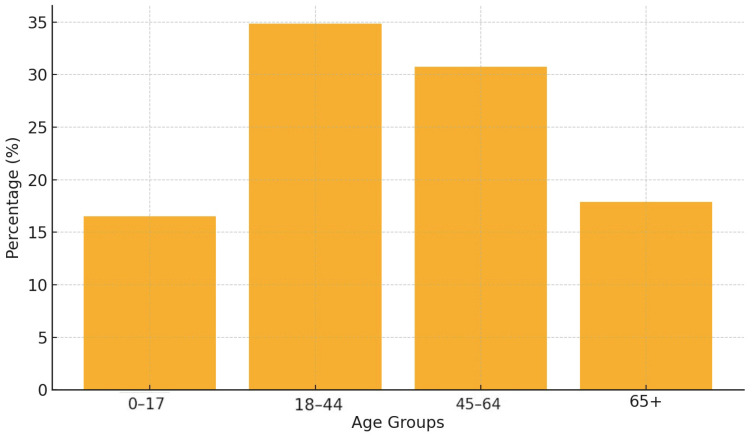
Vitiligo is a pigmentation disorder that impacts approximately 0.5% to 2% of the global population. Growing interest surrounds the comorbidities associated with vitiligo. This study aimed to describe the socio-demographic characteristics of the patients with vitiligo in Aragón (Spain) and to investigate their associated comorbidities. A retrospective observational study was conducted using clinical data from individuals in the EpiChron Cohort (reference population of 1.3 million) who were diagnosed with vitiligo between 1 January and 31 December 2019. The prevalence of chronic comorbidities was calculated using logistic regression models, obtaining the odds ratio (OR) of each comorbidity (dependent variable) according to the presence or absence of vitiligo (independent variable). We used a cut-off point for a statistical significance of -value < 0.05. In total, 218 patients diagnosed with vitiligo were analyzed. The mean age was 44.0 years, and 56.42% were female. The largest proportion of patients (34.86%) were aged between 18 and 44 years. Among all vitiligo patients included, 71.5% presented multimorbidity, with an average of 3.21 diagnosed comorbidities. The conditions most frequently associated with vitiligo included thyroid disorders (OR: 3.01, < 0.001), ocular and hearing abnormalities (OR: 1.54, < 0.020), inflammatory skin disorders (OR: 2.21, < 0.001), connective tissue diseases (OR: 1.84, < 0.007), lower respiratory tract diseases (OR: 1.78, < 0.014), urinary tract infections (OR: 1.69, < 0.032), and cardiac arrhythmias (OR 1.84, < 0.034). This research highlights the importance of understanding the broader health implications of vitiligo and provides a foundation for further exploration into the complex interplay between this dermatologic condition and a diverse range of comorbidities.
白癜风是一种色素沉着紊乱疾病,影响着全球约0.5%至2%的人口。人们对与白癜风相关的合并症越来越感兴趣。本研究旨在描述阿拉贡(西班牙)白癜风患者的社会人口学特征,并调查其相关合并症。使用EpiChron队列(参考人群130万)中2019年1月1日至12月31日期间被诊断为白癜风的个体的临床数据进行了一项回顾性观察研究。使用逻辑回归模型计算慢性合并症的患病率,根据是否患有白癜风(自变量)获得每种合并症(因变量)的优势比(OR)。我们将统计学显著性的临界值设定为P值<0.05。总共分析了218例诊断为白癜风的患者。平均年龄为44.0岁,56.42%为女性。最大比例的患者(34.86%)年龄在18至44岁之间。在所有纳入的白癜风患者中,71.5%患有多种疾病,平均诊断出3.21种合并症。与白癜风最常相关的疾病包括甲状腺疾病(OR:3.01,P<0.001)、眼耳异常(OR:1.54,P<0.020)、炎症性皮肤病(OR:2.21,P<0.001)、结缔组织病(OR:1.84,P<0.007)、下呼吸道疾病(OR:1.78,P<0.014)、尿路感染(OR:1.69,P<0.032)和心律失常(OR 1.84,P<0.034)。这项研究强调了了解白癜风对更广泛健康影响的重要性,并为进一步探索这种皮肤病状况与多种合并症之间的复杂相互作用提供了基础。