Ballouk Muhammed Al-Huda, Altinawi Mohamed, Al-Kafri Abeer, Zeitounlouian Talar S, Fudalej Piotr S
Department of Paediatric Dentistry, Faculty of Dentistry, Damascus University, Damascus, Syria.
Department of Lab Medicine, Faculty of Medicine, Damascus University, Damascus, Syria.
BDJ Open. 2025 Jan 25;11(1):5. doi: 10.1038/s41405-025-00294-z.
Gingivitis and periodontitis are common periodontal diseases that can significantly harm overall oral health, affecting the teeth and their supporting tissues, along with the surrounding anatomical structures, and if left untreated, leading to the total destruction of the alveolar bone and the connective tissues, tooth loss, and other more serious systemic health issues. Numerous studies have shown that propolis can help reduce gum inflammation, inhibit the growth of pathogenic bacteria, and promote tissue regeneration, but with varying degrees of success reported. For this reason, this comprehensive systematic review aims at finding out the truth concerning the efficacy of propolis mouthwashes in treating gingivitis and periodontitis, as its main objective.
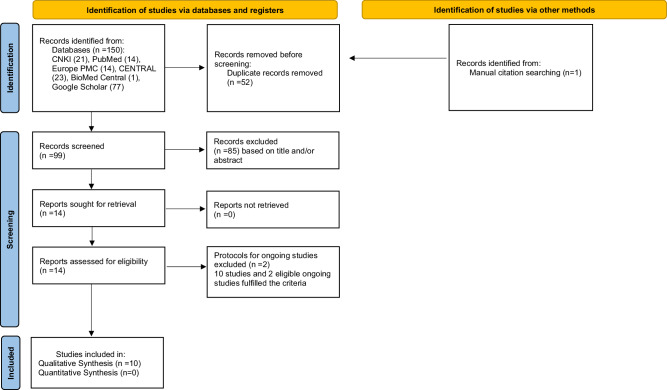
Research findings from 6 different databases: China National Knowledge Infrastructure (CNKI), PubMed®, Europe PMC, Cochrane Central Register of Controlled Trials (CENTRAL), BioMed Central, and Google Scholar, were retrieved and examined in addition to a manual search in the references lists.
The PICOS framework was used to select and exclude studies. The focus was on clinical randomized controlled trials (RCTs) that examined the effectiveness of propolis-containing mouthwashes in comparison with propolis-free ones for the treatment of gingivitis and periodontitis, employing related periodontal indices. Animal studies, microbiological studies, in-vitro studies, retrospective studies, case-control studies, cohorts, case reports, case series, reviews, letters, editorials, meta-analyses, and non-clinical randomized controlled trials (non-RCTs), all were excluded. A meta-analysis was not performed and data were only studied qualitatively due to the obvious heterogeneity amongst the studies. Data from the selected studies were extracted, and then the revised Cochrane's risk of bias tool (RoB 2.0) was utilised by two of the authors, independently, to evaluate the risk of bias in each study.
At first, 151 results were reached, but then after removing duplicates, 99 records remained, and were later screened, assessed, and studied in full details based on the set PICOS criteria. Out of these 99 articles, ten studies were included in this systematic review, encompassing a total of 453 patients with an age range of (13-70) years old. Propolis mouthwashes with different protocols of application were the intervention whereas placebo or the rest of the tested mouthwashes such as, chlorhexidine, sodium fluoride with cetylpyridinium chloride, sterile distilled water, hydrogen peroxide, were the ones to which propolis mouthwashes were compared. Treatment duration extended from 14 days to 3 months and the follow-up period differed from 14 days to 3 months. In general, propolis mouthwashes decreased plaque accumulations and gingival inflammation in gingivitis patients based on the employed indices. On the other hand, the aforementioned tested mouthwashes other than propolis were deemed equally effective or even superior to propolis in some studies. As an overall assessment for the risk of bias, four studies were assigned as having a low risk of bias. Two studies were deemed to have some concerns, while four studies were identified as having a high risk of bias.
Despite the fact that propolis has shown positive effects in terms of controlling gingival and periodontal inflammation especially when used with mechanical methods, studies lack certainty and their power of evidence is low with no agreed gold standards. These conclusions come, for sure, within the limitations of this review, like having substantial variability amongst the included studies and the presence of studies with a high risk of bias. The findings demonstrate that propolis-based mouthwashes showed promising clinical outcomes in reducing plaque and gingival inflammation. However, it is highly recommended to conduct more rigorous trials with patient-reported outcome measures, extended follow-up periods, larger samples sizes, better-designed methodologies, typified propolis use, and with the implementation of similar indices in order to obtain more reliable, conclusive, and generalisable results.
CRD42024524523.
牙龈炎和牙周炎是常见的牙周疾病,会严重损害整体口腔健康,影响牙齿及其支持组织以及周围的解剖结构,若不治疗,会导致牙槽骨和结缔组织完全破坏、牙齿脱落以及其他更严重的全身健康问题。众多研究表明,蜂胶有助于减轻牙龈炎症、抑制病原菌生长并促进组织再生,但报道的成效程度各异。因此,本全面的系统评价旨在查明蜂胶漱口水治疗牙龈炎和牙周炎疗效的真相,作为其主要目标。
除了在参考文献列表中进行手动检索外,还检索并审查了来自6个不同数据库的研究结果:中国知网(CNKI)、PubMed®、欧洲PMC、Cochrane对照试验中心注册库(CENTRAL)、BioMed Central和谷歌学术。
采用PICOS框架选择和排除研究。重点是临床随机对照试验(RCT),这些试验使用相关牙周指标,研究含蜂胶漱口水与不含蜂胶漱口水相比治疗牙龈炎和牙周炎的有效性。动物研究、微生物学研究、体外研究、回顾性研究、病例对照研究、队列研究、病例报告、病例系列、综述、信函、社论、荟萃分析和非临床随机对照试验(非RCT)均被排除。由于研究之间存在明显异质性,未进行荟萃分析,仅对数据进行定性研究。提取所选研究的数据,然后由两位作者独立使用修订后的Cochrane偏倚风险工具(RoB 2.0)评估每项研究的偏倚风险。
最初获得151个结果,但去除重复项后,剩下99条记录,随后根据设定的PICOS标准进行筛选、评估和详细研究。在这99篇文章中,有10项研究纳入本系统评价,共涉及453名年龄在(13 - 70)岁的患者。采用不同应用方案的蜂胶漱口水作为干预措施,而将安慰剂或其他受试漱口水如氯己定、含西吡氯铵的氟化钠、无菌蒸馏水、过氧化氢作为与蜂胶漱口水比较的对象。治疗持续时间从14天到3个月不等,随访期从14天到3个月不等。总体而言,根据所采用的指标,蜂胶漱口水可减少牙龈炎患者的牙菌斑积聚和牙龈炎症。另一方面,在一些研究中,上述除蜂胶外的受试漱口水被认为同样有效甚至优于蜂胶。作为对偏倚风险的总体评估,4项研究被判定为低偏倚风险。2项研究被认为存在一些问题,4项研究被确定为高偏倚风险。
尽管蜂胶在控制牙龈和牙周炎症方面已显示出积极作用,尤其是与机械方法联合使用时,但研究缺乏确定性,其证据力度较低,且没有公认的金标准。当然,这些结论是在本综述的局限性范围内得出的,例如纳入研究之间存在很大差异以及存在高偏倚风险的研究。研究结果表明,基于蜂胶的漱口水在减少牙菌斑和牙龈炎症方面显示出有前景的临床效果。然而,强烈建议进行更严格的试验,采用患者报告的结局指标、延长随访期、更大样本量、设计更优的方法、典型的蜂胶使用方式,并采用相似的指标,以获得更可靠、确凿且可推广的结果。
PROSPERO注册号:CRD42024524523。
