Ahmed Md Fahim, Raby Khalid Hasan, Tasnim Nishat, Islam Md Tariful, Chowdhury Mahbub, Juthi Zarin Tasnim, Mia Md Ashik, Jahan Lubna, Hossain A K M Zakir, Ahmed Shoeb
Department of Chemical Engineering, Bangladesh University of Engineering and Technology, Dhaka, 1000, Bangladesh.
Department of Crop Botany, Bangladesh Agricultural University, Mymensingh, 2202, Bangladesh.
Heliyon. 2025 Jan 2;11(1):e41627. doi: 10.1016/j.heliyon.2025.e41627. eCollection 2025 Jan 15.
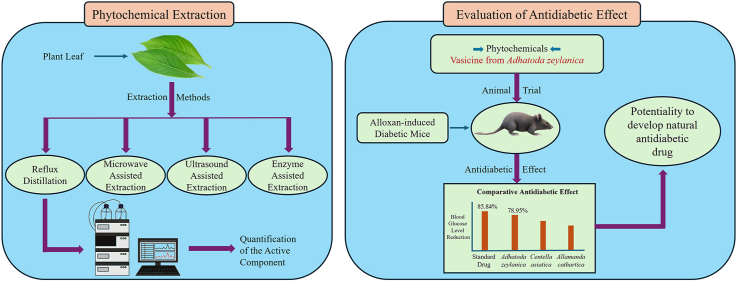
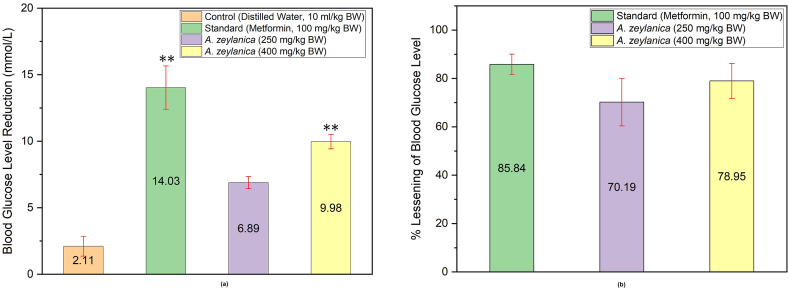
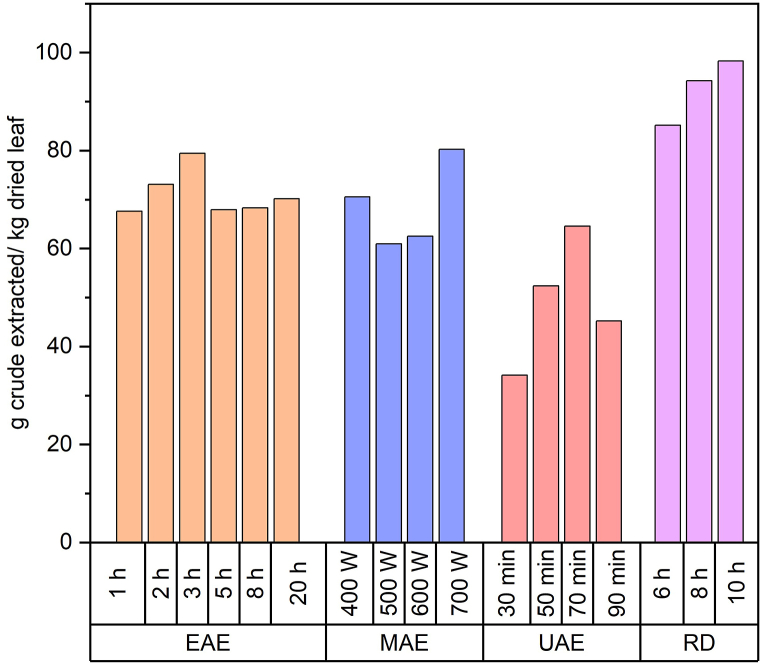
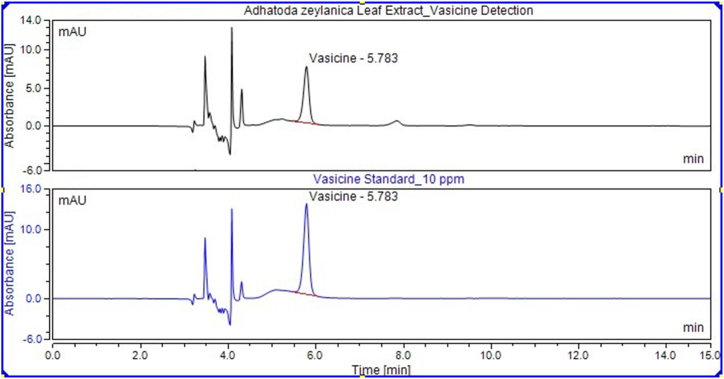
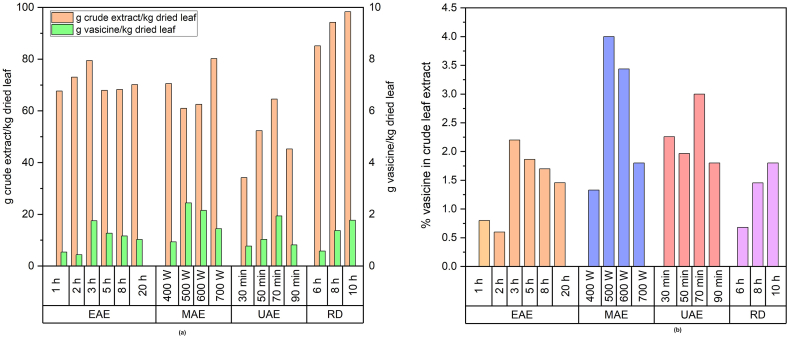
Synthetic antidiabetic drugs are often associated with various adverse side effects, including hypoglycemia, nausea, gastrointestinal disturbances, headaches, and even liver damage. In contrast, plant-derived natural antidiabetic bioactive compounds typically exhibit lower toxicity and fewer side effects and have been reported to aid effectively in diabetes management. These plant extracts regulate diabetes by restoring pancreatic function, enhancing insulin secretion, inhibiting intestinal glucose absorption, and facilitating insulin dependent metabolism. This study explored four extraction methods, including reflux distillation (RD), ultrasound assisted extraction (UAE), microwave assisted extraction (MAE), and enzyme assisted extraction (EAE) to optimize the yield of crude leaf extract and vasicine from . RD produced the highest crude extract yield (98.29 g/kg of dried leaf), while MAE was the most effective for vasicine extraction, yielding 2.44 g vasicine per kg dried leaf. High Performance Liquid Chromatography (HPLC) with a diode array detector (DAD) was used to identify and quantify vasicine, a quinazoline alkaloid with known antidiabetic properties. The hypoglycemic effects of leaf extracts were evaluated in alloxan-induced diabetic mice, and the effect of extract was compared to the extracts of , , and the standard drug metformin. At a dose of 400 mg/kg body weight (BW), methanolic leaf extracts of , , and reduced blood glucose level by 78.95 %, 74.50 %, and 70.19 %, respectively, compared to the standard drug metformin, which reduced blood glucose levels by 85.84 %. at 400 mg/kg BW dose and metformin demonstrated statistically similar and significant blood glucose level reduction ( < 0.001). Additionally, therapeutic doses of leaf extract exhibited low cytotoxicity (cell survival rate >89 %), highlighting its potential as a safe and effective source of antidiabetic agent.
合成抗糖尿病药物常常伴有各种不良副作用,包括低血糖、恶心、胃肠道紊乱、头痛,甚至肝损伤。相比之下,植物源天然抗糖尿病生物活性化合物通常毒性较低、副作用较少,并且据报道能有效辅助糖尿病管理。这些植物提取物通过恢复胰腺功能、增强胰岛素分泌、抑制肠道葡萄糖吸收以及促进胰岛素依赖型代谢来调节糖尿病。本研究探索了四种提取方法,包括回流蒸馏(RD)、超声辅助提取(UAE)、微波辅助提取(MAE)和酶辅助提取(EAE),以优化粗叶提取物和鸭嘴花碱的产量。RD产生的粗提取物产量最高(98.29克/千克干叶),而MAE对鸭嘴花碱提取最为有效,每千克干叶可提取2.44克鸭嘴花碱。使用配有二极管阵列检测器(DAD)的高效液相色谱法(HPLC)来鉴定和定量鸭嘴花碱,它是一种具有已知抗糖尿病特性的喹唑啉生物碱。在四氧嘧啶诱导的糖尿病小鼠中评估叶提取物的降血糖作用,并将提取物的效果与提取物、提取物以及标准药物二甲双胍的效果进行比较。在体重400毫克/千克剂量下,提取物、提取物和提取物的甲醇叶提取物分别使血糖水平降低了78.95%、74.50%和70.19%,而标准药物二甲双胍使血糖水平降低了85.84%。在400毫克/千克体重剂量下,提取物和二甲双胍在降低血糖水平方面表现出统计学上相似且显著的效果(<0.001)。此外,治疗剂量的叶提取物表现出低细胞毒性(细胞存活率>89%),突出了其作为抗糖尿病药物安全有效来源的潜力。