Roy Sreekanya, Biswas Sima, Nandy Anirban, Guha Dipanjan, Dasgupta Rakhi, Bagchi Angshuman, Sil Parames Chandra
Department of Biochemistry and Biophysics, University of Kalyani, Kalyani, Nadia, West Bengal, India.
Bioinformatics Infrastructure Facility Center, University of Kalyani, Kalyani, Nadia, West Bengal, India.
Toxicol Rep. 2024 Dec 28;14:101879. doi: 10.1016/j.toxrep.2024.101879. eCollection 2025 Jun.
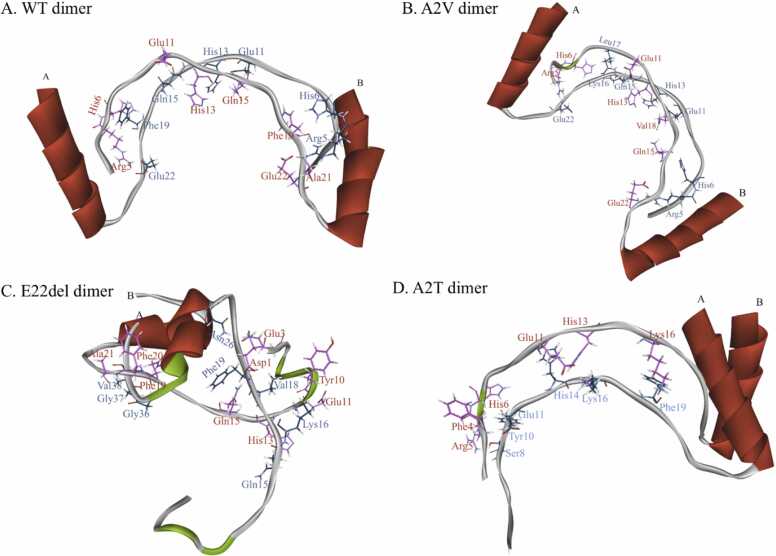
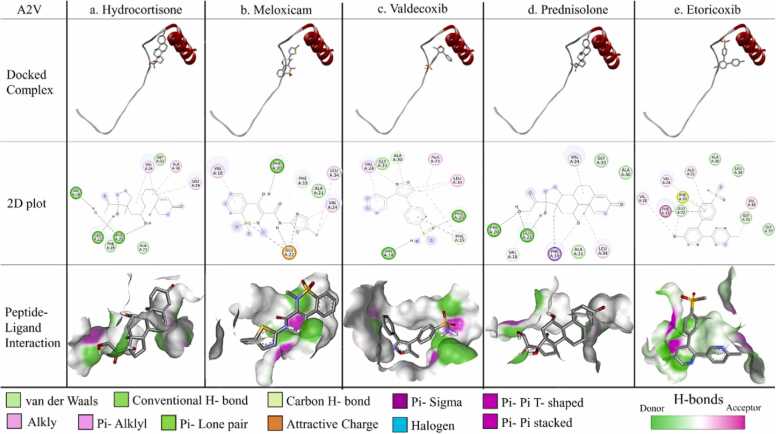
Alzheimer's Disease (AD) is one of the leading neurodegenerative diseases that affect the human population. Several hypotheses are in the pipeline to establish the commencement of this disease; however, the amyloid hypothesis is one of the most widely accepted ones. Amyloid plaques are rich in Amyloid Beta (Aβ) proteins, which are found in the brains of Alzheimer's patients. They are the spliced product of a transmembrane protein called Amyloid Precursor Protein (APP); when they enter into the amylogenic pathway, they get cleaved simultaneously by Beta and Gamma Secretase and produce Aβ protein. Appearances of Amyloid plaques are the significant clinical hallmarks of this disease. AD is mainly present in two genetically distinct forms; sporadic and familial AD. Sporadic Alzheimer's Disease (sAD) is marked by a later clinical onset of the disease, whereas, familial Alzheimer's Disease (fAD) is an early onset of the disease with mendelian inheritance. Several mutations have been clinically reported in the last decades that have shown a direct link with fAD. Many of those mutations are reported to be present in the APP. In this study, we selected a few significant mutations present in the Aβ stretch of the APP and tried to differentiate the wild-type Aβ dimers formed in sAD and the mutant dimers formed in fAD through molecular modelling as there are no structures available from wet-lab studies till date. We analysed the binding interactions leading to formations of the dimers. Our next aim was to come up with a solution to treat AD using the method of drug repurposing. For that we used virtual screening and molecular docking simulations of the already existing anti-inflammatory drugs and studied their potency in resisting the formation of Aβ dimers. This is the first such report of drug repurposing for the treatment of AD, which might pave new pathways in therapy.
阿尔茨海默病(AD)是影响人类的主要神经退行性疾病之一。目前有几种假说试图解释这种疾病的发病机制;然而,淀粉样蛋白假说仍是最被广泛接受的假说之一。淀粉样斑块富含β淀粉样蛋白(Aβ),在阿尔茨海默病患者的大脑中可以发现这些蛋白。它们是一种名为淀粉样前体蛋白(APP)的跨膜蛋白的剪接产物;当它们进入淀粉样生成途径时,会同时被β和γ分泌酶切割,产生Aβ蛋白。淀粉样斑块的出现是这种疾病的重要临床标志。AD主要有两种基因上不同的形式:散发性和家族性AD。散发性阿尔茨海默病(sAD)的临床发病较晚,而家族性阿尔茨海默病(fAD)则是具有孟德尔遗传特征的早发性疾病。在过去几十年里,临床上报告了几种与fAD有直接联系的突变。据报道,其中许多突变存在于APP中。在这项研究中,我们选择了APP的Aβ区域中存在的一些重要突变,并试图通过分子建模来区分sAD中形成的野生型Aβ二聚体和fAD中形成的突变二聚体,因为迄今为止尚无来自湿实验室研究的结构。我们分析了导致二聚体形成的结合相互作用。我们的下一个目标是想出一种利用药物重新利用的方法来治疗AD的解决方案。为此,我们对现有的抗炎药物进行了虚拟筛选和分子对接模拟,并研究了它们抵抗Aβ二聚体形成的效力。这是第一篇关于药物重新利用治疗AD的此类报告,可能为治疗开辟新途径。