Hou Can, Xu Jiayi, Zhou Min, Huo Junyu, Wang Xiaofei, Jiang Wanying, Su Tong, Wang Hui, Jia Fang
Department of Cardiovascular Medicine, The First People's Hospital of Changzhou, The Third Affiliated Hospital of Soochow University, 213000, Changzhou, Jiangsu Province, China.
Department of Cardiology, Changzhou Hospital of Traditional Chinese Medicine, Changzhou Hospital Affiliated to Nanjing University of Chinese Medicine, 213000, Changzhou, Jiangsu Province, China.
Biochem Biophys Rep. 2025 Jan 11;41:101911. doi: 10.1016/j.bbrep.2024.101911. eCollection 2025 Mar.
Previous research has established that chronic kidney disease (CKD) and heart failure with preserved ejection fraction (HFpEF) often coexist. Although we have a preliminary understanding of the potential correlation between HFpEF and CKD, the underlying pathophysiological mechanisms remain unclear. This study aimed to elucidate the molecular mechanisms associated with CKD and HFpEF through bioinformatics analysis.
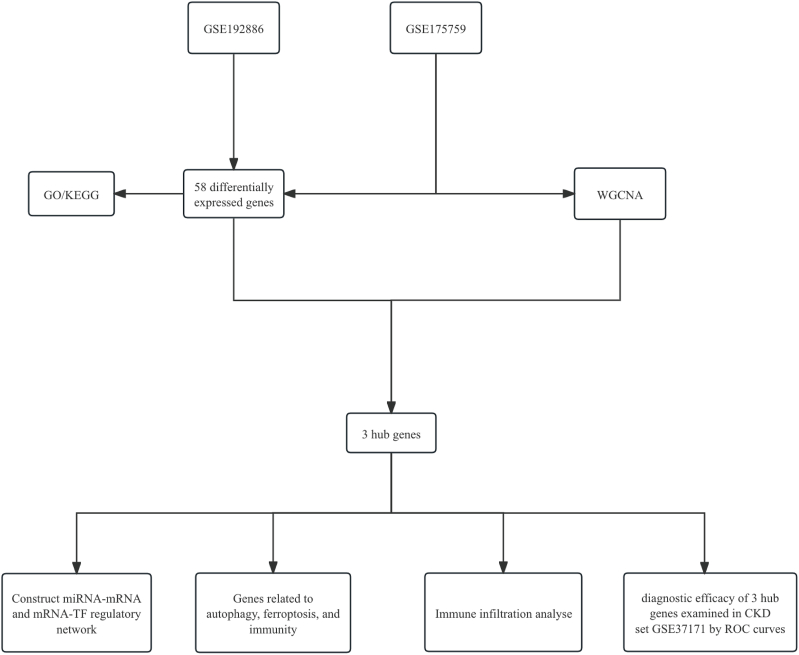
Datasets for HFpEF and CKD were obtained from the Gene Expression Omnibus (GEO) database. The R software package "limma" was employed to conduct differential expression analysis. Functional annotation was performed using the Kyoto Encyclopedia of Genes and Genomes (KEGG) and Gene Ontology (GO). We conducted weighted gene co-expression network analysis (WGCNA), correlation analysis with autophagy, ferroptosis, and immune-related processes, as well as transcriptional regulation analysis, immune infiltration analysis, and diagnostic performance evaluation. Finally, the diagnostic potential of the identified hub genes for CKD and HFpEF was assessed using ROC curve analysis (GSE37171).
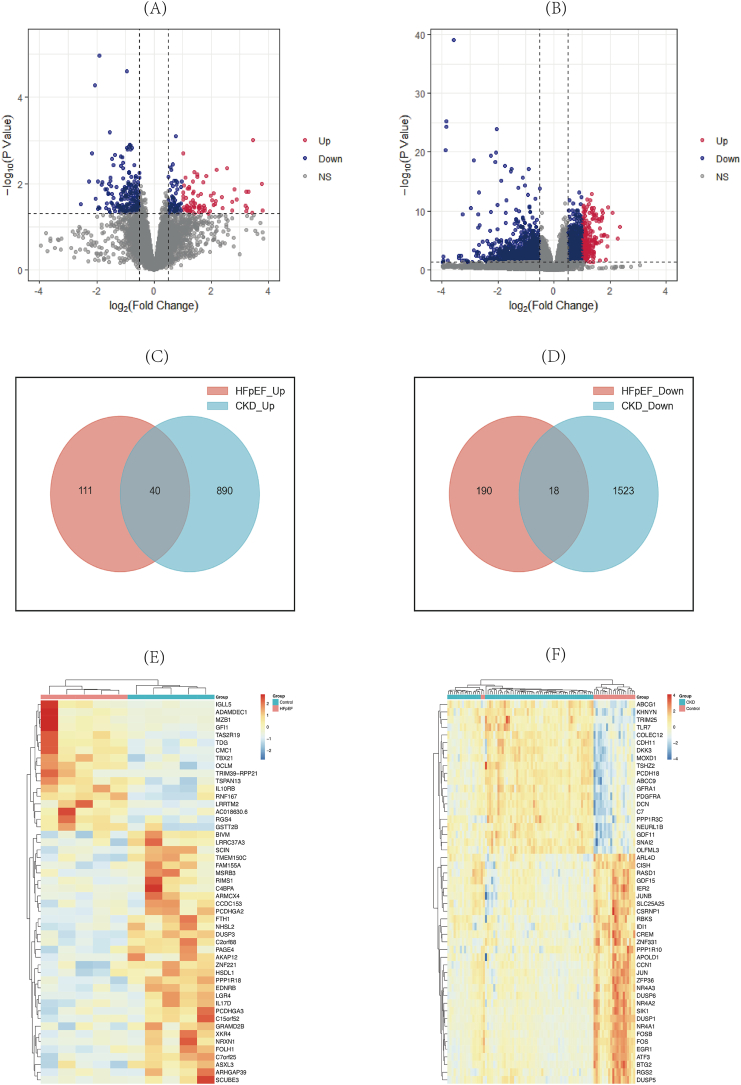
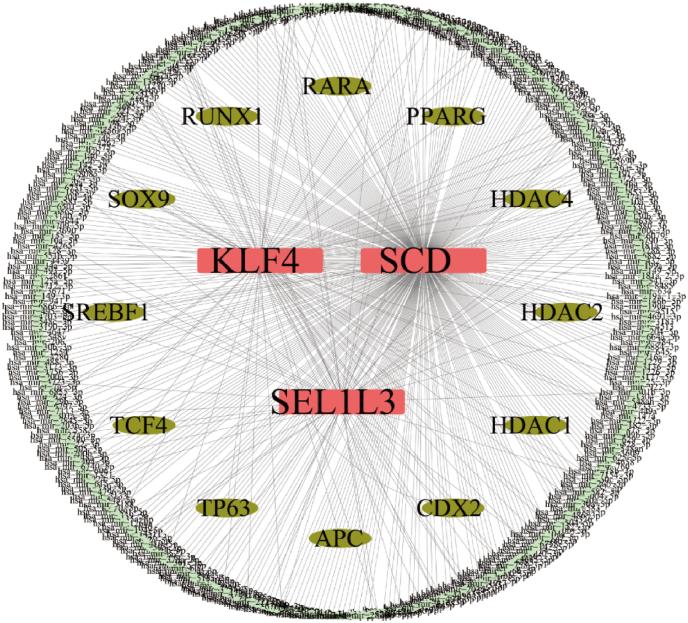
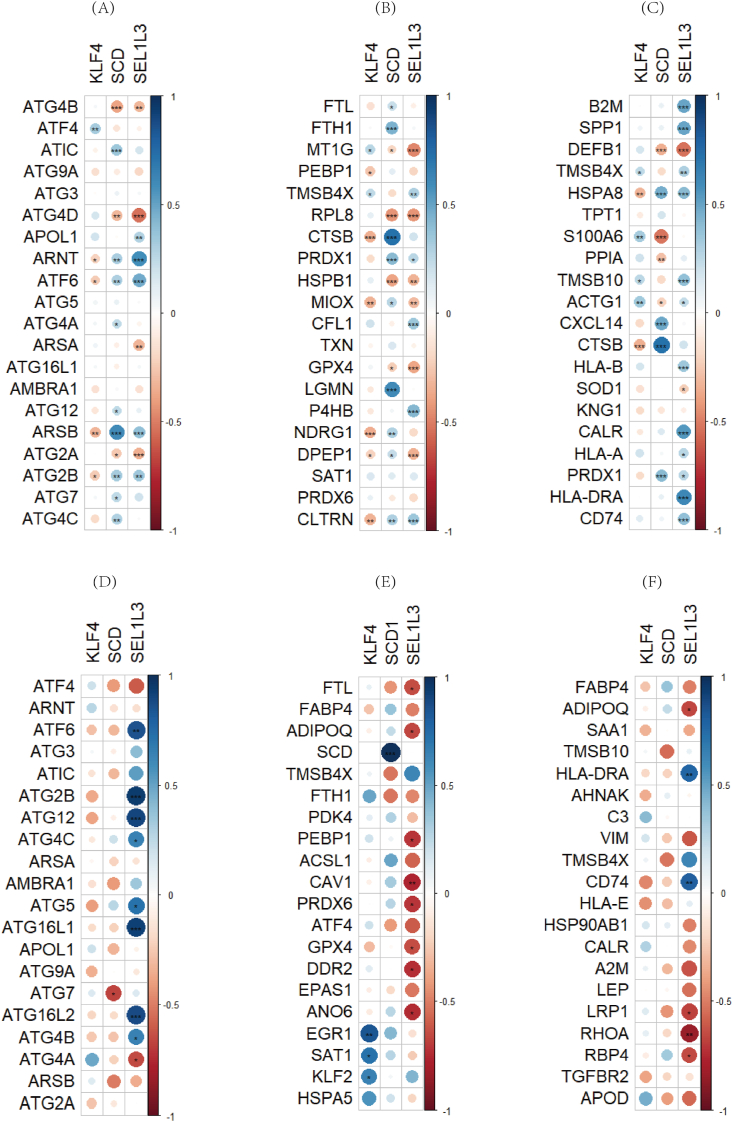
Differential expression analysis revealed 58 overlapping genes, comprised of 40 up-regulated and 18 down-regulated genes. Both GO and KEGG analyses indicated enriched pathways relevant to both disorders. WGCNA identified 4086 genes associated with CKD. Further comparison with differentially expressed genes (DEGs) identified three hub genes (KLF4, SCD, and SEL1L3) that were linked to autophagy, ferroptosis, and immune processes in both conditions. Additionally, a miRNA-mRNA regulatory network involving 376 miRNAs and 12 transcription factors (TFs) was constructed. ROC curve analysis was performed to evaluate the diagnostic utility of the hub genes for CKD and HFpEF.
This study elucidated shared pathogenic mechanisms and identified diagnostic markers common to both HFpEF and CKD. The identified hub genes show promise as potential tools for early diagnosis and treatment strategies for these conditions.
先前的研究已证实慢性肾脏病(CKD)与射血分数保留的心力衰竭(HFpEF)常并存。尽管我们对HFpEF与CKD之间的潜在关联有了初步了解,但其潜在的病理生理机制仍不清楚。本研究旨在通过生物信息学分析阐明与CKD和HFpEF相关的分子机制。
从基因表达综合数据库(GEO)获取HFpEF和CKD的数据集。使用R软件包“limma”进行差异表达分析。采用京都基因与基因组百科全书(KEGG)和基因本体论(GO)进行功能注释。我们进行了加权基因共表达网络分析(WGCNA)、与自噬、铁死亡和免疫相关过程的相关性分析,以及转录调控分析、免疫浸润分析和诊断性能评估。最后,使用ROC曲线分析(GSE37171)评估所鉴定的枢纽基因对CKD和HFpEF的诊断潜力。
差异表达分析揭示了58个重叠基因,其中40个上调基因和18个下调基因。GO和KEGG分析均表明与这两种疾病相关的富集通路。WGCNA鉴定出4086个与CKD相关的基因。进一步与差异表达基因(DEG)比较,确定了三个枢纽基因(KLF4、SCD和SEL1L3),它们在两种情况下均与自噬、铁死亡和免疫过程相关。此外,构建了一个涉及376个miRNA和12个转录因子(TF)的miRNA-mRNA调控网络。进行ROC曲线分析以评估枢纽基因对CKD和HFpEF的诊断效用。
本研究阐明了共同的致病机制,并鉴定出HFpEF和CKD共有的诊断标志物。所鉴定的枢纽基因有望成为这些疾病早期诊断和治疗策略的潜在工具。