Shamanaev Aleksandr, Ma Yujie, Ponczek Michal B, Sun Mao-Fu, Cheng Quifang, Dickeson S Kent, McCarty Owen J T, Emsley Jonas, Mohammed Bassem M, Gailani David
Department of Pathology, Microbiology and Immunology, Vanderbilt University Medical Center, Nashville, TN.
Biodiscovery Institute, School of Pharmacy, University of Nottingham, Nottingham, United Kingdom.
Blood Adv. 2025 Apr 22;9(8):1940-1951. doi: 10.1182/bloodadvances.2025015842.
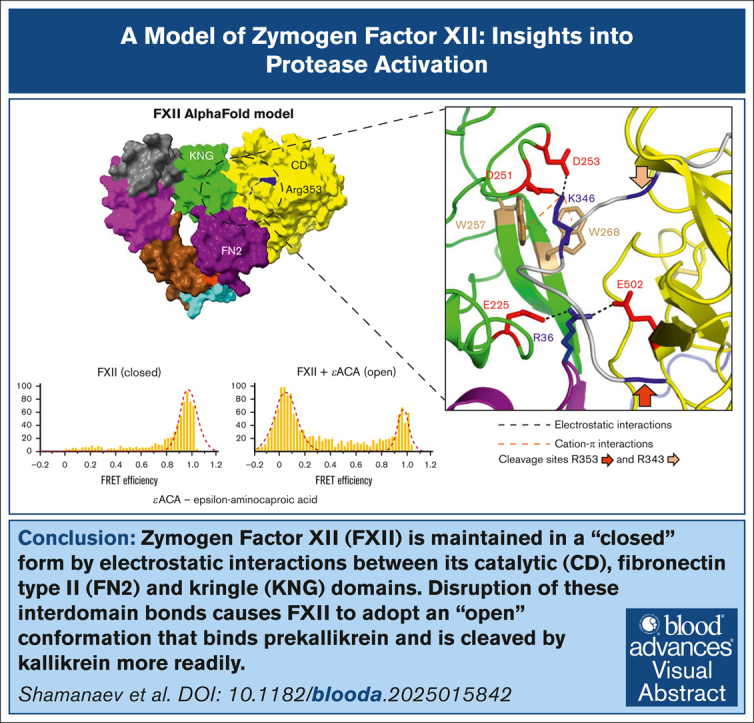
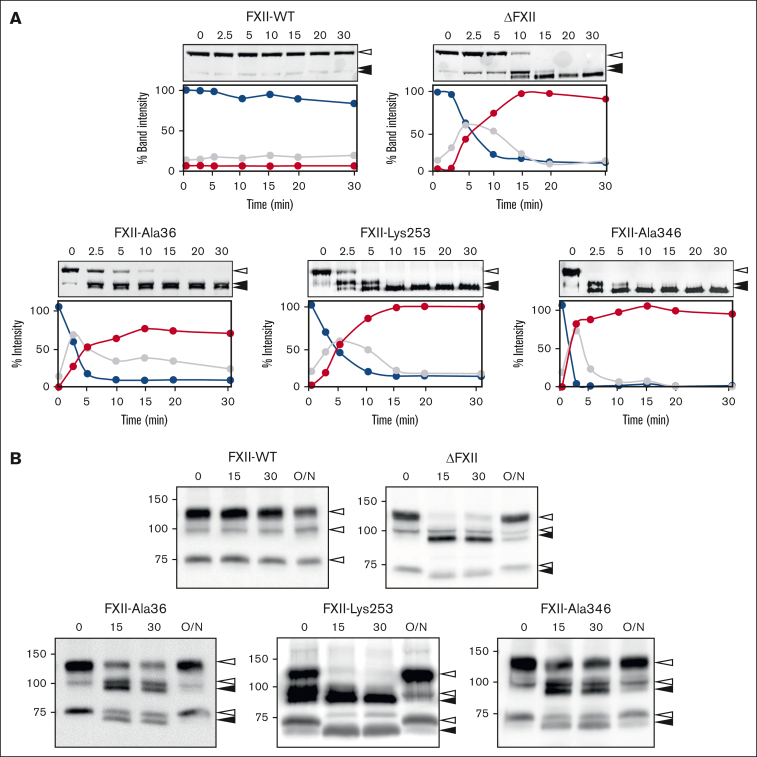
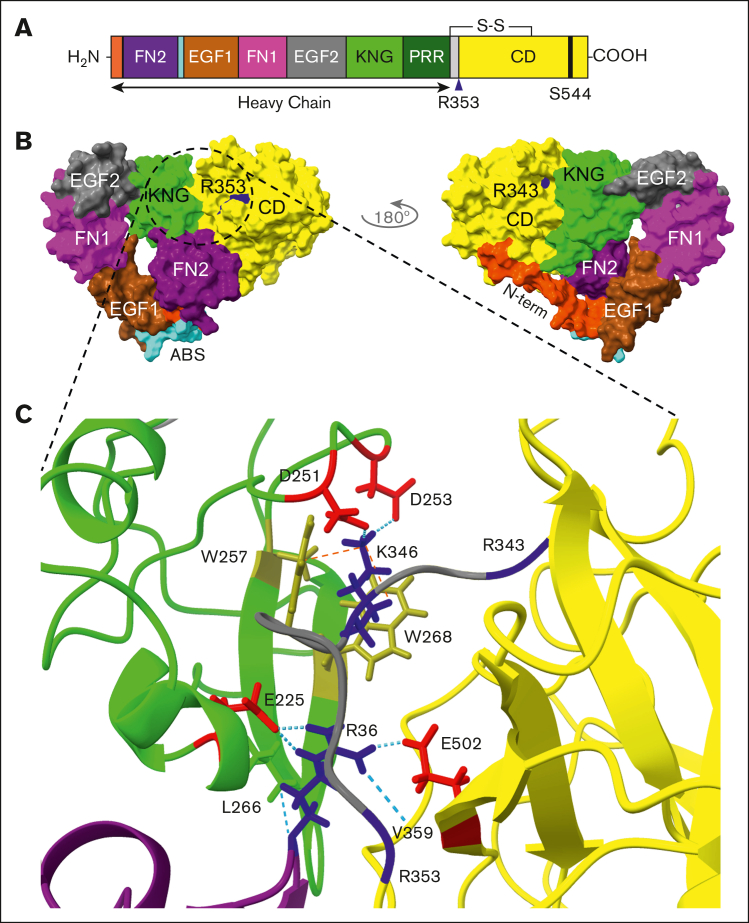
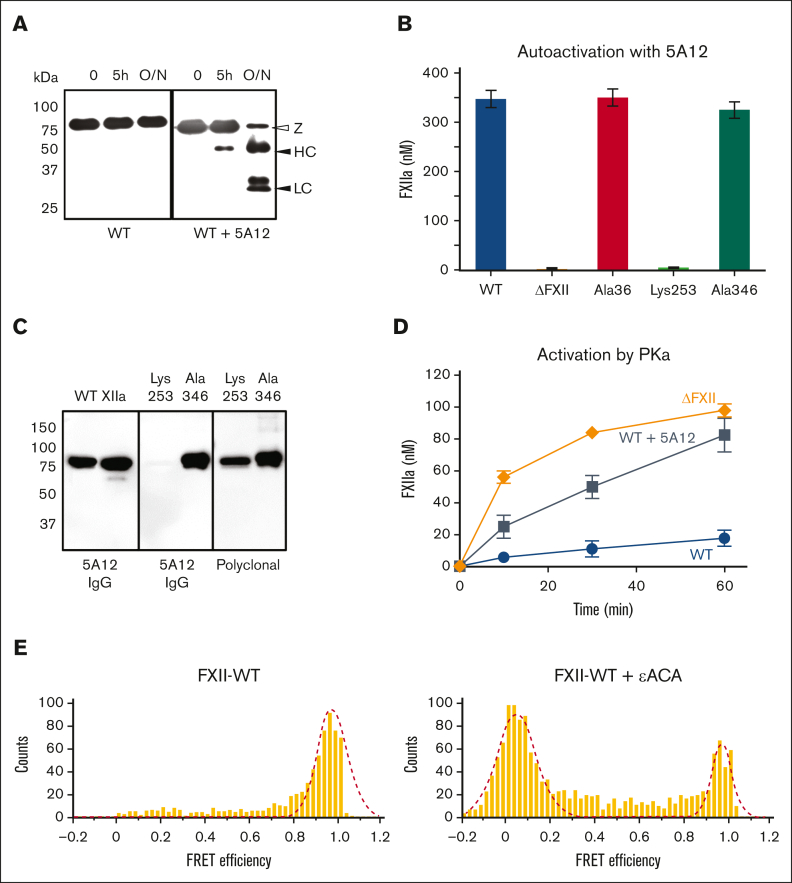
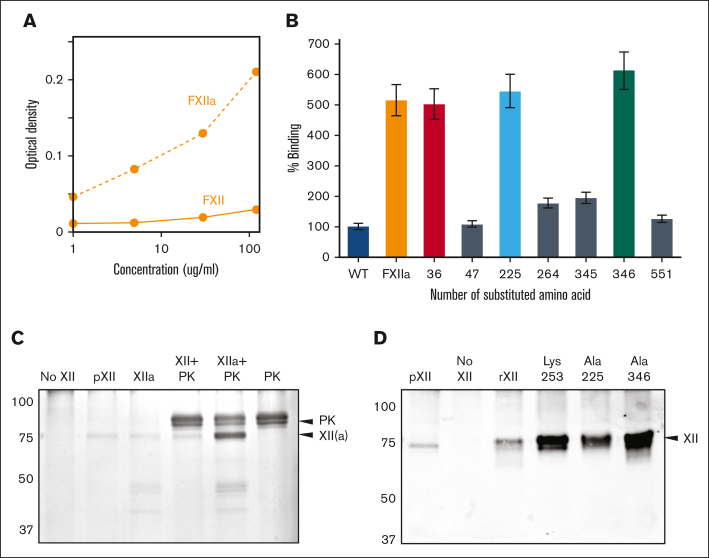
In plasma, the zymogens factor XII (FXII) and prekallikrein reciprocally convert each other to the proteases FXIIa and plasma kallikrein (PKa). PKa cleaves high-molecular-weight kininogen (HK) to release bradykinin, which contributes to regulation of blood vessel tone and permeability. Plasma FXII is normally in a "closed" conformation that limits activation by PKa. When FXII binds to a surface during contact activation it assumes an "open" conformation that increases the rate of activation by PKa. Mutations in FXII that disrupt the closed conformation have been identified in patients with conditions associated with excessive bradykinin formation. Using FXII structures from the AlphaFold database, we generated models for the closed form of human FXII that we tested with site-directed mutagenesis. The models predict multiple interactions between the fibronectin type 2 (FN2), kringle, and catalytic domains involving highly conserved amino acids that restrict access to the FXII activation cleavage sites. Based on the model, we expressed FXII with single-amino acid substitutions and studied their effects on FXII activation by PKa. Replacements for Arg36 in the FN2 domain; Glu225, Asp253, or Trp268 in the kringle domain; or Lys346 near the activation cleavage site were activated >10-fold faster by PKa than wild-type FXII. Adding these proteins to plasma resulted in rapid HK cleavage due to markedly enhanced reciprocal activation with prekallikrein. The results support a model that explains the behavior of FXII in solution. Conformational changes involving the identified amino acids likely occur when FXII binds to a surface to facilitate activation.
在血浆中,凝血因子 XII(FXII)和前激肽释放酶这两种酶原相互转化为蛋白酶 FXIIa 和血浆激肽释放酶(PKa)。PKa 裂解高分子量激肽原(HK)以释放缓激肽,缓激肽有助于调节血管张力和通透性。血浆 FXII 通常处于“封闭”构象,这限制了 PKa 的激活作用。当 FXII 在接触激活过程中与表面结合时,它会呈现“开放”构象,从而增加 PKa 的激活速率。在与缓激肽过度生成相关疾病的患者中,已鉴定出破坏封闭构象的 FXII 突变。利用来自 AlphaFold 数据库的 FXII 结构,我们生成了人类 FXII 封闭形式的模型,并通过定点诱变进行测试。这些模型预测,纤连蛋白 2 型(FN2)、kringle 和催化结构域之间存在多种相互作用,涉及高度保守的氨基酸,这些氨基酸限制了对 FXII 激活裂解位点的 access。基于该模型,我们表达了具有单氨基酸取代的 FXII,并研究了它们对 PKa 激活 FXII 的影响。FN2 结构域中 Arg36 的替代物;kringle 结构域中的 Glu225、Asp253 或 Trp268;或激活裂解位点附近的 Lys346 被 PKa 激活的速度比野生型 FXII 快 10 倍以上。将这些蛋白质添加到血浆中会导致 HK 快速裂解,这是由于与前激肽释放酶的相互激活明显增强。结果支持了一个解释 FXII 在溶液中行为的模型。当 FXII 与表面结合以促进激活时,可能会发生涉及所鉴定氨基酸的构象变化。