Xu Tiankai, Chu Chu, Xue Shuyu, Jiang Tongchao, Wang Ying, Xia Wen, Lin Huanxin
Department of Radiation Oncology, State Key Laboratory of Oncology in South China, Guangdong Key Laboratory of Nasopharyngeal Carcinoma Diagnosis and Therapy, Guangdong Provincial Clinical Research Center for Cancer, Sun Yat-sen University Cancer Center, Guangzhou, 510060, People's Republic of China.
Department of Medical Oncology, State Key Laboratory of Oncology in South China, Guangdong Key Laboratory of Nasopharyngeal Carcinoma Diagnosis and Therapy, Guangdong Provincial Clinical Research Center for Cancer, Sun Yat-sen University Cancer Center, Guangzhou, 510060, People's Republic of China.
J Transl Med. 2025 Jan 30;23(1):131. doi: 10.1186/s12967-025-06080-7.
Drug resistance constitutes one of the principal causes of poor prognosis in breast cancer patients. Although cancer cells can maintain viability independently of mitochondrial energy metabolism, they remain reliant on mitochondrial functions for the synthesis of new DNA strands. This dependency underscores a potential link between mitochondrial energy metabolism and drug resistance. Hence, drug resistance and mitochondrial energy metabolism-related differentially expressed genes (DMRDEGs) may emerge as candidates for novel cancer biomarkers. This study endeavors to assess the viability of DMRDEGs as biomarkers or therapeutic targets for breast cancer.
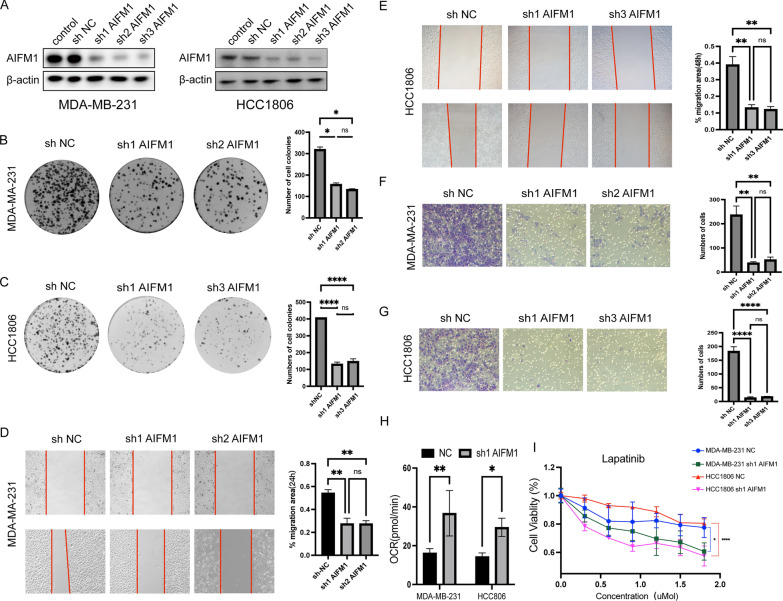
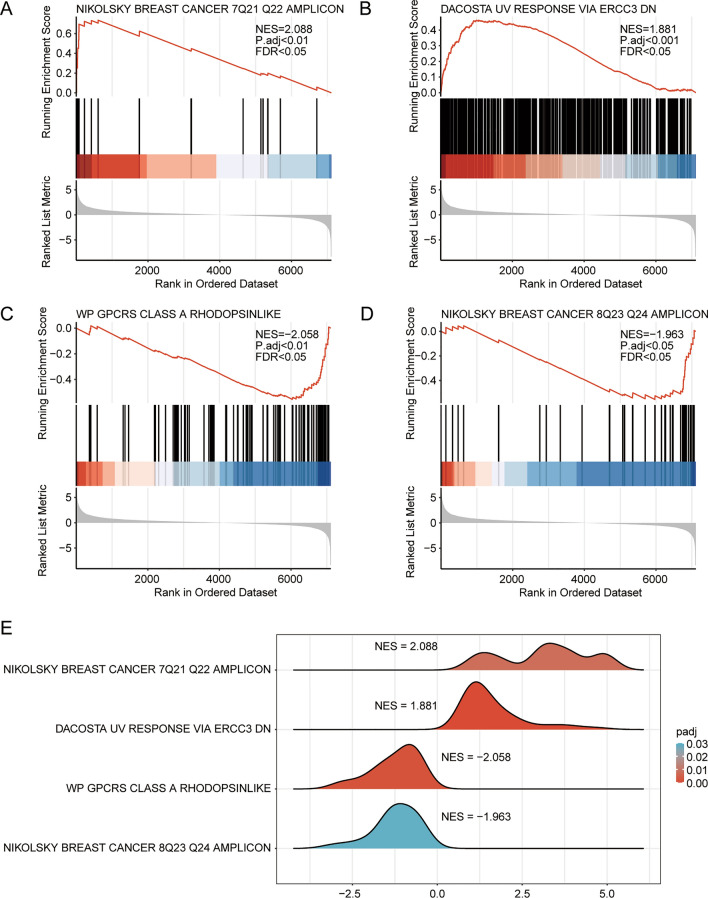
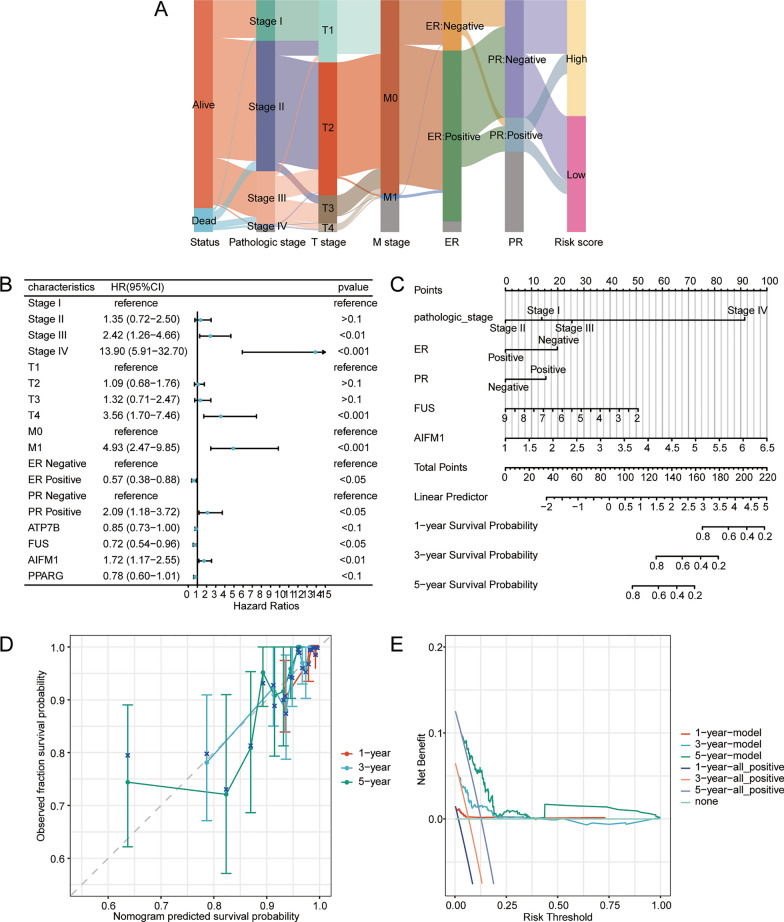
We utilized the DRESIS database and MSigDB to identify genes related to drug resistance. Additionally, we sourced genes associated with mitochondrial energy metabolism from GeneCards and extant literature. By merging these genes with differentially expressed genes observed in normal and tumor tissues from the TCGA-BRCA and GEO databases, we successfully identified the DMRDEGs. Employing unsupervised consensus clustering, we divided breast cancer patients into two distinct groups based on the DMRDEGs. Consequently, we identified four hub genes to formulate a prognostic model, applying Cox regression, LASSO regression, and Random Forest methods. Furthermore, we examined immune infiltration and tumor mutation burden of the genes within our model and scrutinized divergences in the immune microenvironment between high- and low-risk groups. Small hairpin RNA and lentiviral plasmids were designed for stable transfection of breast cancer cell lines MDA-MB-231 and HCC1806. By conducting clone formation, scratch test, transwell assays, cell viability assay and measurement of oxygen consumption we initiated a preliminary investigation into mechanistic roles of AIFM1.
We utilized DMRDEGs to develop a prognostic model that includes four mRNAs for breast cancer. This model combined with various clinical features and critical breast cancer facets, demonstrated remarkable efficacy in predicting patient outcomes. AIFM1 appeared to enhance the proliferation, migration, and invasiveness of breast cancer cell lines MDA-MB-231 and HCC1806. Moreover, by reducing oxygen consumption, it aids in the cancer cells' acquisition of drug resistance.
DMRDEGs hold promise as diagnostic markers and therapeutic targets for breast cancer. Among the associated mutated genes, ATP7B, FUS, AIFM1, and PPARG could serve as early diagnostic indicators, and notably, AIFM1 may present itself as a promising therapeutic target.
耐药性是乳腺癌患者预后不良的主要原因之一。尽管癌细胞可以独立于线粒体能量代谢维持生存能力,但它们在新DNA链的合成方面仍依赖线粒体功能。这种依赖性突出了线粒体能量代谢与耐药性之间的潜在联系。因此,耐药性和线粒体能量代谢相关的差异表达基因(DMRDEGs)可能成为新型癌症生物标志物的候选者。本研究旨在评估DMRDEGs作为乳腺癌生物标志物或治疗靶点的可行性。
我们利用DRESIS数据库和MSigDB来鉴定与耐药性相关的基因。此外,我们从GeneCards和现有文献中获取与线粒体能量代谢相关的基因。通过将这些基因与在TCGA-BRCA和GEO数据库的正常组织和肿瘤组织中观察到的差异表达基因进行合并,我们成功鉴定出了DMRDEGs。采用无监督一致性聚类,我们根据DMRDEGs将乳腺癌患者分为两个不同的组。因此,我们鉴定出四个枢纽基因以构建一个预后模型,应用Cox回归、LASSO回归和随机森林方法。此外,我们检查了模型中基因的免疫浸润和肿瘤突变负担,并审视了高风险组和低风险组之间免疫微环境的差异。设计小发夹RNA和慢病毒质粒用于乳腺癌细胞系MDA-MB-231和HCC1806的稳定转染。通过进行克隆形成、划痕试验、Transwell实验、细胞活力测定和氧消耗测量,我们对AIFM1的机制作用展开了初步研究。
我们利用DMRDEGs构建了一个包含四个mRNA的乳腺癌预后模型。该模型结合各种临床特征和乳腺癌的关键方面,在预测患者预后方面显示出显著疗效。AIFM1似乎增强了乳腺癌细胞系MDA-MB-231和HCC1806的增殖、迁移和侵袭能力。此外,通过减少氧消耗,它有助于癌细胞获得耐药性。
DMRDEGs有望成为乳腺癌的诊断标志物和治疗靶点。在相关的突变基因中,ATP7B、FUS、AIFM1和PPARG可作为早期诊断指标,值得注意的是,AIFM1可能是一个有前景的治疗靶点。