Dessalegn Engeda, Mathewos Mengisteab, Gebremeskel Hiwot, Tuasha Nigatu
Department of Chemistry, Hawassa College of Teacher Education, Sidama National Regional State, Hawassa, Ethiopia.
Department of Biology, Hawassa College of Teacher Education, Sidama National Regional State, Hawassa, Ethiopia.
BMC Complement Med Ther. 2025 Jan 31;25(1):35. doi: 10.1186/s12906-025-04788-z.
Syzygium guineense (Wild.) DC. is a wild indigenous tree widely used as a traditional medicine for various human ailments in Ethiopia. The purpose of this study was to quantify total phenolic (TPC) and total flavonoid (TFC) contents and determine the antioxidant and antibacterial activities of various solvent extracts of the bark of the plant.
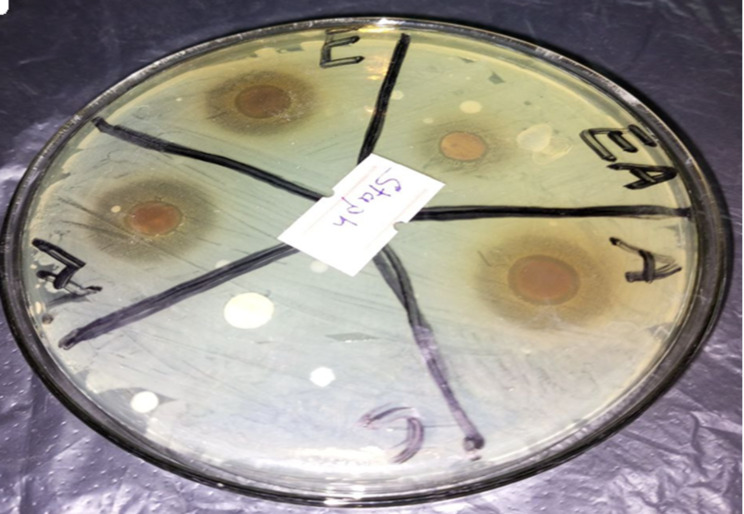
The TPC and TFC were determined using Folin-Ciocalteu and aluminum chloride methods, respectively. The 2, 2-diphenyl-1-picrylhydrazyl (DPPH) scavenging, ferric-reducing power, and total antioxidant capacity assays were used to evaluate the antioxidant activities. Antibacterial properties were determined using the disc-diffusion and broth dilution assays.
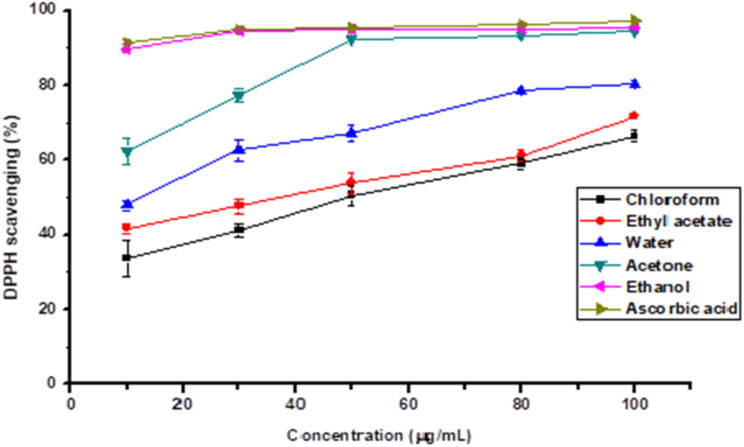
The ethanol extract of the bark was found to have high TPC (37.80 ± 3.70 mgGAE/g) and TFC (19.22 ± 1.44 mgQE/g). Similarly, the ethanol extract showed stronger DPPH scavenging activity (EC = 5.62 μg/mL). The ferric-reducing power and total antioxidant capacity were also strong (163.08±11.67 mgAAE/g and 143.72±2.86 mgBHTE/g of dried extract of 1 mg/mL, respectively). The lowest MIC was observed in acetone extract against S. aureus (1.56 mg/mL) and in ethanol extract against K. pneumoniae (1.56 mg/mL).
The ethanol extract of the bark of S. guineense possesses high TPC and TFC. In addition, it showed strong ferric-reducing power and total antioxidant capacity, asserting high antioxidant content. The extracts have shown antibacterial activities against both Gram-positive (S. aureus) and Gram-negative bacterial species. Thus, further in-depth investigations may warrant the isolation of powerful antioxidants and potent antimicrobial agents from the plant.
几内亚蒲桃(Syzygium guineense (Wild.) DC.)是一种野生本土树木,在埃塞俄比亚被广泛用作治疗各种人类疾病的传统药物。本研究的目的是量化总酚(TPC)和总黄酮(TFC)含量,并测定该植物树皮不同溶剂提取物的抗氧化和抗菌活性。
分别采用福林 - 酚试剂法和氯化铝法测定TPC和TFC。采用2,2 - 二苯基 - 1 - 苦基肼(DPPH)自由基清除、铁还原能力和总抗氧化能力测定来评估抗氧化活性。使用纸片扩散法和肉汤稀释法测定抗菌性能。
树皮的乙醇提取物具有较高的TPC(37.80±3.70 mgGAE/g)和TFC(19.22±1.44 mgQE/g)。同样,乙醇提取物表现出较强的DPPH自由基清除活性(EC = 5.62μg/mL)。铁还原能力和总抗氧化能力也很强(分别为163.08±11.67 mgAAE/g和143.72±2.86 mgBHTE/g的1 mg/mL干燥提取物)。丙酮提取物对金黄色葡萄球菌的最低抑菌浓度(MIC)最低(1.56 mg/mL),乙醇提取物对肺炎克雷伯菌的MIC最低(1.56 mg/mL)。
几内亚蒲桃树皮的乙醇提取物具有较高的TPC和TFC。此外,它表现出较强的铁还原能力和总抗氧化能力,表明抗氧化成分含量高。提取物对革兰氏阳性菌(金黄色葡萄球菌)和革兰氏阴性菌均表现出抗菌活性。因此,进一步深入研究可能有必要从该植物中分离出强效抗氧化剂和高效抗菌剂。